
Aveiro's Art Nouveau Houses and Azulejo Façades
Aveiro's historic centre holds one of Portugal's densest groupings of Arte Nova houses, where curved stonework, iron balconies and patterned azulejo tiles line a handful of central streets.
Aveiro sits between the Atlantic and the wide waters of the Ria de Aveiro, a lagoon city whose canals, salt pans and painted moliceiro boats draw most of the attention. Yet the streets running inland from the waterfront contain something equally distinctive: a compact group of townhouses built between the 1890s and the 1920s in the Arte Nova style, Portugal's interpretation of Art Nouveau. Their façades combine flowing carved stone, wrought-iron balconies and walls clad in azulejo tiles, giving the centre a decorative character that rewards a slow walk and a close look.
The Arrival of Arte Nova in Aveiro
Arte Nova reached Portugal around 1900, carried by illustrated magazines, architects trained abroad and a merchant class that travelled widely. Aveiro proved unusually receptive. Its economy rested on salt extraction, fishing and trade across the lagoon, and money made overseas, particularly in Brazil, financed new houses for families returning home. Local builders and workshops adapted French and Belgian models to Portuguese habits, adding tiled surfaces, carved stone and ironwork in place of the painted stucco seen elsewhere in Europe. The result is a body of buildings often described as one of the largest concentrations of Art Nouveau architecture in Portugal, spread across a few neighbouring streets rather than gathered into a single monument.
Central Streets Where the Decorative Houses Cluster
Most of the finest examples stand in a small area between the old town and the newer avenues. Rua João Mendonça, Rua dos Combatentes da Grande Guerra, Rua do Carmo, the streets around the Praça do Peixe fish market and the early stretches of Avenida Lourenço Peixinho hold the greatest number. These are generally modest two- and three-storey townhouses on narrow plots, built for merchants, shopkeepers and professional families rather than for the aristocracy. Several ground floors once contained shops, and a few still preserve the broad openings and carved surrounds of their commercial past.
Azulejo Façades and Their Patterns
The most striking feature of these houses is the use of azulejo tiles as full façade cladding rather than as a narrow band above the pavement. Entire frontages are covered in repeated patterns: floral sprays, ribbons, garlands and geometric lattices in blue and white or in softer polychrome shades of green, yellow and rose. The tiles were supplied by factories in Lisbon and Porto, and their glazed surfaces served a practical purpose as well as an ornamental one, shedding the heavy Atlantic rain and protecting the lime mortar beneath from salt-laden air. On some houses the tiles stop at the first floor, with painted stucco imitating stone above; on others they run to the eaves, framing windows and doorways in a continuous decorative skin.
Ironwork, Stone and Stucco Detail
Looking upwards reveals the rest of the repertoire. Wrought-iron balconies curve outward in stems, lilies and ferns; window pediments swell into asymmetric gables; cartouches carrying female heads, monograms or stylised flowers sit between floors. Carved stone doorways and window surrounds are common, often contrasted with smooth tiled wall surfaces, and some buildings retain original timber doors and stained-glass panels. It is worth comparing a single street, where the flowing lines of Arte Nova stand directly beside the stricter nineteenth-century façades that preceded them, to see how quickly architectural fashion changed.
Public Buildings and the Museu de Arte Nova
The Casa do Major Pessoa, a townhouse with a tile-clad front and delicate iron balcony, now houses the Museu de Arte Nova, which explains the movement and displays period interiors and decorative objects. Institutional architecture adopted the style too: the Cooperativa Agrícola de Aveiro, a substantial building serving the region's farming community, shows Arte Nova detailing applied on a larger scale. The railway station, later in date, lines its vestibule with azulejo panels depicting lagoon scenes, fishing and salt work, providing a useful introduction to local tile production before exploring the streets.
Appreciating the Houses on Foot
Aveiro's decorative buildings are best understood by walking, since the ornament is concentrated at street level and just above eye height. Morning light brings out the glaze and relief of the tiles, while late afternoon shadows emphasise the depth of carved stone and ironwork. Most remain private homes, so the pleasure lies in observing from the pavement rather than entering. Combined with the canals, the salt pans and the boats that give the city its identity, these façades show how a prosperous provincial trading town absorbed an international style and made it thoroughly local.
Related content
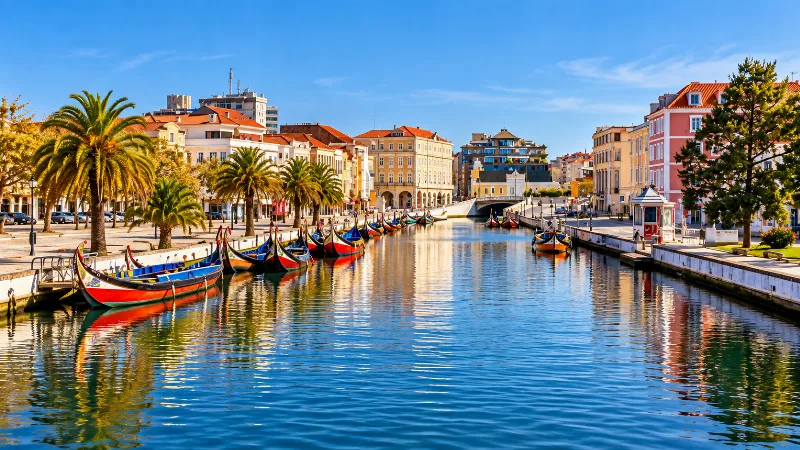
Aveiro
Aveiro is a small coastal-region city with canals, Art Nouveau details, colourful boats and easy access to lagoons and Atlantic landscapes.
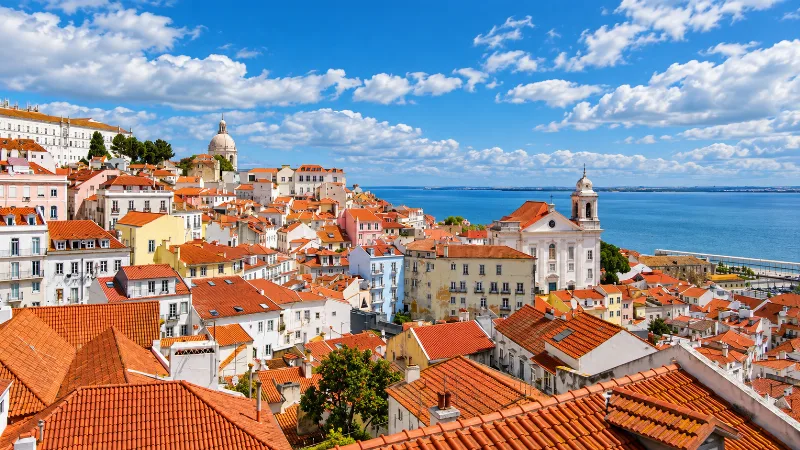
Lisbon
Portugal’s capital combines historic neighbourhoods, river views, tiled façades, viewpoints and an energetic everyday city life.
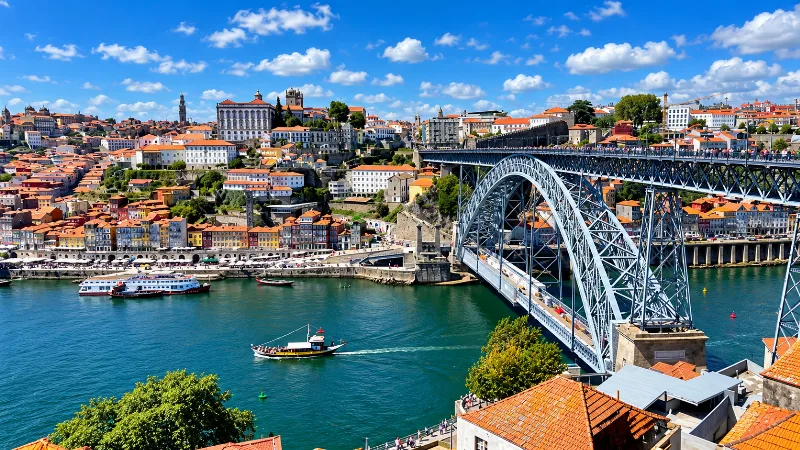
Porto
Porto is a compact northern city of steep streets, granite architecture, riverfront views, historic districts and strong local character.
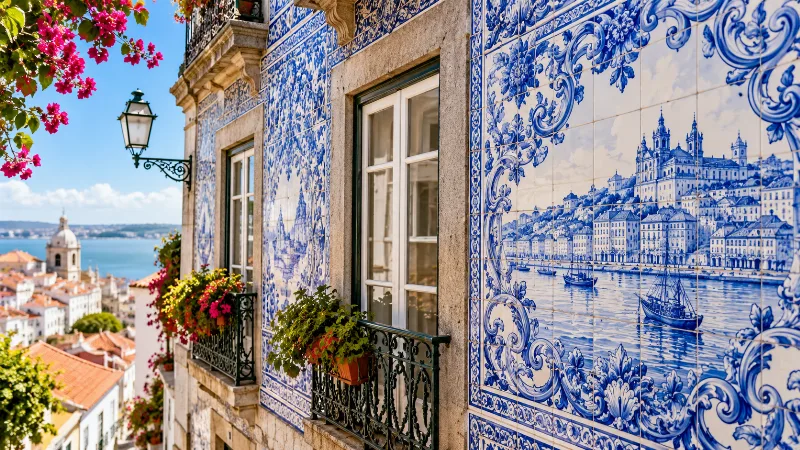
Azulejos
Azulejos are a defining feature of Portuguese architecture, appearing on churches, stations, palaces, homes and public buildings across the country.
Things to Do in Aveiro
Explore things to do in aveiro with a practical guide to notable places, regional landscapes, local heritage and travel planning in Portugal.

Central Portugal
Discover Coimbra, Aveiro, Serra da Estrela, Atlantic landscapes, mountain villages and the varied historic and natural scenery of central Portugal.