
The Crater Lakes of Sete Cidades on São Miguel
Sete Cidades, at the western tip of São Miguel in the Azores, holds a wide volcanic caldera with the famous Blue and Green lakes, quieter craters and high viewpoints across a green, mist-wrapped landscape.
Sete Cidades occupies the western end of São Miguel, the largest island of the Azores, and its name refers both to a broad volcanic massif and to the small parish that lies inside it. The central feature is a caldera several kilometres across, and within its floor sit the crater lakes that have made the area one of the most photographed landscapes in the archipelago. The parish belongs to the municipality of Ponta Delgada and is reached by a scenic road that climbs from the coast through pasture and forest before dropping into the crater itself.
A Volcanic Caldera in Western São Miguel
The Sete Cidades massif is the product of successive volcanic activity, ending in the collapse of a large structure that left a wide, roughly circular depression. Later eruptions built smaller cones inside and around the rim, and some of these now hold water. The caldera walls rise several hundred metres above the valley floor, and the highest points along the rim give long views over the lakes on one side and the Atlantic on the other.
The interior is green and gently rolling, divided into fields by hedgerows and used for grazing. Beyond the pasture, patches of laurisilva and plantations of Japanese cedar cover the steeper slopes, holding moisture and producing the deep, soft tones that characterise the landscape even in dull weather.
The Blue and Green Lakes
The best known of the crater lakes are Lagoa Azul and Lagoa Verde, which lie side by side and are joined by a narrow channel. From the viewpoints on the eastern rim, the pair appear to hold different colours: one reading as a deep blue, the other as a green. The effect depends on the angle of the sun, the depth of the water, the reflection of the surrounding slopes and the presence of algae, so the tones shift through the day and are often subdued when cloud sits over the caldera.
A local legend explains the colours through the tears of a princess and a shepherd boy who were separated by circumstance; the story is told in various forms and is part of the identity of the place rather than a geological account. Beside the lakes, the small Church of São Nicolau and a scatter of whitewashed houses with dark basalt corners form the nucleus of the village.
Smaller Lakes and High Viewpoints
Several quieter lakes lie within the same volcanic complex. Lagoa de Santiago, ringed by trees and reeds, sits in its own small crater and is reached by a short path from the roadside. Lagoa Rasa is shallower and more sheltered, while Lagoa do Canário lies higher on the western side and is surrounded by dense woodland.
Near Lagoa do Canário, a track leads towards the rim above the Boca do Inferno, a gap in the crater wall where the view opens over the northern lakes and out to the sea. The classic panorama is from Vista do Rei on the eastern rim, where the whole caldera, the village and both main lakes can be taken in at once. Cloud and mist move quickly here, so the view can close and reopen within minutes.
Walking and Cycling Around the Lakes
Paths follow parts of the crater rim and descend to the lakesides, offering walks of varying length on tracks and old access roads. The network rewards those who start early, when the air is still and the water reflects the walls most clearly. Cyclists use the quieter roads around the caldera, and the flatter ground beside the lakes is suited to an unhurried afternoon.
Angling and non-motorised boating take place on the larger lakes, and picnic areas near the village provide a base. Because the area is farmland as well as a natural monument, gates should be left as they are found and livestock given space.
Vegetation, Weather and the Character of the Place
Hydrangeas line many of the roads in summer, their blue and white heads marking field boundaries in a way that has become typical of São Miguel. Rainfall is frequent and distributed through the year, which keeps the crater green and fills the streams that drain towards the coast. Visitors should expect changeable conditions and carry a layer of warm, waterproof clothing regardless of the forecast at sea level.
What distinguishes Sete Cidades is the combination of scale and quiet: a vast collapsed volcano, water held in old vents, worked pasture inside the crater and a village that continues an ordinary life around the visitors who come to look down from the rim.
Related content
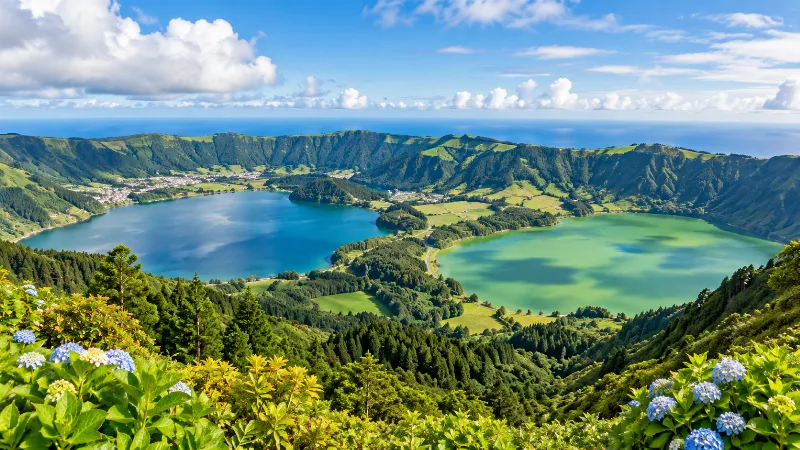
Explore Sete Cidades on São Miguel
Experience one of the Azores’ most dramatic volcanic landscapes around Sete Cidades, with crater lakes, viewpoints, roads and walking routes.
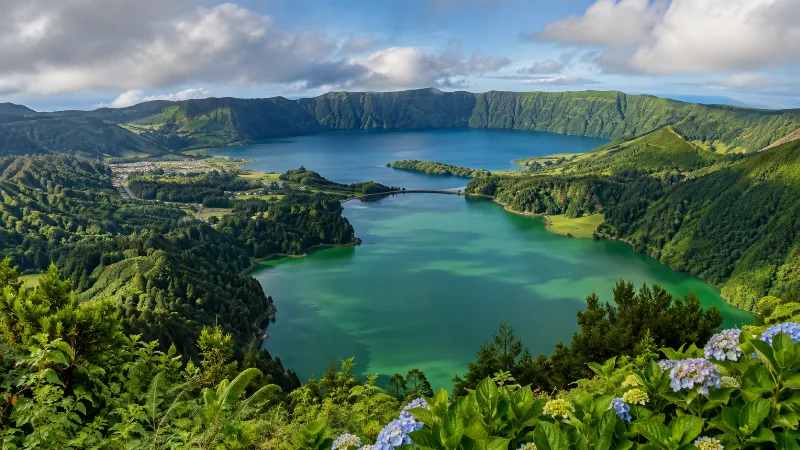
Lagoa das Sete Cidades – Volcanic Lakes of São Miguel
Sete Cidades is a volcanic landscape on São Miguel known for its twin lakes, steep green caldera and expansive viewpoints.
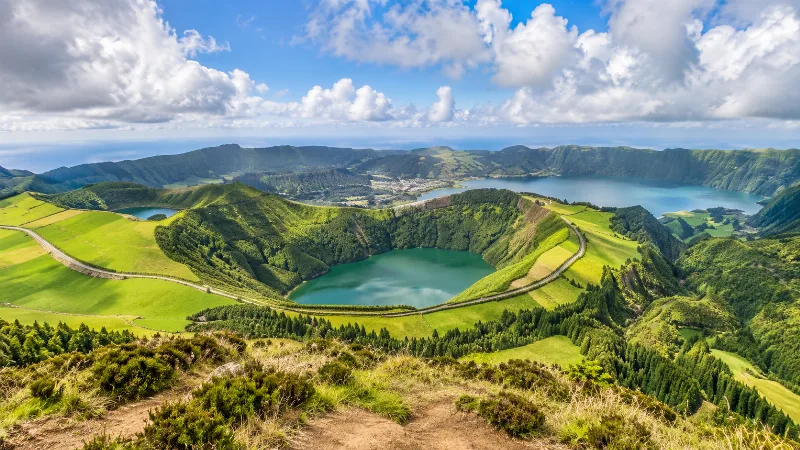
Azores
Discover the Azores through volcanic islands, crater lakes, green landscapes, Atlantic coastlines, hiking, wildlife and distinctive island communities.
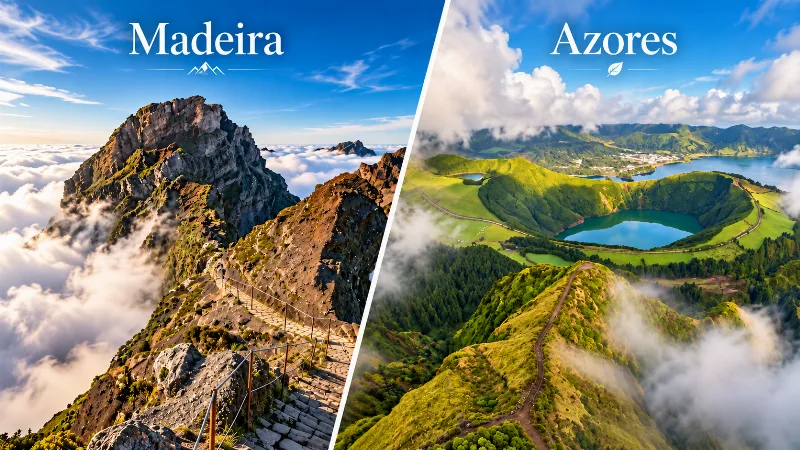
Madeira or Azores: Which Islands Should You Choose?
Madeira and the Azores offer very different Atlantic island experiences, from hiking and volcanic scenery to weather, transport, towns and travel style.
Exploring the Island of São Miguel
Explore exploring the island of são miguel with a practical guide to notable places, regional landscapes, local heritage and travel planning in Portugal.
Best Beaches on São Miguel Island
Explore best beaches on são miguel island with a practical guide to notable places, regional landscapes, local heritage and travel planning in Portugal.
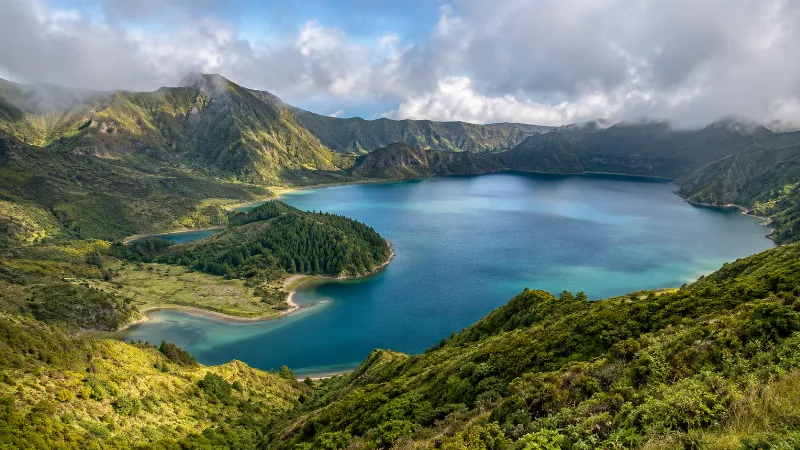
Lagoa do Fogo – A Volcanic Lake in the Azores
Lagoa do Fogo is a crater lake on São Miguel, admired for its protected setting, steep slopes and changing mountain weather.
Exploring the Azores Islands
Explore exploring the azores islands with a practical guide to notable places, regional landscapes, local heritage and travel planning in Portugal.