
The Terraced Vineyards of the Douro Valley
The Douro Valley is defined by vineyards cut into steep schist slopes above a winding river, a landscape shaped by centuries of wine growing. Its terraces, villages and seasonal colour make it one of Portugal's most distinctive rural regions.
The Douro Valley lies in northern Portugal, where the River Douro carves a deep, winding course through hills that rise sharply on both banks. What makes the valley so immediately recognisable is the way its slopes have been adapted for growing grapes: long ribbons of terraced vineyards follow the contours of the land, stacked one above another like uneven steps. This is the heart of Portugal's port wine region, and the cultivated landscape of the Alto Douro Vinhateiro has been recognised as a UNESCO World Heritage Site since 2001.
A Landscape Formed by the River
The Douro rises in Spain and travels west across northern Portugal before reaching the Atlantic near Porto. In its middle section, the river passes through mountainous country where rainfall is low, summers are hot and the rocky schist soil holds little moisture. These conditions are difficult for most crops but well suited to vines, which send roots deep into cracks in the rock. The river itself moderates temperatures and reflects light back onto the slopes, helping grapes ripen in an otherwise demanding climate.
The valley is not a single uniform view. In places the banks open into broad bowls of vines; elsewhere the gorge narrows and the slopes become almost vertical, with only small parcels of land fit for planting. Villages and quintas, the wine estates that dot the region, tend to occupy the flatter ground near the water or cling to ridges above the river.
How the Terraces Were Built
The terraces are the product of generations of manual labour. Three main styles can be seen across the valley. The oldest are socalcos, narrow platforms supported by dry stone walls built from the local schist, each holding only a few rows of vines. From the twentieth century onwards, wider patamares were cut into gentler slopes with fewer retaining walls, allowing more room for machinery. In some areas vines are planted vinha ao alto, running straight up and down the hillside without terracing at all, a method suited to less precipitous ground.
Each arrangement affects how the vineyard looks and how it is worked. The stone walls of the older terraces provide drainage, retain soil and shelter vines from wind, and they give the valley much of its visual character, particularly where they trace long horizontal lines across the hills.
The Port Wine Region and Its Grapes
The Douro's vineyards are best known for the grapes used in port, the fortified wine aged and shipped from Vila Nova de Gaia. Traditional varieties include Touriga Nacional, Touriga Franca, Tinta Roriz, Tinta Barroca and Tinta Cão, often planted together in mixed plots rather than separated by grape. The same vineyards also produce unfortified Douro wines, which have gained recognition in their own right.
Harvest usually takes place in late summer and early autumn, when the slopes fill with pickers working the narrow terraces by hand. The grape must is still trodden in some estates using traditional granite lagares, although mechanical methods are now common.
Seasonal Character and Things to See
The valley changes markedly through the year. In late winter, almond trees in bloom scatter white and pink across the slopes. Spring brings fresh green growth along the vine rows, and by summer the hills are dense with foliage. Autumn is perhaps the most striking season, when leaves turn gold, russet and deep red before falling.
Visitors often travel along the Linha do Douro railway, which follows the river past terraced hillsides and small stations, or take to the water on a river boat between Peso da Régua and Pinhão. Viewpoints above the valley offer wide prospects over the terraces and the winding river, while the towns along the banks provide a base for exploring the surrounding quintas and villages.
Nature and Rural Life
Beyond the vines, the Douro region supports olive groves, almond trees, cork oak and remnants of Mediterranean woodland. Birds of prey are frequently seen riding thermals above the ridges, and the river corridor attracts a range of water birds. Rural life remains closely tied to the agricultural calendar, with small communities maintaining walls, tracks and terraces that would quickly disappear without constant care.
These terraced vineyards are therefore more than a scenic backdrop. They represent a long relationship between people and a difficult landscape, sustained by practical knowledge passed down through farming families and still visible in every wall and row of vines.
Related content
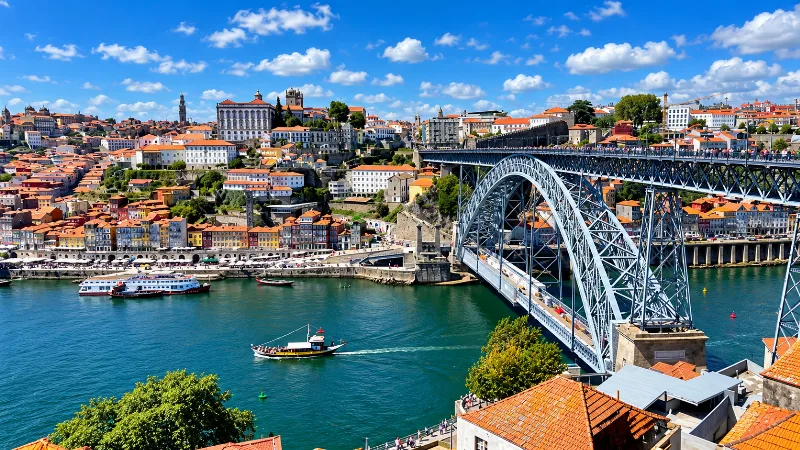
Porto
Porto is a compact northern city of steep streets, granite architecture, riverfront views, historic districts and strong local character.
Discovering the Vineyards of the Douro Valley
Explore discovering the vineyards of the douro valley with a practical guide to notable places, regional landscapes, local heritage and travel planning in
Exploring the Douro Valley
Explore exploring the douro valley with a practical guide to notable places, regional landscapes, local heritage and travel planning in Portugal.
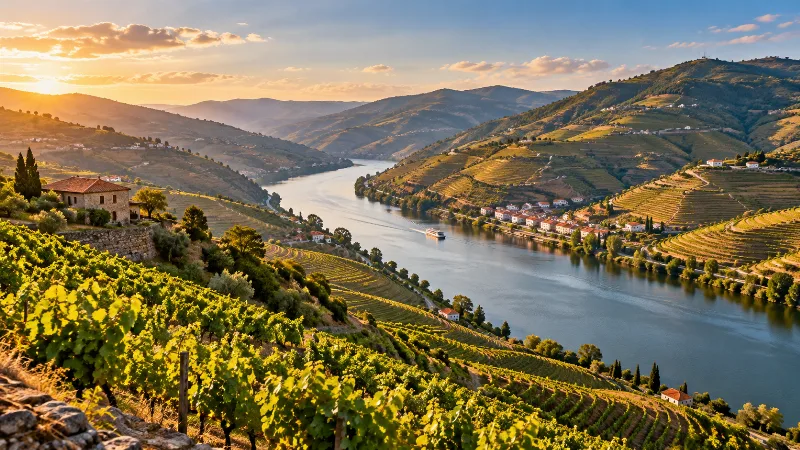
Explore the Douro Valley
Follow the Douro east from Porto through terraced hills, river landscapes, small towns and one of Portugal’s most distinctive rural regions.
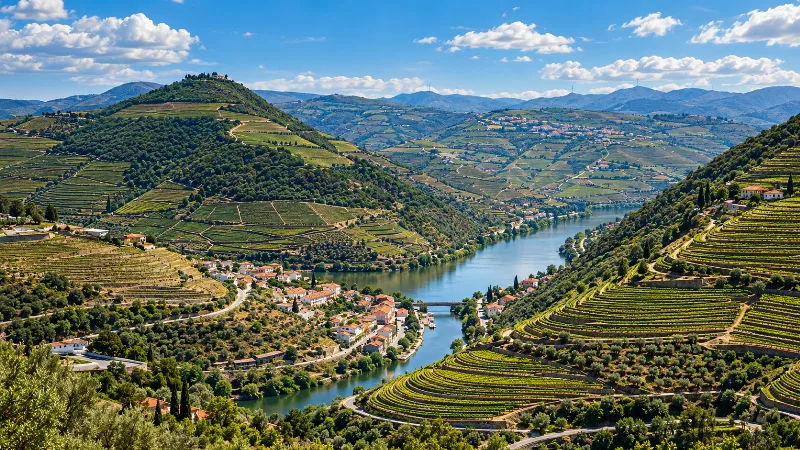
Northern Portugal
Explore Porto, the Douro Valley, Braga, Guimarães, Peneda-Gerês and the green landscapes, food traditions and historic cities of northern Portugal.
Scenic Drives Through the Douro Region
Explore scenic drives through the douro region with a practical guide to notable places, regional landscapes, local heritage and travel planning in Portuga