
Portugal Without a Car
Plan a car-free Portugal visit with connected bases, useful station locations and realistic arrangements for the final part of each journey.
A visit to Portugal without a car works best when accommodation and activities are chosen around usable transport connections. The main task is to connect the whole journey, including the distance between a station and your final destination. Start with places you can reach reliably on your dates, then choose a small number of bases that support the visits you most want to make.
Choose Connected Bases
Lisbon and Porto offer urban transport networks alongside connections to other destinations. Other regional centres can also work as bases when their services fit your plans. Compare where the station or coach terminal sits in relation to the neighbourhood where you want to stay. A property near an arrival point may still be inconvenient for most of your daily visits.
Plan the Final Section
A train or coach reaching a town does not necessarily reach its beach, hilltop monument or rural accommodation. Check the remaining local bus, walk or other transfer separately. Look at the return direction as carefully as the outward journey. If an activity ends after the last suitable connection, change its timing or arrange a confirmed alternative before booking it.
Build Practical Day Trips
Select excursions that allow time at the destination after the return travel is considered. A direct connection can make a nearby town more rewarding than a complicated journey to a more distant attraction. Keep the starting terminal, arrival stop and return departure point clear in your notes. They may not be in the same place, even within one urban area.
Approach Rural and Island Visits
For a particular countryside attraction, an organised excursion or occasional booked transfer may complement a trip otherwise made by public transport. Verify pickup arrangements and what is included. Island travel also needs location-specific planning: do not assume that a service pattern in one place applies elsewhere. Choose accommodation and outings together when connections outside the main town are important.
Travel with Manageable Luggage
Consider stairs, uneven paving and the final walking distance when choosing bags and accommodation. A short route on a map can involve a slope or several changes of level. Keep tickets and addresses available offline and allow time to find unfamiliar platforms or stops. Review current operator notices before important journeys. A car-free plan is strongest when its everyday movements are simple, with more complicated excursions treated as deliberate choices. Check whether your chosen neighbourhood has useful evening connections, particularly if you plan to return after dinner in another district.
Related content
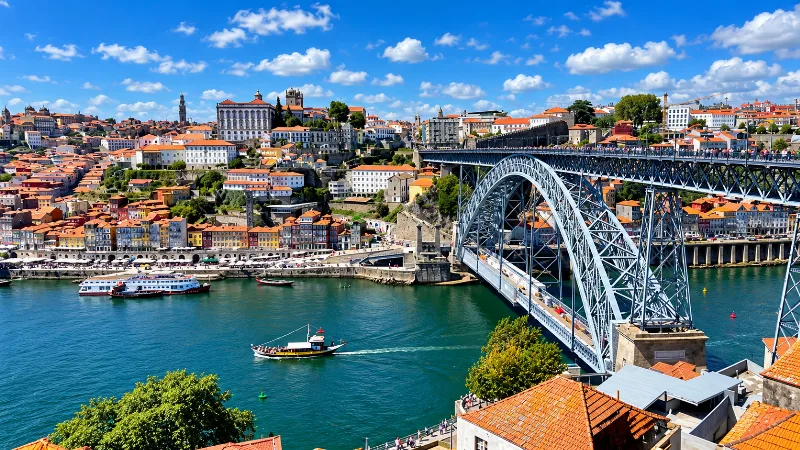
Porto
Porto is a compact northern city of steep streets, granite architecture, riverfront views, historic districts and strong local character.
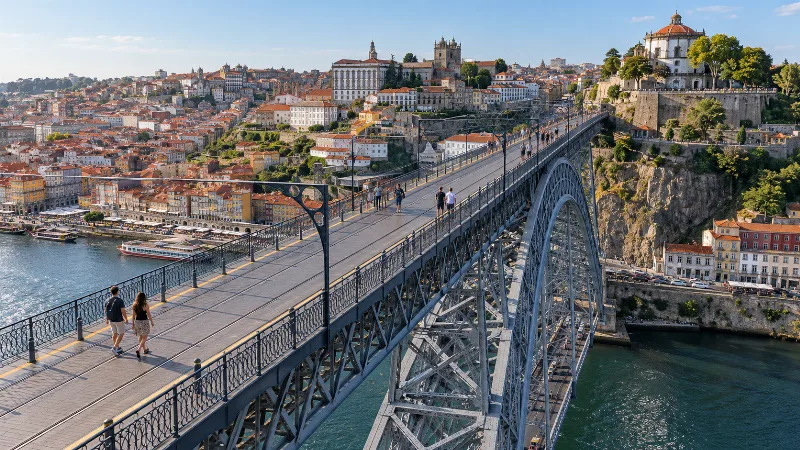
Walk Across Porto’s Dom Luís I Bridge
Cross the Douro between Porto and Vila Nova de Gaia, combining the bridge’s upper deck, Jardim do Morro and the riverside streets.
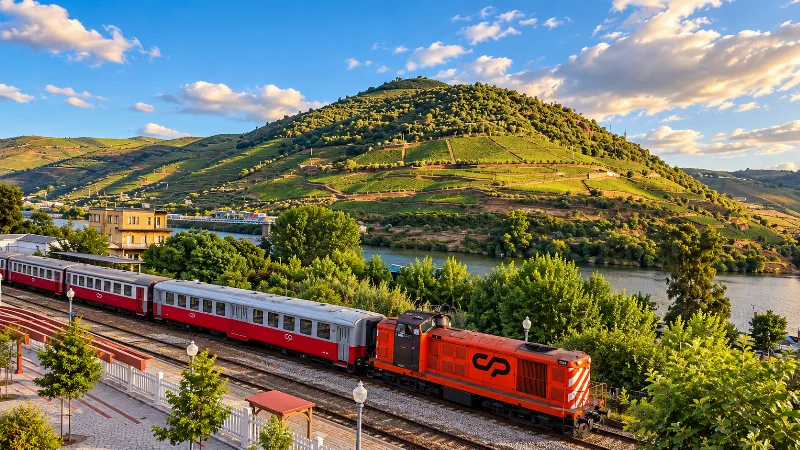
Portugal Without a Car: How Easy Is It?
Portugal can be explored without a car if you focus on major cities and rail corridors, but rural regions, remote beaches and mountains require more planning.