
Arrábida Natural Park: Limestone Hills and Sheltered Coves
Arrábida Natural Park stretches along the Setúbal peninsula, where pale limestone hills fall sharply to a coast of sheltered coves and clear water. The park combines Mediterranean vegetation, a protected marine area and long views across the Sado estuary.
Arrábida Natural Park occupies a compact but unusually varied stretch of the Setúbal peninsula in southern Portugal, roughly between the city of Setúbal and the fishing town of Sesimbra. Its defining feature is a ridge of limestone hills, the Serra da Arrábida, which rises steeply from the coast and reaches its highest point at around 500 metres. Because the hills meet the sea so directly, the park packs cliffs, wooded slopes, small beaches and sheltered coves into a relatively short coastline, all within easy reach of Lisbon yet noticeably distinct in character.
Where the Limestone Hills Meet the Sea
The serra is formed of Jurassic limestone, laid down when this area lay beneath warm, shallow water. Later earth movements tilted and folded the rock, and erosion has since carved the ridgeline into a series of rounded summits, steep gullies and exposed crags. From the water, the hills appear as a pale wall above the shoreline, streaked with grey and ochre where the stone breaks through the vegetation. From the tops, the view opens northwards over the Sado estuary towards the sandbanks of Tróia, and southwards along a coast that becomes increasingly rugged towards Cabo Espichel.
Mediterranean Scrub and Wooded Slopes
The park's plant life reflects a warm, sheltered microclimate and thin, well-drained soils. Dense Mediterranean scrub covers much of the hillside, with kermes oak, lentisk, rosemary, thyme and rockrose forming low, aromatic thickets. Taller stands of stone pine and cork oak appear in the more sheltered valleys, while carob and olive trees mark the older cultivated edges of the park. In spring the slopes carry a succession of wild flowers, including several species of orchid. The vegetation is not merely scenery: it holds the thin soil in place on gradients where rain would otherwise strip the slope quickly.
The Coves of the Setúbal Coast
The coastline between Setúbal and Sesimbra is a sequence of small bays set beneath cliffs. Praia da Figueirinha lies at the northern end, where the hills soften towards the estuary. Further south, Portinho da Arrábida sits in a natural harbour with calm, clear water and a small scatter of buildings behind the beach. Nearby are the coves of Galapos and Galapinhos, reached by paths that wind through the scrub, and Praia dos Coelhos, tucked into a narrow inlet. These coves share the same qualities: pale sand, water sheltered from the prevailing swell, and limestone ledges that make the shallows easy to read from above.
A Protected Marine Area
The sea adjacent to the park is protected as a marine reserve named after Professor Luiz Saldanha, a Portuguese marine biologist. The combination of sheltered bays and exposed rock makes the reserve unusually rich in habitats. Seagrass meadows, rocky reefs and sandy channels support a wide range of species, and the area is known for its seahorses and for the dolphins occasionally seen offshore. The reserve also protects the underwater landscape itself, which is why diving and boating in the area are managed rather than unrestricted.
Walking, Climbing and Long Views
A network of waymarked trails crosses the hills, linking the coast with the higher ground and the villages on the inland side. Walks range from short coastal paths between coves to longer routes that climb to the ridge for views over the estuary. The limestone offers established rock climbing on several crags, and the quiet roads attract cyclists willing to accept steep gradients. Early morning and late afternoon are the most rewarding times, when the light rakes across the ridge and the sea below turns a deep, even blue.
The Convent and the Cultural Layer
Halfway up the hillside above Portinho stands the Convento da Arrábida, founded in the sixteenth century as a Franciscan retreat. Its whitewashed buildings and terraced gardens are built into the slope in a way that seems to grow out of the rock rather than sit upon it. The convent is a reminder that Arrábida has long been a place people sought out for quiet and distance from the world below, a role it still plays for walkers who reach the ridge and look back over the coves.
Visiting the park is straightforward, but the terrain and the protected status of the area ask for some care. Paths are uneven, shade is limited on the upper slopes, and the coves have no facilities beyond the immediate shoreline. Travelling on foot, keeping to marked routes and carrying water are simple habits that allow the hills, the scrub and the sheltered water to remain as they are for the next visitor.
Related content
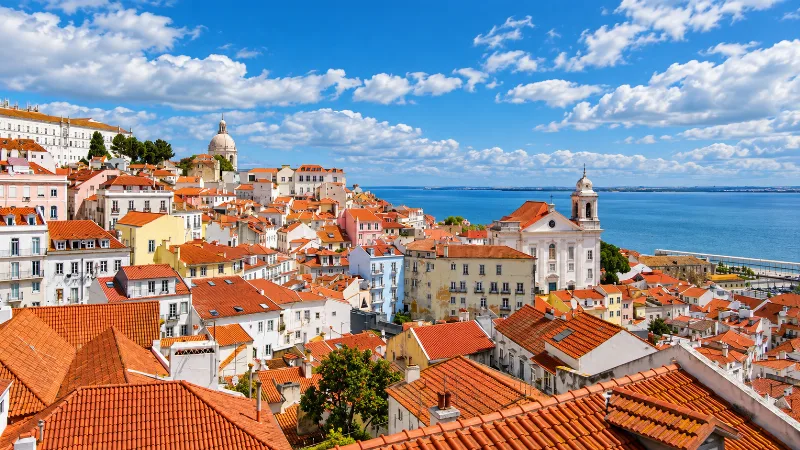
Lisbon
Portugal’s capital combines historic neighbourhoods, river views, tiled façades, viewpoints and an energetic everyday city life.
Exploring the Natural Beauty of Arrábida
Explore exploring the natural beauty of arrábida with a practical guide to notable places, regional landscapes, local heritage and travel planning in Portu
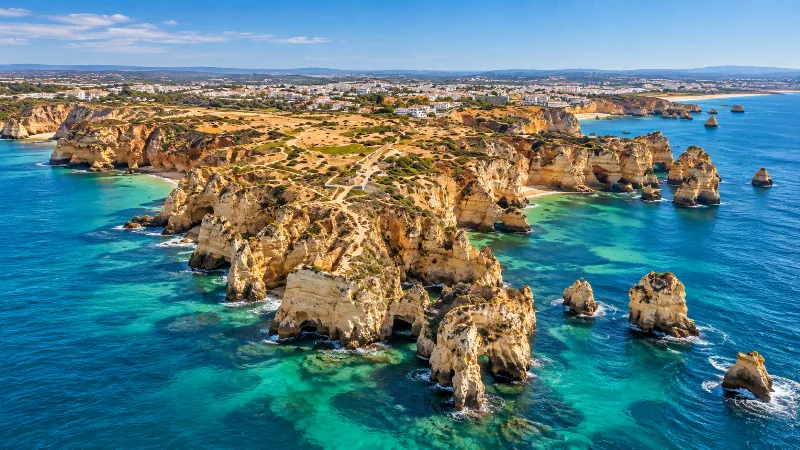
Algarve
Explore the Algarve through sandy beaches, limestone cliffs, Faro, Ria Formosa, coastal trails, historic towns and southern Portuguese landscapes.
Ponta da Piedade Clifftop Paths in the Western Algarve
The limestone headland of Ponta da Piedade, just south of Lagos, is threaded with clifftop paths above sea stacks, arches and hidden grottoes. This guide explains the geology, the walking routes and the natural detail that make the headland distinctive.
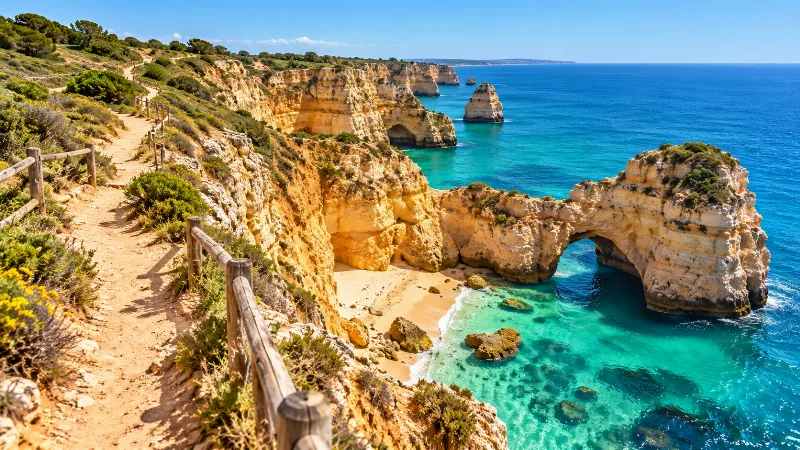
Hike the Seven Hanging Valleys Trail
Walk one of the Algarve’s best-known coastal trails above limestone cliffs, beaches, sea arches and wide Atlantic viewpoints.
Hidden Beaches Along the Algarve Coast
Explore hidden beaches along the algarve coast with a practical guide to notable places, regional landscapes, local heritage and travel planning in Portuga
Discovering the Cliffs of the Algarve
Explore discovering the cliffs of the algarve with a practical guide to notable places, regional landscapes, local heritage and travel planning in Portugal
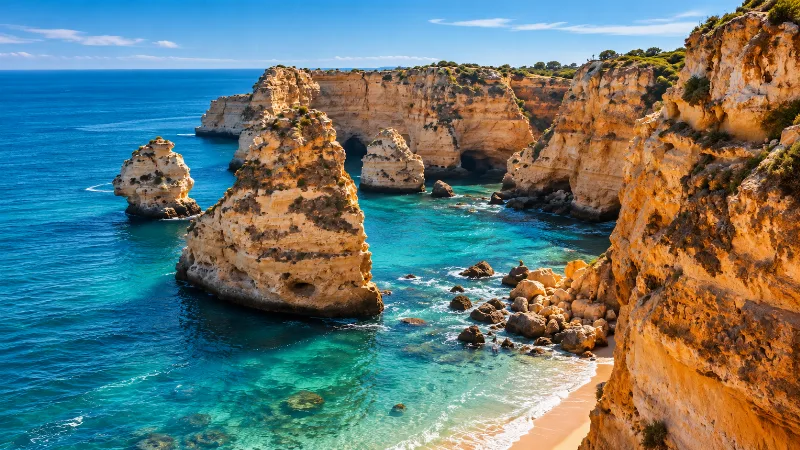
Praia da Marinha
Praia da Marinha is one of the Algarve’s most distinctive coastal landscapes, known for limestone cliffs, clear water, sea stacks and natural arches.