
Ponta da Piedade Clifftop Paths in the Western Algarve
The limestone headland of Ponta da Piedade, just south of Lagos, is threaded with clifftop paths above sea stacks, arches and hidden grottoes. This guide explains the geology, the walking routes and the natural detail that make the headland distinctive.
Ponta da Piedade is a rocky headland immediately south of Lagos, at the western end of the Algarve coastline in southern Portugal. It is known above all for a dense cluster of sea stacks, slender pinnacles and natural arches cut from pale golden limestone, and for the paths that trace the top of its cliffs, opening onto a succession of viewpoints above the water. The headland is compact enough to explore on foot in an afternoon, yet its rock formations and clear Atlantic water reward a slower visit.
A headland carved from limestone
The cliffs around Ponta da Piedade are formed of soft, fossil-bearing limestone laid down in a shallow sea many millions of years ago. Over time, pressure and earth movement opened fine cracks and bedding planes through the rock, and the waves began to work along these lines of weakness. Caves hollowed out at the base of the cliff, some of them joining to form arches, and where a roof eventually collapsed a free-standing stack was left behind. The process is continuous, which is why the coastline here looks restless and intricate rather than smooth: pillars, buttresses, ledges and small hidden beaches follow one another in quick succession.
The same limestone influences the colour of the sea. Where the water is deep the surface reads as a dark blue-green; over sand-filled gullies between the stacks it turns turquoise, and in calm weather the rock is visible well below the surface.
Following the clifftop paths
A network of paved paths and timber boardwalks runs across the headland, linking the main viewpoints and keeping walkers a safe distance from the most fragile edges. Simple railings appear at the principal lookouts, while other stretches are left open, so attention to footing and to the cliff line is worthwhile throughout.
The small, square lighthouse of Farol da Ponta da Piedade stands near the tip and acts as a useful landmark. From there the paths continue eastwards above a series of small coves towards Praia do Camilo and, beyond it, Porto de Mós, while a signed coastal route connects the headland with the town of Lagos. The ground is largely level but uneven in places, with occasional steps, and there is very little shade, so early morning or late afternoon walking is generally more comfortable.
The staircase down to the water
A steep flight of steps cut into the rock descends from the cliff top to a narrow landing among the stacks, where small boats collect passengers in calm conditions. Trips from the harbour at Lagos run beneath the cliffs and into the grottoes, passing through arches and into shallow caves where the light reflects off the water onto the rock walls. These excursions depend entirely on the state of the sea, and the landing itself is best negotiated in dry weather.
Plants, birds and marine life
The clifftop is covered in low, wind-clipped scrub: gorse, wild thyme, sea lavender and scattered spring flowers that cling to thin soil between the rocks. The stacks offshore provide nesting ledges for yellow-legged gulls, while cormorants are often seen drying their wings on lower outcrops, and falcons and kestrels hunt along the cliff face. In the clear water below, shoals of small fish move over the sandy patches, and the rock pools at the foot of the steps hold anemones, crabs and weed at low tide.
Nearby coves and the wider coastline
Two sheltered beaches lie within easy walking distance: Praia do Camilo, reached by a long wooden staircase, and Praia Dona Ana, framed by ochre cliffs. Both are small and backed by rock rather than development, and both share the same clear, cold Atlantic water. Westwards the coast continues towards Sagres and its more exposed headlands; eastwards the cliffs soften into the long sandy sweep of Meia Praia on the far side of Lagos. Seen together, the coves and paths around Ponta da Piedade form one of the most distinctive stretches of coastal scenery in the Algarve.
Related content
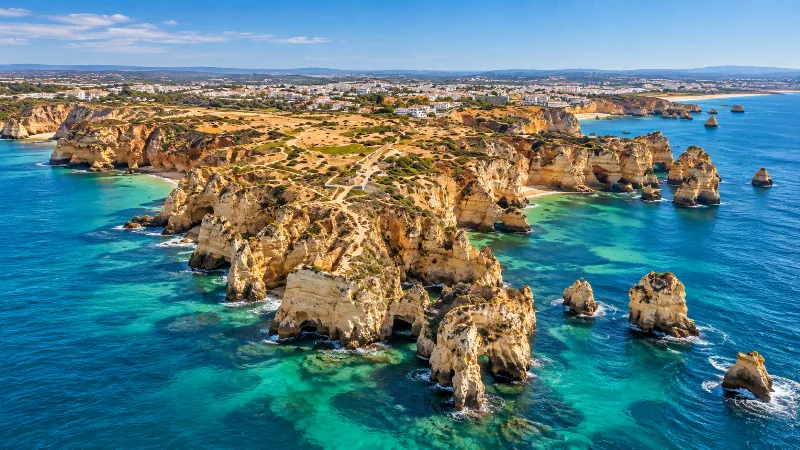
Algarve
Explore the Algarve through sandy beaches, limestone cliffs, Faro, Ria Formosa, coastal trails, historic towns and southern Portuguese landscapes.
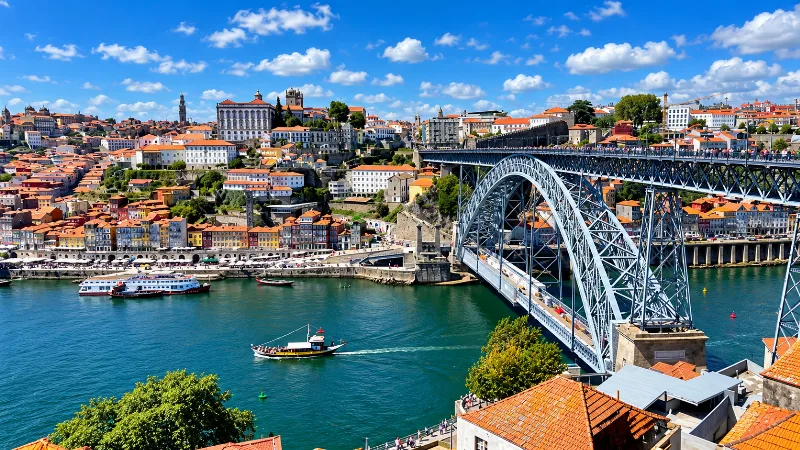
Porto
Porto is a compact northern city of steep streets, granite architecture, riverfront views, historic districts and strong local character.
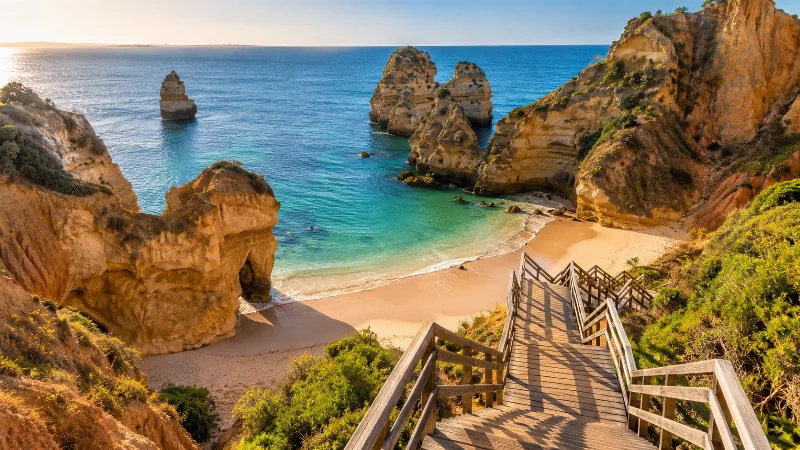
Praia do Camilo – Golden Cliffs and Turquoise Waters
Praia do Camilo is a compact beach at Lagos, framed by sculpted cliffs and reached by a long wooden stairway.
Costa Vicentina Coastal Path and Atlantic Cliffs
The Costa Vicentina is a wild Atlantic shoreline of dark schist cliffs, broad beaches and waymarked trails, where walking routes link quiet Alentejo fishing villages with protected natural parkland.
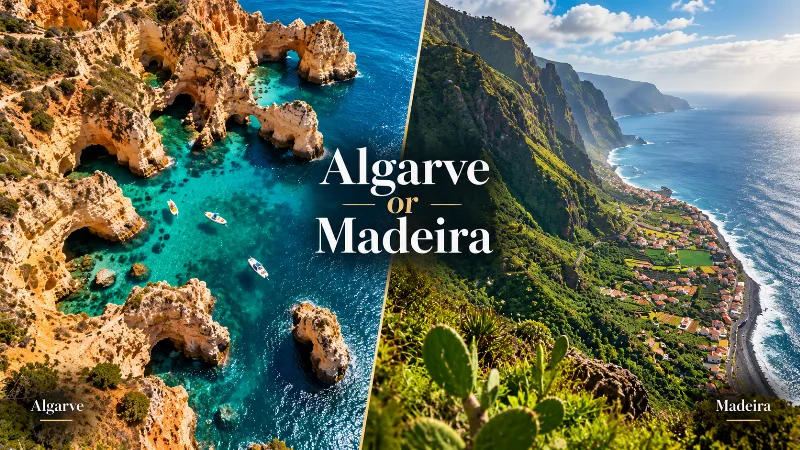
Algarve or Madeira: Which Is Better for Your Trip?
The Algarve and Madeira both offer warm-weather escapes, but they differ greatly in beaches, scenery, hiking, driving, towns and overall travel style.
Best Things to Do in Lagos
Explore best things to do in lagos with a practical guide to notable places, regional landscapes, local heritage and travel planning in Portugal.
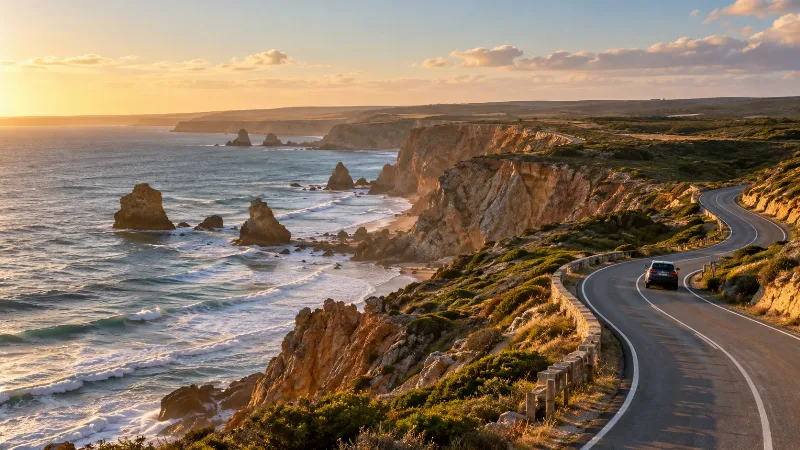
How to Plan a Coastal Road Trip in Portugal
Create a coast-focused itinerary with realistic stops, safe access and varied landscapes.
Ria Formosa Lagoon and Barrier Islands in the Eastern Algarve
The Ria Formosa is a tidal lagoon stretching along the eastern Algarve coast, sheltered by a chain of low sandbar islands and fringed with salt marshes that draw wading birds and shellfish gatherers alike.