
Costa Vicentina Coastal Path and Atlantic Cliffs
The Costa Vicentina is a wild Atlantic shoreline of dark schist cliffs, broad beaches and waymarked trails, where walking routes link quiet Alentejo fishing villages with protected natural parkland.
The Costa Vicentina is the Atlantic edge of south-west Portugal, a continuous run of cliffs, dunes and small river mouths that begins around Porto Covo in the Alentejo and continues south past Vila Nova de Milfontes, Zambujeira do Mar, Odeceixe and Aljezur towards the western Algarve. Almost the whole of this shoreline falls inside the Parque Natural do Sudoeste Alentejano e Costa Vicentina, one of the largest protected coastal areas in the country, and it is this status that has kept the coast largely free of large-scale building. For walkers the result is unusual in western Europe: a long, mostly undeveloped clifftop path connecting small settlements, market gardens, fishing beaches and open Atlantic scenery.
A coastline shaped by schist and Atlantic weather
The cliffs here are cut from dark, layered schist and greywacke, rocks that fold and fracture into slabs, ledges and narrow gullies. Constant wave action has worked them into sea stacks, arches, flat rock platforms and small coves filled with pebbles or sand. Heights vary considerably, from low rocky shelves where the sea washes over at high tide to headlands that stand several dozen metres above the water and give wide views north and south along the coast.
The climate is markedly Atlantic. Wind is a near-constant presence, salt spray reaches surprisingly far inland, and the light changes quickly as cloud banks move in from the ocean. Evenings often bring a strong horizontal glow across the rock faces, which is one of the reasons the coast attracts photographers as well as walkers.
Walking the Rota Vicentina
The trails along this coast are grouped under the Rota Vicentina, a waymarked network of long-distance and shorter routes that runs through the natural park. Signage is consistent, and the paths are designed to be walked in stages, with villages placed at convenient intervals for supplies and overnight stops. Two long routes form the backbone of the system.
The Fishermen's Trail
This is the coastal route, following the clifftops and beach access paths from Porto Covo southwards to Odeceixe. It is divided into stages of roughly a half-day's walking each and passes a mixture of sand, dune boardwalks, rocky points and fishing harbours. Because it stays close to the sea, the trail demands attention to tides and swell at certain crossings, and parts of it run over soft sand.
The Historical Way
Further inland, the Historical Way takes a quieter line through cork oak woods, olive groves and small whitewashed villages, heading south towards the Sagres peninsula. It offers a contrast to the coast: shaded tracks, farm gates, stone bridges and a sense of the rural Alentejo that the clifftop route barely touches. Many walkers combine sections of both to vary the terrain.
Beaches and river mouths below the cliffs
The beaches are broad, exposed and often reached by sandy paths or wooden stairs cut into the rock. Some are backed by low dunes and juniper; others end at the mouth of a stream that colours the water brown for a few metres before it mixes with the ocean.
- Praia do Malhão, near Vila Nova de Milfontes, a long, open beach behind a low dune belt.
- Praia da Zambujeira do Mar, set beneath the village and framed by tall cliffs.
- Praia de Odeceixe, where the Rio Seixe curves between rock walls before reaching the sea.
- Praia da Bordeira and Praia do Castelejo, near Carrapateira and Vila do Bispo, with dark, dramatic rock formations.
Strong currents and powerful surf are common, so swimming is generally a matter for calm days and lifeguarded spots rather than a casual dip.
Plants and wildlife of the cliffs
The vegetation is low and adapted to salt and wind: cistus, gorse, sea lavender, thrift, wild carrot and creeping juniper, with stone pine and umbrella pine on the sheltered slopes behind. In spring the clifftops carry a dense flowering of yellow, white and pink, and the scent of cistus travels a long way on the breeze.
Birdlife is a particular strength of the area. Peregrine falcons and kestrels hunt along the cliff line, cormorants and gulls rest on offshore rocks, and white storks nest in unusual places on the coastal stacks of the Alentejo stretch. Otters frequent the quieter estuaries, and the rock pools hold crabs, anemones and small fish at low tide.
Villages along the coast
Porto Covo was rebuilt in an ordered grid after the 1755 earthquake and retains a small, square-centred layout above its bay. Vila Nova de Milfontes sits where the Rio Mira meets the sea, with a small fort facing the bar. Zambujeira do Mar is a compact village on the cliff edge, Azenha do Mar a handful of houses above a fishing cove, and Odeceixe a cluster of white houses on a hill above the river bend. Further south, Aljezur keeps the remains of a Moorish castle, and Carrapateira has a small museum devoted to the fishing and farming life of the coast.
The character of a walking season
Spring and autumn are the classic months, with mild temperatures, green clifftops and manageable wind. Summer brings strong sun and little shade on the coastal route, so early starts and generous water supplies matter; the inland Historical Way is more forgiving in the heat. Winter walking is possible and quiet, but paths can be muddy and the Atlantic can close beach access altogether. Wherever the season, the appeal of the Costa Vicentina lies in the same thing: a long, uninterrupted cliff line, the sound of the ocean below it, and a path that keeps on going.
Related content
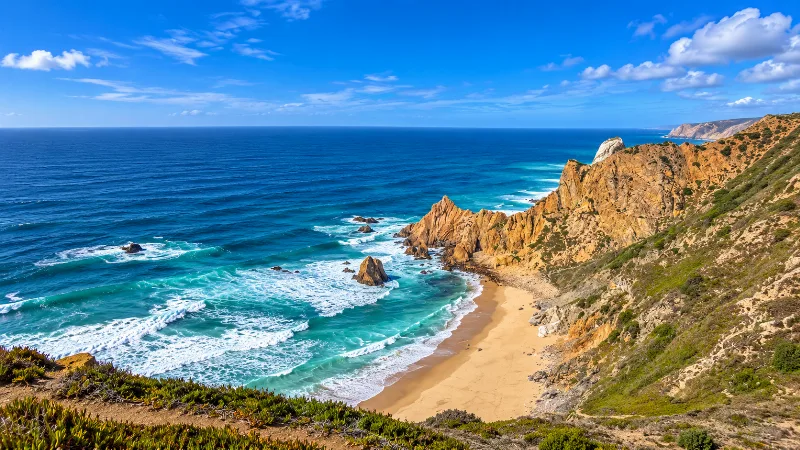
Costa Vicentina
Costa Vicentina is a rugged Atlantic coastline of cliffs, broad beaches, dunes and small settlements stretching through southwest Portugal.
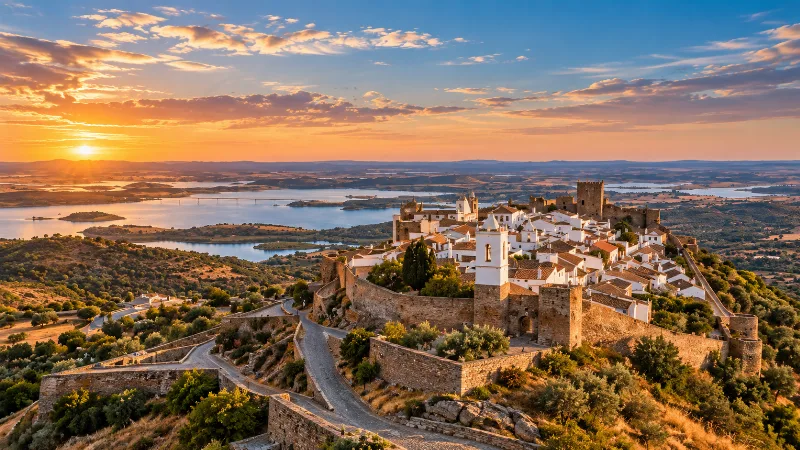
Alentejo
Discover Alentejo through Évora, whitewashed towns, cork-oak landscapes, vineyards, regional food and the broad rural interior of southern Portugal.
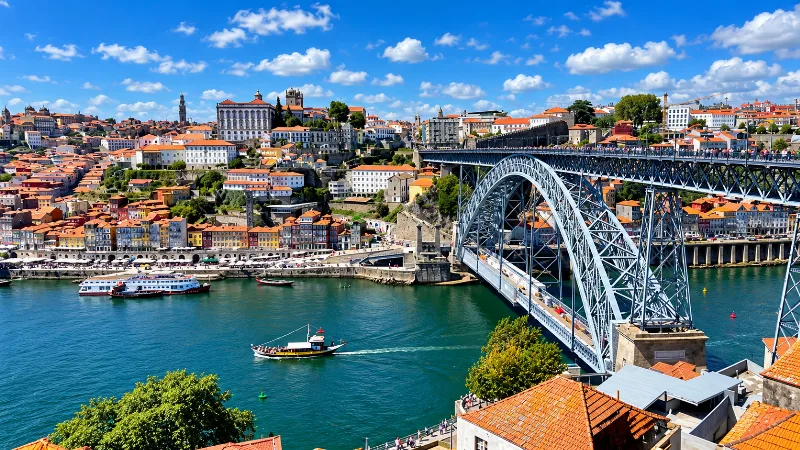
Porto
Porto is a compact northern city of steep streets, granite architecture, riverfront views, historic districts and strong local character.
Discovering the Beaches of Costa Vicentina
Explore discovering the beaches of costa vicentina with a practical guide to notable places, regional landscapes, local heritage and travel planning in Por
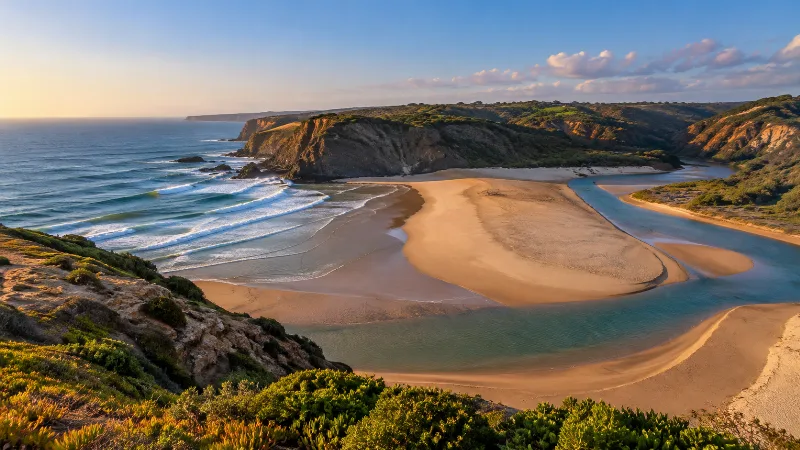
Praia de Odeceixe – Where the River Meets the Atlantic
Praia de Odeceixe sits at the mouth of the Seixe River, where a broad sandy beach connects river scenery with Atlantic surf.
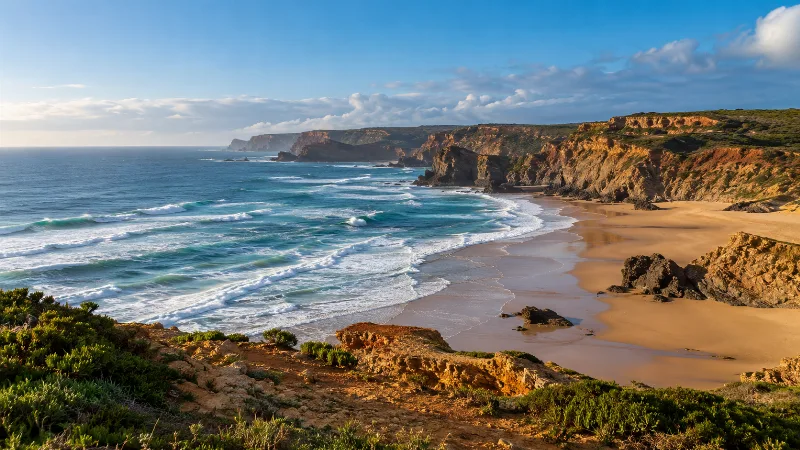
Praia do Amado – Atlantic Waves and Rugged Coastal Scenery
Praia do Amado is an Atlantic-facing beach in the Aljezur area, distinguished by powerful surf and wild coastal scenery.
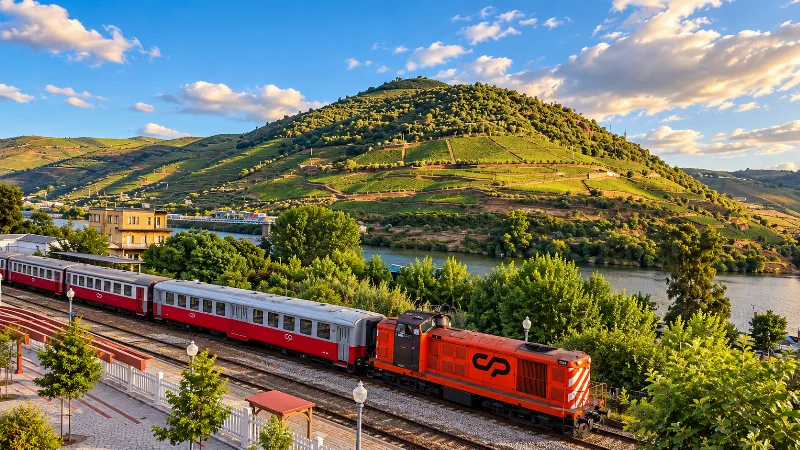
Portugal Without a Car: How Easy Is It?
Portugal can be explored without a car if you focus on major cities and rail corridors, but rural regions, remote beaches and mountains require more planning.
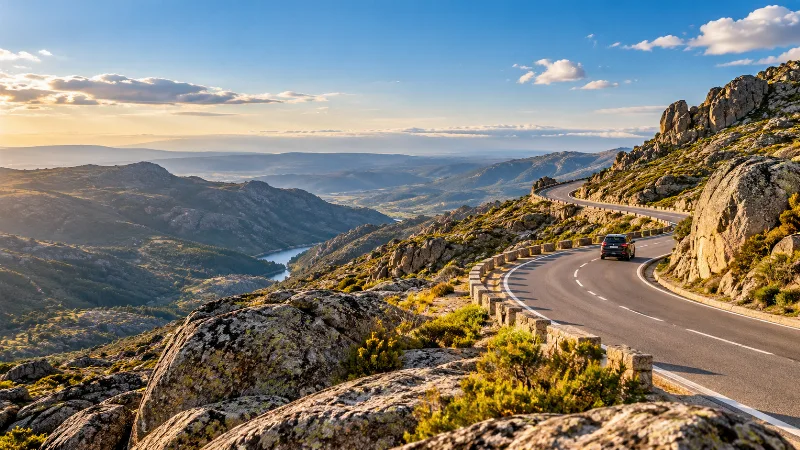
Driving in Portugal
Driving gives travellers access to rural Portugal, small villages, beaches and mountain regions, but tolls, parking and local road conditions require planning.