
Beja
Beja is a hilltop city in the Baixo Alentejo, once the Roman town of Pax Julia, whose marble-grey castle keep rises above a plain of wheat, olive groves and cork oak. Its old convent now holds one of southern Portugal's richest regional museums.
Beja sits on a low hill in the middle of the Baixo Alentejo, roughly 180 kilometres south-east of Lisbon, and is the administrative capital of Portugal's largest district. It is a compact provincial city of narrow streets, whitewashed houses and tiled roofs, whose skyline is fixed by the massive keep of its medieval castle. Long before it became Portuguese it was the Roman town of Pax Julia, and traces of that earlier city still shape the street plan.
Location and general character
The city occupies a rise of about 277 metres above a broad, gently undulating plain known locally as the barros de Beja, a landscape of heavy clay soils. The municipality stretches over some 1,150 square kilometres, making it one of the largest in the country, yet its population is close to 30,000, so the impression is of a substantial market town rather than a large urban centre. Beja is the seat of district and regional administration, a service centre for the surrounding farms, and a student town with a polytechnic institute.
The climate is Mediterranean with a continental edge. Summers are long, dry and hot, with frequent spells above 35°C and warm nights; winters are mild by day but cold enough for regular frosts on the plain. Annual rainfall averages only around 550 millimetres, most of it falling between October and March, which explains the pale, sun-bleached look of the countryside for much of the year. Road connections run north towards Lisbon and Évora and south towards the Algarve, and the city keeps a railway station on the Alentejo line. The former air base outside the town now also handles some civilian traffic.
From Pax Julia to a frontier town
The site was occupied in pre-Roman times, but it was the Romans who gave Beja its lasting shape. After the pacification of Lusitania in the first century BC the settlement was renamed Pax Julia and became a regional capital with legal and administrative functions. Its forum stood close to the present Praça da República, and the two surviving gates of the old town, the Portas de Évora and the Portas de Mértola, stand where Roman gateways once did.
In the sixth century the Visigoths took the territory and made the town an important religious centre. From 711 it passed into Muslim hands, and it is from that period that the name Beja derives. Christian forces captured it in 1162, but the frontier remained disputed for decades until the area was secured in the thirteenth century. A royal charter followed in 1254, and the castle was built at the end of that century, with the great keep added under King Dinis. Later the town became the centre of a duchy, and the royal patronage of the fifteenth century left a series of churches and convents that still define the historic centre.
Architecture of the old town
The castle is the obvious starting point. Its keep is around 40 metres high and is generally described as the tallest military tower in Portugal; a long, winding stone staircase of some 180 steps leads to the terrace, from which the extent of the plain becomes clear. Below it, the streets of the centre climb between low façades, Manueline doorways and iron balconies. The cathedral, rebuilt in the sixteenth century and later given a mannerist and baroque interior, stands beside the castle, while the Praça da República is framed by the pillory, the Renaissance church of the Misericórdia and a row of arcaded buildings.
Elsewhere in the centre, the churches of Santa Maria and Santiago and the small church of Santo Amaro show how layers of building have been reused: Santo Amaro is an early Christian temple that retains Visigothic capitals. Plain lime render, limestone detailing and blue or patterned tiles are the recurring materials, and the convents in particular preserve extensive tile panels added from the fifteenth century onwards.
The plain and its surroundings
Beja's countryside is famously open. Wheat was the dominant crop and the defining element of the landscape until the later twentieth century, when irrigation changed farming patterns; today maize, olive groves and vineyards occupy land that was once given to dry cereal. Cork oak, holm oak and scattered olive trees mark the shallower slopes, and the old windmills of Santa Iria stand on the ridge above the city as reminders of the grain economy. To the east the land falls towards the Guadiana, while the Sado rises in the hills to the west. The steppe-like plains around Castro Verde, south of Beja, are among the most important areas in Portugal for grassland birds.
Local culture and everyday life
Daily life is unhurried and strongly tied to agriculture. The weekly rhythm is set by the market and by the business of the surrounding estates, and the year is punctuated by Ovibeja, the region's large agricultural and livestock fair, which brings farmers, machinery dealers and food producers into the city. Alentejo singing, recognised by UNESCO as intangible cultural heritage, is performed by amateur groups in the district, and the local repertoire of wheat-based cooking, herb soups, migas, black pork, sheep's cheese and olive oil reflects the rural economy. The convent kitchen of the Conceição is traditionally credited with some of the region's egg and sugar sweets, which are still sold in small pastry shops near the museum.
Notable places
The former Convento de Nossa Senhora da Conceição, founded in 1459 by the parents of King Manuel I, has housed the regional museum since 1927 and is now named after Queen Leonor. Its cloister, chapter house and church contain Hispano-Arab and later tiles, Flemish, Spanish and Portuguese painting, sculpture and silverwork, as well as archaeological pieces from Roman Pax Julia. The museum also manages the Visigothic collection in the church of Santo Amaro. In the centre, the Rua do Sembrano centre displays excavated walls and finds beneath a glass floor, and the Teatro Municipal Pax Julia, opened in 1928 and restored in 2005, remains the city's main auditorium.
A short drive south-west of the city, the Roman villa of Pisões preserves mosaic floors and the plan of a wealthy rural residence occupied between the first and fourth centuries.
Nearby destinations
Évora, with its Roman temple and cathedral, lies about 80 kilometres to the north. Eastwards, Serpa and Mértola offer walled centres and riverside settings on the Guadiana, and Moura has a hilltop castle and an Islamic past. Alvito, Ferreira do Alentejo and Cuba are small agricultural towns with churches and manor houses worth a detour, while the Alqueva reservoir, roughly 50 kilometres to the north-east, has become a focus for walking, cycling and birdwatching. Castro Verde and the surrounding plains reward visitors interested in wildlife, and the Algarve coast is a little over two hours away by road.
Related content
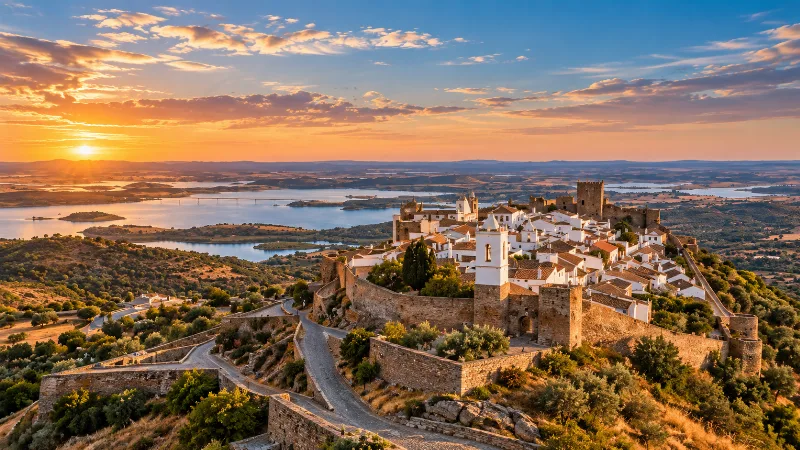
Alentejo
Discover Alentejo through Évora, whitewashed towns, cork-oak landscapes, vineyards, regional food and the broad rural interior of southern Portugal.
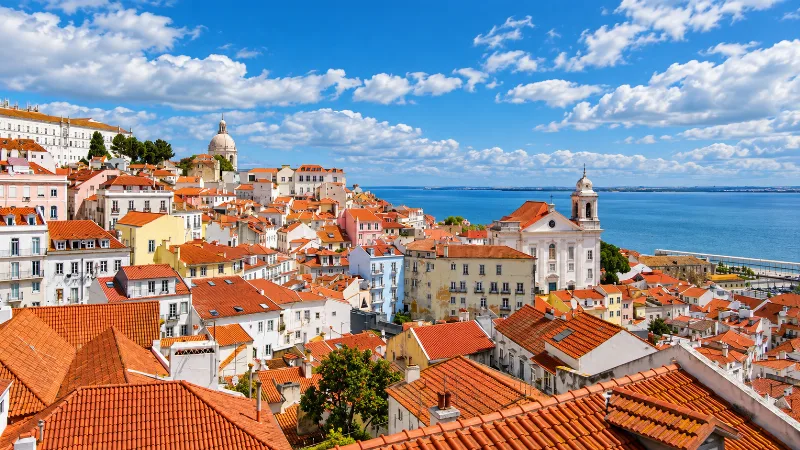
Lisbon
Portugal’s capital combines historic neighbourhoods, river views, tiled façades, viewpoints and an energetic everyday city life.
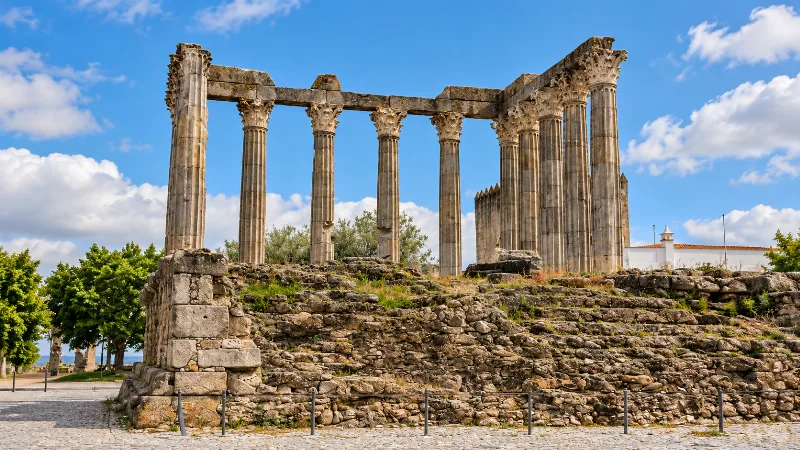
Évora
Évora is a historic Alentejo city of Roman remains, whitewashed streets, medieval walls, churches and a slower inland Portuguese rhythm.
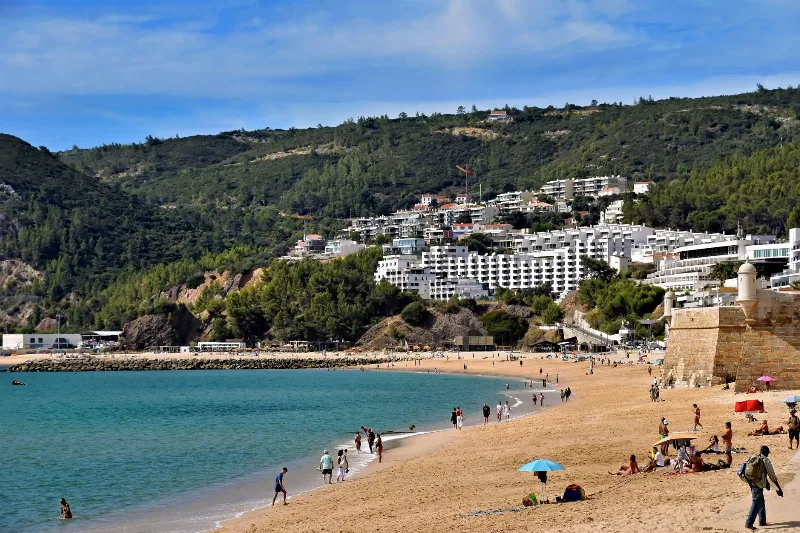
Best Regions to Visit in Portugal
Discover Portugal's most popular travel regions, from the historic cities of Lisbon and Porto to the beaches of Algarve, the countryside of Alentejo and the Atlantic islands.