
Horta
Horta, the main town of Faial in the Azores, is built around a sheltered bay that has served whalers, cable engineers and Atlantic sailors. Its compact centre, painted harbour wall and volcanic hinterland make it one of the central group's most distinctive ports.
Horta is the principal town of Faial, an island in the central group of the Azores, and it faces the narrow strait that separates Faial from Pico. Its bay, guarded by low volcanic cones, offers a harbour that has sheltered vessels for centuries — first whalers and packet ships, more recently yachts completing Atlantic crossings. Although small, the town is the administrative, commercial and cultural centre of the island and keeps a markedly maritime atmosphere.
Location and general character
The town stands at the eastern end of Faial, arranged around a curving bay and up the lower slopes behind it. The municipality of Horta covers roughly two thirds of the island and takes in rural parishes such as Flamengos, Cedros and Capelo as well as the urban parishes of Matriz, Conceição and Angústias. Around 14,000 people live in the municipality, most of them in the town itself. Horta is one of the three historic cities of the Azores, together with Ponta Delgada and Angra do Heroísmo, and its centre is easy to walk: the waterfront, the main square and the shopping streets can be covered in an afternoon. Houses are usually whitewashed, with dark basalt stonework framing doors and windows, and many streets are laid with cobbles that shine after rain.
History
Faial was settled in the fifteenth century, and Horta began as a small landing place on the island's protected eastern coast. Its early growth is often linked to Josse van Huerter, a Flemish nobleman who brought settlers from Flanders, and the town's name may derive from his family. By the close of the fifteenth century Horta held a town charter and a parish church, and it had already become the island's leading port.
The harbour's importance grew with transatlantic traffic. In the nineteenth century Horta supplied and repaired ships, and from 1893 it was a junction for submarine telegraph cables connecting Europe with North America. British, German and American cable companies kept staff in the town, and the quarter known as the Colónia Alemã still contains villas built for that community, with timber balconies and decorative tiles. The American consulate, held for many years by members of the Dabney family, looked after the interests of a busy transient population. The twentieth century brought change: shipping patterns shifted away from the islands, the eruption at Capelinhos between 1957 and 1958 reshaped the western end of Faial, and the earthquake of 9 July 1998 damaged buildings in the town and across the island, prompting a long programme of repair.
Architecture and townscape
Horta's buildings show the mix of Portuguese island traditions and outside influence typical of a port. The parish church of São Salvador has been rebuilt more than once after earthquakes and keeps a carved interior. Near the water, the Fort of Santa Cruz dates from the sixteenth century and once formed part of the town's defences. The Torre do Relógio, a clock tower surviving from an earlier religious house, rises above the older streets, while the former Jesuit college now houses the municipal museum. Along the shore, commercial buildings from the cable and shipping era sit beside ordinary townhouses with wooden balconies, small walled gardens and azulejo panels. The Teatro Faialense, a nineteenth-century playhouse, remains a landmark of civic ambition in a town of this size.
Natural surroundings
Faial is a volcanic island of about 173 square kilometres, and its interior rises to the Caldeira, a crater roughly two kilometres across and several hundred metres deep, ringed by laurisilva and ferns. At the eastern end, Monte da Guia and Monte Queimado form the twin cones that enclose the bay; the protected area around them includes a small chapel on the summit and paths looking down on the water. Porto Pim, a sheltered inlet below the town, has a modest beach of dark sand. The western peninsula, where the Capelinhos eruption added new land to the island, is windswept and almost bare of vegetation, in contrast to the blue hydrangea hedges that line the lanes of the central parishes and give Faial its nickname, the Blue Island. Dolphins and sperm whales are regularly seen offshore, and whale-watching boats leave from the marina throughout the season.
Local culture and everyday life
Daily life in Horta revolves around the harbour and the sea. Fishing boats still work from the smaller quays, and the town's cafés fill with sailors, islanders and visitors in equal measure. Peter Café Sport, open since 1918, has become a meeting point for crews crossing the Atlantic and holds a collection of scrimshaw — carvings made on whale teeth and bone — reflecting the whaling trade that dominated the island until the 1980s; the old whale-processing factory at Porto Pim is now an observatory devoted to the marine environment. Religious tradition remains visible in the festivals of the Holy Spirit, when small chapels known as impérios are decorated and neighbours share food, and in the processions that fill the streets on saints' days. In August the Semana do Mar brings sailing races, music and street stalls to the waterfront. Cheese from Faial, locally caught fish and figs are staples of the local table.
Notable places
The harbour wall is the town's best-known sight: thousands of paintings left by visiting crews cover the concrete and stone, each recording a boat, a date and a landfall. From there, a short walk leads to the main square, the public garden and the streets of the old centre.
- The marina and painted seawall — the focal point of the town and its sailing community.
- Peter Café Sport and its scrimshaw collection — a café and small museum in the heart of the port.
- Fort of Santa Cruz — sixteenth-century defences on the waterfront.
- Museu da Horta — housed in the former Jesuit college, covering the island's history and art.
- Porto Pim and Monte da Guia — bay, beach, fort and viewpoints within walking distance of the centre.
- The Caldeira — the island's central crater, reached by road from the town.
- Capelinhos — the 1957–58 eruption site, with its half-buried lighthouse and interpretation centre.
Nearby destinations
Pico lies about eight kilometres across the strait, and regular ferries link Horta with Madalena in around half an hour; the island's vineyards, a UNESCO World Heritage landscape, and the cone of Mount Pico, Portugal's highest peak at 2,351 metres, are visible from the Faial shore. São Jorge, with its long ridges and fajãs, can be reached by ferry from Horta or by air, and Terceira and Graciosa lie further east. On Faial itself, the village of Praia do Almoxarife has a dark-sand beach, Varadouro offers natural rock pools, and the lanes of Flamengos and Cedros show the island's rural side. Horta Airport, in the parish of Castelo Branco, has flights to Lisbon and to other islands in the archipelago.
Related content
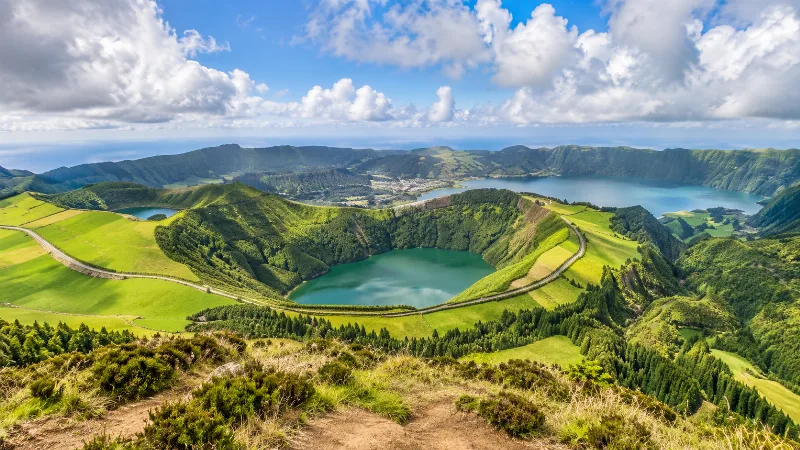
Azores
Discover the Azores through volcanic islands, crater lakes, green landscapes, Atlantic coastlines, hiking, wildlife and distinctive island communities.
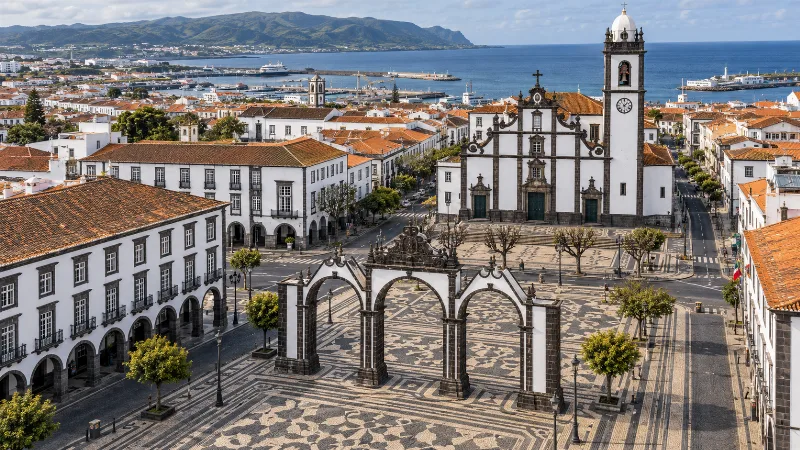
Ponta Delgada
Ponta Delgada is São Miguel’s main city, combining an Atlantic waterfront, volcanic-stone architecture, historic churches and access to the island’s lakes and geothermal landscapes.
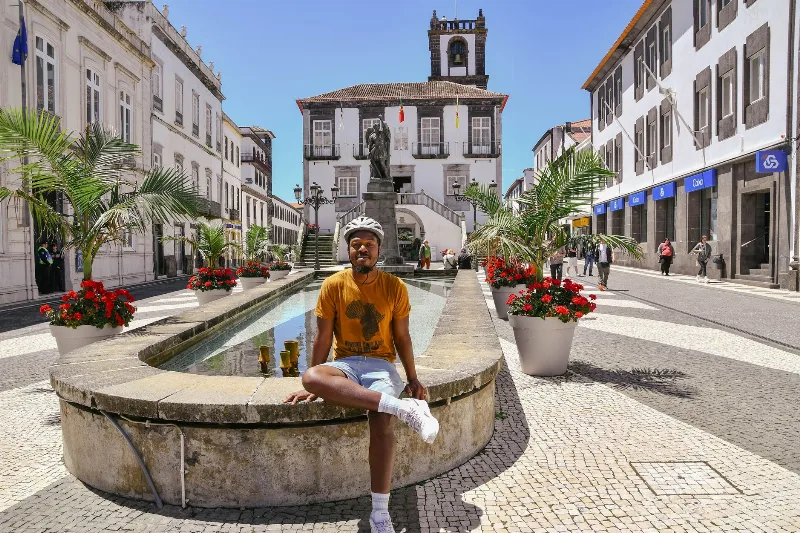
Ponta Delgada
The Azores' largest city spreads across a basalt terrace above a south-facing bay on São Miguel. This guide covers its harbour history, religious architecture, festivals and the volcanic hills that surround it.
Things to Do in Ponta Delgada
Explore things to do in ponta delgada with a practical guide to notable places, regional landscapes, local heritage and travel planning in Portugal.
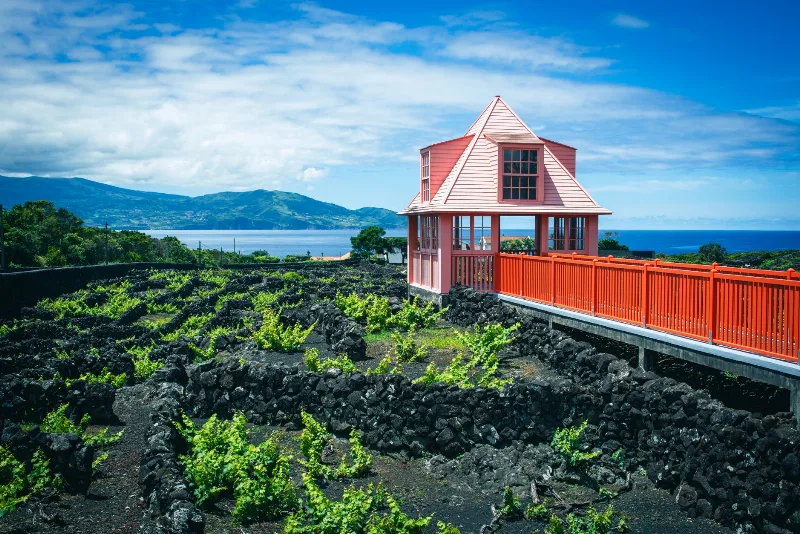
Madalena
Madalena is the ferry port and wine capital of Pico in the Azores, a basalt-built town facing Faial across a narrow channel, with UNESCO-listed vineyard walls, a whaling inheritance and one of Portugal's longest lava tubes just inland.
Mainland Portugal or the Islands?
Compare mainland Portugal, Madeira and the Azores according to travel time, transport arrangements and the experiences you want.