
Madalena
Madalena is the ferry port and wine capital of Pico in the Azores, a basalt-built town facing Faial across a narrow channel, with UNESCO-listed vineyard walls, a whaling inheritance and one of Portugal's longest lava tubes just inland.
Madalena occupies a low shelf of black basalt on the west coast of Pico, the second-largest island in the Azores, and for most visitors it is where a trip to the central group begins. The harbour looks directly across the Faial Channel to the neighbouring island, the streets rise in short terraces above the water, and behind the rooftops the cone of Mount Pico closes the view. This is a working town rather than a resort: a ferry terminal, a fishing quay, a wine cooperative and a compact centre where people still do their weekly shopping.
A Town Facing the Faial Channel
Pico is a long, narrow island, and Madalena sits at its western end, in the municipality of the same name. The concelho takes in the parishes of Bandeiras, Candelária, Criação Velha, Madalena, São Caetano and São Mateus, covering the north-western and western flanks of the island as well as the town itself. Madalena is the most populous parish on Pico and the island's administrative and commercial centre, with a municipal population of around six thousand.
The channel separating Pico from Faial is roughly eight kilometres wide at its narrowest point, and the ferry crossing to Horta takes about half an hour, with several sailings a day in summer and a reduced timetable in winter. Pico's own airport lies on the north coast about eight kilometres from the town, so arrivals by air and by sea both funnel through the same small centre. Montanha do Pico, at 2,351 metres the highest point in Portugal, stands inland and is visible from much of the town on clear days.
From Lugar dos Ilhéus to a Wine Town
The first settlement here grew up at Areia Larga, where a group of fishermen built thatched houses during the first half of the fifteenth century; the place was long known as Lugar dos Ilhéus before the name Madalena took hold. For two centuries it remained a scattered coastal village within the jurisdiction of Lajes, and its fortunes changed only when viticulture spread across the island's lava fields.
Religious orders, notably the Jesuits and the Carmelites, did much to establish the vineyards, introducing cultivation methods and the blending of grape varieties that produced the fortified verdelho wine for which Pico became known abroad. That trade passed through Horta and reached markets in Europe, Brazil and North America, enriching the landowning families who built the manor houses that still stand in the town. On 8 March 1723 a royal charter of João V raised Madalena to the status of vila, reflecting the wealth and population the wine trade had brought. The prosperity did not last: an outbreak of vine mildew from 1853 destroyed most of the vineyards, many smallholders lost their living, and emigration to New England and Brazil followed. Wine production continued on a smaller scale, and in the twentieth century the town's economy came to rest on dairy farming, fishing and services.
Architecture Built from Basalt
The town's buildings share a single palette. Walls are laid in dark volcanic stone, often left unrendered, and the roofs are covered in curved clay tiles. The Igreja de Santa Maria Madalena, the parish church facing the harbour ramp, was begun in the middle of the seventeenth century and completed within a couple of decades; its three naves rest on plain round arches, and the façade that now fronts it was added in 1891, the church being consecrated in 1931. Close by stand the eighteenth-century Paços do Concelho and the house of the capitão-mor, reminders of the period when Madalena was the island's only seat of civic administration.
The countryside is equally architectural. Dry-stone walls of loose basalt divide the land into hundreds of small enclosures, and among them stand small wine lodges, presses and storehouses built from the same stone. Shallow tidal wells, cut into the rock to collect fresh water seeping from the lava, once supplied the vineyards. Near Valverde and Bicadas, conical piles of stones cleared from the fields, known as maroiços, stand as a record of generations of back-breaking labour.
Vineyards, Lava Tubes and the Mountain
The vineyard landscape around Criação Velha and Santa Luzia was inscribed by UNESCO in 2004 as the Landscape of the Pico Island Vineyard Culture. Vines are planted in small hollows hacked out of solid lava and sheltered by walls built without mortar, forming a grid of curraletas that protects the plants from salt-laden Atlantic wind and spray. Walking the tracks through these enclosures, with the sea on one side and the mountain on the other, is the most distinctive experience the island offers.
Inland from Criação Velha, the Gruta das Torres is the longest known lava tube in Portugal, running for about 5,150 metres and reaching fifteen metres in height. It formed roughly 1,500 years ago from a flow issuing from Cabeço Bravo, and its floor and walls preserve lava stalactites, benches and ropy surfaces. Guided visits follow a section of about 450 metres. The island's volcanic geology continues upwards towards the summit cone, while the coast below the town offers rock platforms and small coves used for swimming, notably at Areia Larga.
Everyday Life and Local Traditions
Pico's whaling era shaped the island's coastal communities more than any other activity. From the 1870s islanders hunted sperm whales from open rowing boats, working the land for most of the year and going to sea when the animals passed; lookouts watched from cliff-top posts and signalled with rockets or a conch shell. The killing ended in 1987, and the principal museums of that history are at Lajes do Pico and São Roque do Pico rather than in Madalena, but many local families are descended from crews, the old skills survive in the whaleboat rowing races held each summer, and boats now leave Madalena's harbour to watch cetaceans in the channel instead of pursuing them.
Religious life remains visible throughout the year. Small chapels dedicated to the Holy Spirit, known as impérios, stand in the town and at Valverde, Cabo Branco and Sete Cidades, and their feast days in the summer bring processions, brass bands and shared meals. The grape harvest, the dairy herds that supply the island's cheese, and the fishing fleet still set the rhythm of the working week, and the town's population swells briefly whenever a ferry arrives.
Notable Places in and around the Town
- Museu do Vinho: part of the Museu do Pico, housed in a former Carmelite convent building and estate, with presses, stills and cellars explaining the history of island wine; a notable group of dragon trees grows beside it.
- Igreja de Santa Maria Madalena: the seventeenth-century parish church on the square above the port.
- Cooperativa Vitivinícola da Ilha do Pico: founded in 1949 and still the main producer, with restored stone wine stores in the lajidos.
- Moinho do Frade: an old windmill in Criação Velha, a landmark in the vineyard landscape.
- Gruta das Torres visitor centre: the starting point for guided walks into the lava tube.
- Areia Larga: the old fishing quarter north of the centre, with bathing spots along the rocks.
Across the Water and Along the Coast
The ferry from Madalena makes Horta, on Faial, an easy half-day excursion; its harbour, marina and the volcanic peninsula of Capelinhos are the obvious draws. On Pico itself, São Roque do Pico to the north has the old whaling factory, now a museum, and natural sea pools at Santo Amaro, while Lajes do Pico on the south coast holds the Museu dos Baleeiros and the island's surfing beaches. The road climbing from Madalena towards the summit ends at the Casa da Montanha, roughly 1,200 metres up, where the marked route to the top begins. Ferries from Cais do Pico also connect with Velas on São Jorge, completing the triangle of islands that share this stretch of the Atlantic.
Related content
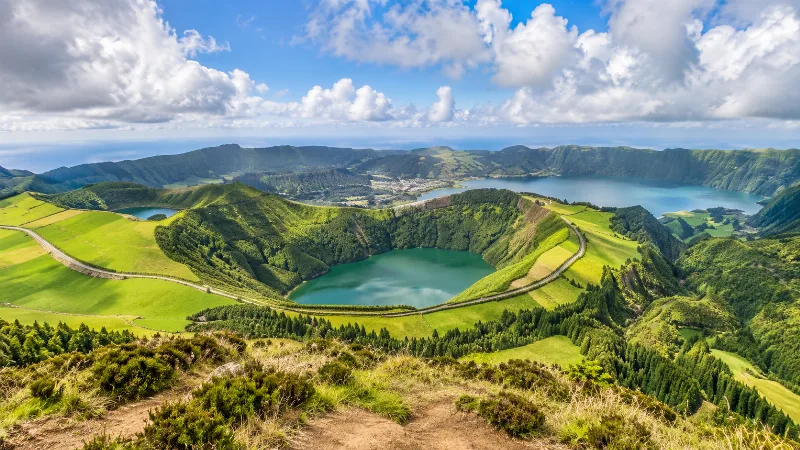
Azores
Discover the Azores through volcanic islands, crater lakes, green landscapes, Atlantic coastlines, hiking, wildlife and distinctive island communities.
Horta
Horta, the main town of Faial in the Azores, is built around a sheltered bay that has served whalers, cable engineers and Atlantic sailors. Its compact centre, painted harbour wall and volcanic hinterland make it one of the central group's most distinctive ports.
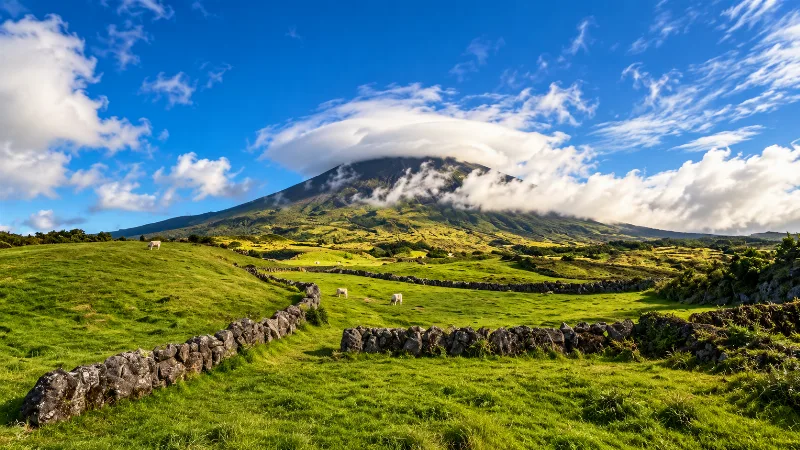
Pico Island
Pico Island combines Portugal’s highest mountain with volcanic coastlines, lava landscapes, vineyards, small settlements and expansive Atlantic scenery.
Pico Island Vineyard Culture and the Currais de Pedra
Pico Island's vineyard landscape is a hand-built mosaic of black basalt walls, raised over centuries to shelter grapes from Atlantic wind and salt spray on the Azores' young volcanic coast.
Discovering the Natural Landscapes of Pico Island
Explore discovering the natural landscapes of pico island with a practical guide to notable places, regional landscapes, local heritage and travel planning
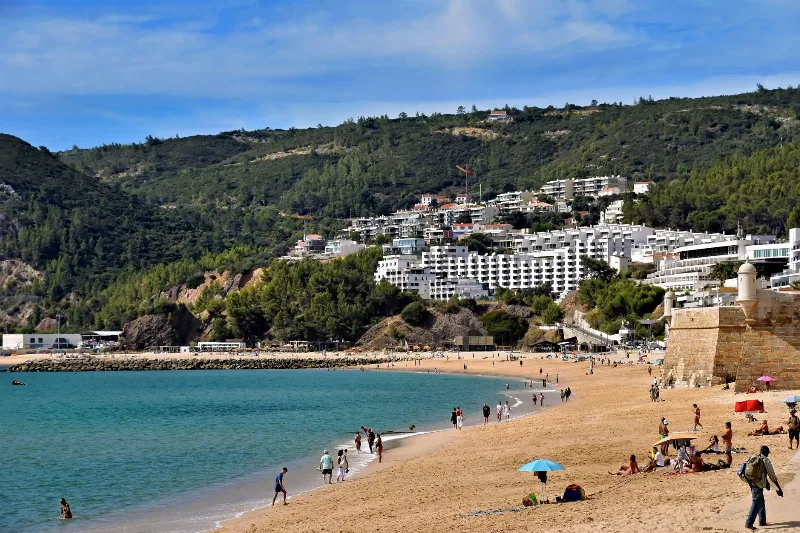
Best Regions to Visit in Portugal
Discover Portugal's most popular travel regions, from the historic cities of Lisbon and Porto to the beaches of Algarve, the countryside of Alentejo and the Atlantic islands.