
Pico Island Vineyard Culture and the Currais de Pedra
Pico Island's vineyard landscape is a hand-built mosaic of black basalt walls, raised over centuries to shelter grapes from Atlantic wind and salt spray on the Azores' young volcanic coast.
Pico is the second largest island in the Azores and the most dramatically shaped of the archipelago's central group, its interior filled almost entirely by the cone of Mount Pico, which rises to 2,351 metres and is the highest point in Portugal. Along the western coast, between Madalena and São Roque do Pico, the land takes on an appearance found nowhere else in the country: a dense mosaic of low black walls spread across the lava, so numerous that from a distance the coastline seems draped in a dark net. This is the Landscape of the Pico Island Vineyard Culture, inscribed on the UNESCO World Heritage List in 2004, and the walls at its heart are the currais de pedra, dry-stone enclosures built to shelter grapevines from the Atlantic.
A Vineyard Carved from Lava
The western coast of Pico is a broad lava field, the residue of eruptions that reached the sea and cooled into basalt. Soil is scarce, rainfall is uneven and the ocean wind arrives unchecked, carrying salt that scorches tender growth. When settlers began planting vines here from the fifteenth century onwards, they could not simply plough and sow. Instead they broke up the surface of the lava, prised out the loose stone and stacked it into walls, leaving small clearings in which a handful of vines could be planted directly into cracks and hollows in the rock.
The result is a landscape of extraordinary texture, in which the black of the basalt contrasts with the pale green of the vine leaves and the deep blue of the sea beyond. Because the ground is so broken, everything must be done by hand, and the vineyards have preserved a scale of cultivation that has all but vanished elsewhere in Europe.
How the Currais de Pedra Work
A curral is a small, roughly rectangular plot enclosed by walls built without mortar, each stone chosen and balanced against its neighbours. The walls are generally a metre or more in height and serve several purposes at once: they break the force of the prevailing wind, intercept salt spray, and absorb warmth during the day, releasing it slowly over the cool nights. The enclosures are also irregular in shape, following the contours of the lava rather than any formal plan, which gives the vineyard an organic, almost maze-like character.
Narrow paths thread between the walls, wide enough for a person carrying a basket but not for machinery. Scattered through the vineyards are small stone huts, known as palheiros, which provided shelter from sudden weather and storage for tools and produce. Many have been restored, and together with the walls they form part of the protected landscape rather than being incidental to it.
Verdelho and the Wines of Pico
Pico's most celebrated grape is Verdelho, a white variety that thrives in the warmth trapped by the stone and produces wines of marked acidity and mineral character. It is joined by Arinto dos Açores and the scarce Terrantez do Pico, along with a small quantity of red varieties grown in the same enclosures. Historically, Verdelho from Pico was fortified and shipped in quantity to Europe and the Americas, earning a reputation that carried it as far as the Russian imperial court in the eighteenth and nineteenth centuries.
Harvest takes place in late summer and is entirely manual. Grapes are cut cluster by cluster and carried in small baskets along the stone paths to collection points, a slow process dictated by the terrain. Fermentation and ageing traditionally took place in stone lagares and cellars close to the coast, some of which survive and are still used.
Decline, Revival and World Heritage Status
The vineyard economy of Pico faltered in the nineteenth century, first with the arrival of vine mildew and later with phylloxera, which devastated plantations across Europe. Many currais were abandoned, walls collapsed and vines were replaced by pasture or simply left to the elements. By the middle of the twentieth century, only a fraction of the historic vineyard remained in production.
Recovery began in the later decades of the century, when local growers and cooperatives replanted plots and restored walls, and the UNESCO inscription of 2004 gave the landscape formal recognition and a framework for conservation. Today the protected area takes in vineyards, villages, stone houses and the lava fields known locally as lajidos, and it is maintained largely through the continued work of the people who farm it.
Walking Among the Currais
The vineyards are best understood on foot. Marked paths link Madalena with the older settlement of Criação Velha and the hamlet of Lajido da Criação Velha, where dark stone houses with brightly painted window frames stand close to the sea. The walking is easy but uneven, and the views shift constantly: Mount Pico behind, the channel and the neighbouring island of Faial ahead, and the geometry of walls in every direction. Near the shore there are the remains of tide mills that once served the estates, a reminder that this coast has long depended on the sea as much as on the vine.
Late summer, when the fruit is ripening and the paths are dry, is the most rewarding time to see the landscape at work, though the currais themselves, built to last, are legible in any season.
Related content
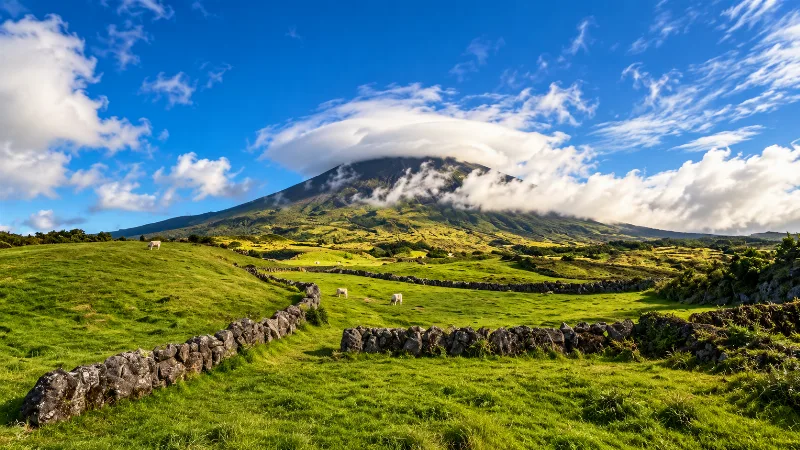
Pico Island
Pico Island combines Portugal’s highest mountain with volcanic coastlines, lava landscapes, vineyards, small settlements and expansive Atlantic scenery.
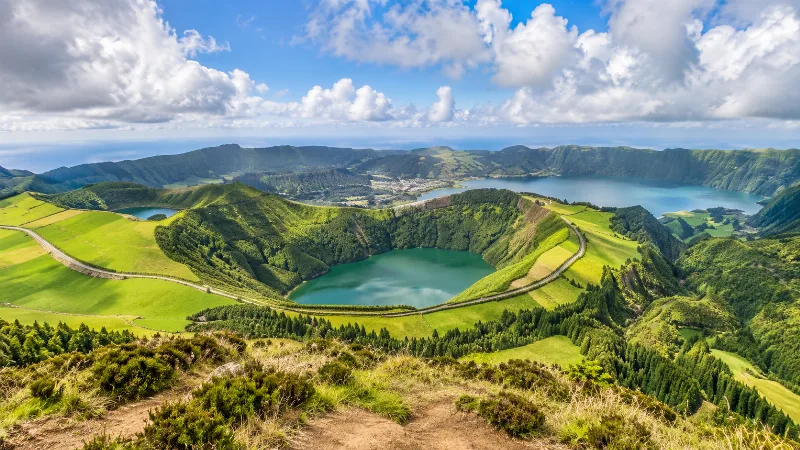
Azores
Discover the Azores through volcanic islands, crater lakes, green landscapes, Atlantic coastlines, hiking, wildlife and distinctive island communities.
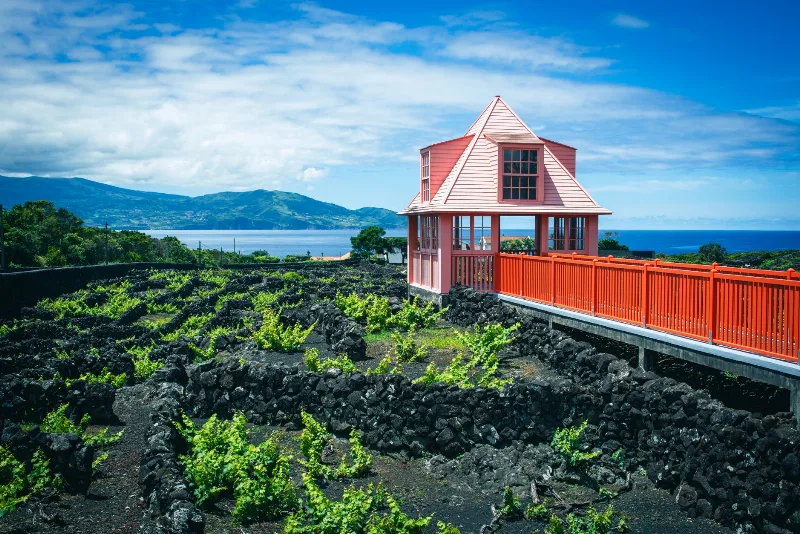
Madalena
Madalena is the ferry port and wine capital of Pico in the Azores, a basalt-built town facing Faial across a narrow channel, with UNESCO-listed vineyard walls, a whaling inheritance and one of Portugal's longest lava tubes just inland.
Discovering the Natural Landscapes of Pico Island
Explore discovering the natural landscapes of pico island with a practical guide to notable places, regional landscapes, local heritage and travel planning
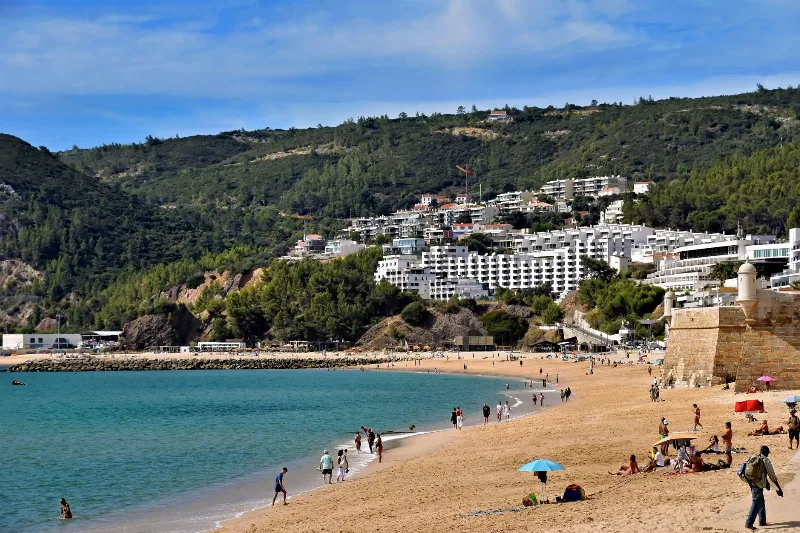
Best Regions to Visit in Portugal
Discover Portugal's most popular travel regions, from the historic cities of Lisbon and Porto to the beaches of Algarve, the countryside of Alentejo and the Atlantic islands.
Horta
Horta, the main town of Faial in the Azores, is built around a sheltered bay that has served whalers, cable engineers and Atlantic sailors. Its compact centre, painted harbour wall and volcanic hinterland make it one of the central group's most distinctive ports.
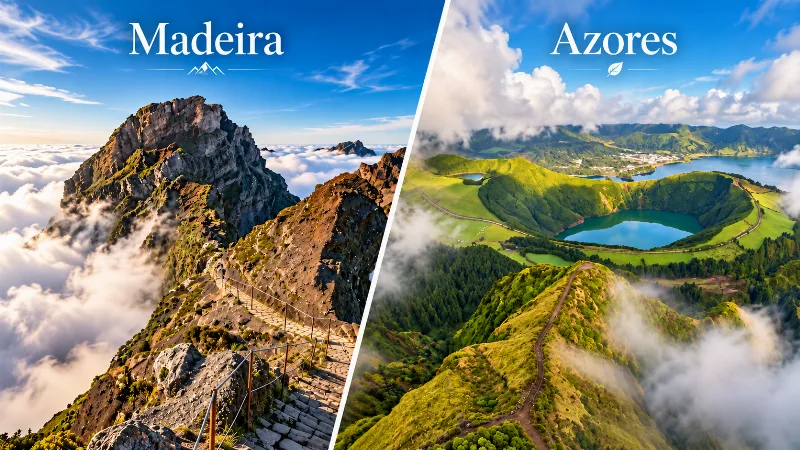
Madeira or Azores: Which Islands Should You Choose?
Madeira and the Azores offer very different Atlantic island experiences, from hiking and volcanic scenery to weather, transport, towns and travel style.
Pico do Arieiro to Pico Ruivo Mountain Trail
A guide to the high-level walking route between Pico do Arieiro and Pico Ruivo in Madeira, where volcanic ridges, cloud inversions and endemic plants shape one of Portugal's finest mountain journeys.