
Pico do Arieiro to Pico Ruivo Mountain Trail
A guide to the high-level walking route between Pico do Arieiro and Pico Ruivo in Madeira, where volcanic ridges, cloud inversions and endemic plants shape one of Portugal's finest mountain journeys.
The trail between Pico do Arieiro and Pico Ruivo is one of Madeira’s defining mountain walks. Linking two of the island’s highest summits, it follows a high ridge through the central massif, where volcanic peaks rise above cloud and the Atlantic stretches beyond the horizon. For Madeira hiking, few routes offer such sustained exposure to the island’s rugged interior or such a clear sense of scale.
A High Ridge Across Madeira’s Central Massif
Pico do Arieiro stands at 1,818 metres and Pico Ruivo at 1,862 metres, making the latter the highest point on Madeira. The route between them is a Madeira mountain trail in the truest sense: a narrow, engineered path that traverses ridges, skirts deep ravines and passes beneath Pico das Torres, the island’s second-highest peak. Much of the walking is on carved steps and natural rock, with short tunnels cut through the mountain and sections protected by handrails. The route is usually walked in one direction, although it can be followed either way, and it forms part of the high-level network within Madeira Natural Park.
Volcanic Scenery and Cloud Inversions
The landscape is overwhelmingly volcanic. Dark basalt and reddish tuff form jagged crests, while steep gullies drop toward the greener valleys far below. On clear days, views reach across the central mountains and down to the Curral das Freiras valley, a deep bowl enclosed by sheer walls. Cloud often settles beneath the ridge, producing inversions in which the highest summits appear as islands above a white sea. Early morning and late afternoon light can sharpen the contrast between rock, cloud and sky, but conditions change quickly at this altitude. The trail’s exposure is part of its character: walkers feel the scale of the mountains with every rise and fall.
Plants and Wildlife of the High Mountains
Despite the harsh conditions, the high ground supports specialised vegetation. Low shrubs, mosses and lichens cling to sheltered ledges, and endemic plants adapted to wind and cold appear among the rocks. The open terrain is also a good place to look for Berthelot’s pipit, a small bird associated with Madeira’s uplands, as well as for lizards warming themselves on sunny stones. Because the route lies within a protected natural park, the landscape is managed to conserve both its geological features and its fragile plant communities. Walkers can help by staying on the path and avoiding damage to the vegetation.
Walking the Route
The route is demanding rather than merely scenic. It involves sustained ascent and descent, steep steps, narrow passages and unlit tunnels, so sturdy footwear and a torch are useful. Weather can shift from bright sunshine to strong wind and mist within a short time, and temperatures are cooler than on the coast. Carrying water, food and a windproof layer is sensible, and walkers should allow several hours to complete the traverse at a steady pace. The reward is a continuous sequence of views and a close look at the volcanic architecture of Madeira’s highest ground. For anyone seeking a challenging but memorable day on foot, the Pico do Arieiro to Pico Ruivo route remains one of Portugal’s most distinctive mountain experiences.
Related content
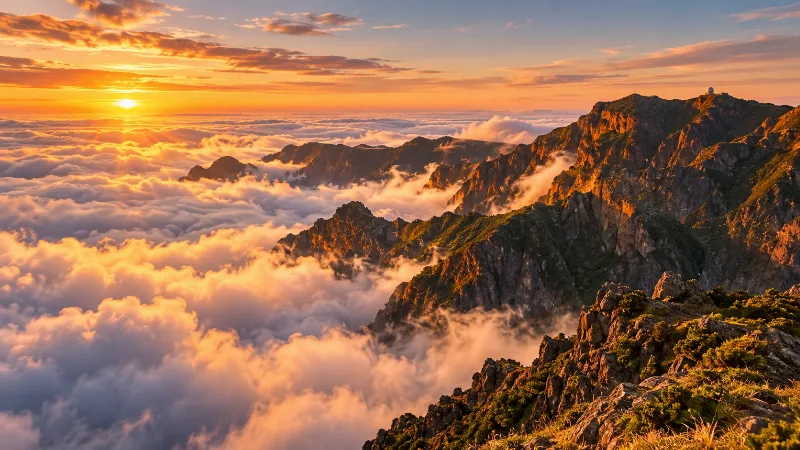
Madeira
Explore Madeira through Funchal, dramatic mountains, levada walks, subtropical gardens, volcanic coastlines and distinctive Atlantic island landscapes.
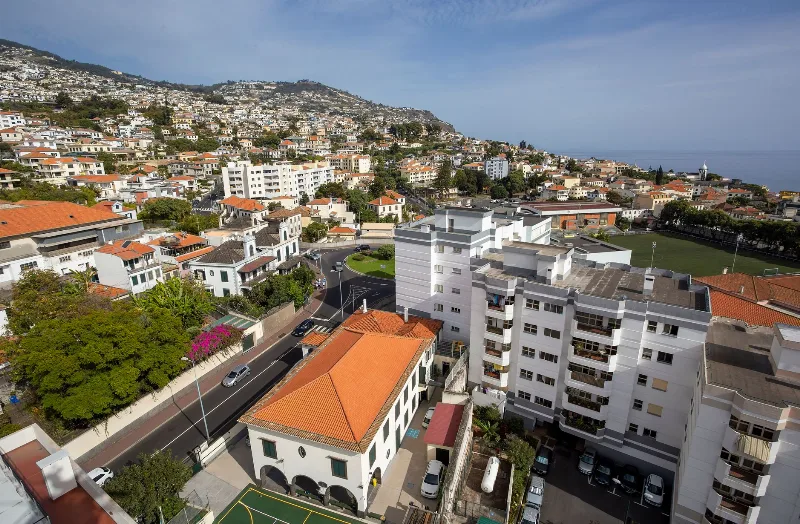
Funchal
Funchal, Madeira's capital, spreads from its Atlantic harbour up the slopes of a volcanic amphitheatre, combining a working port and historic quarters with gardens, wine lodges and access to the island's levada walks.
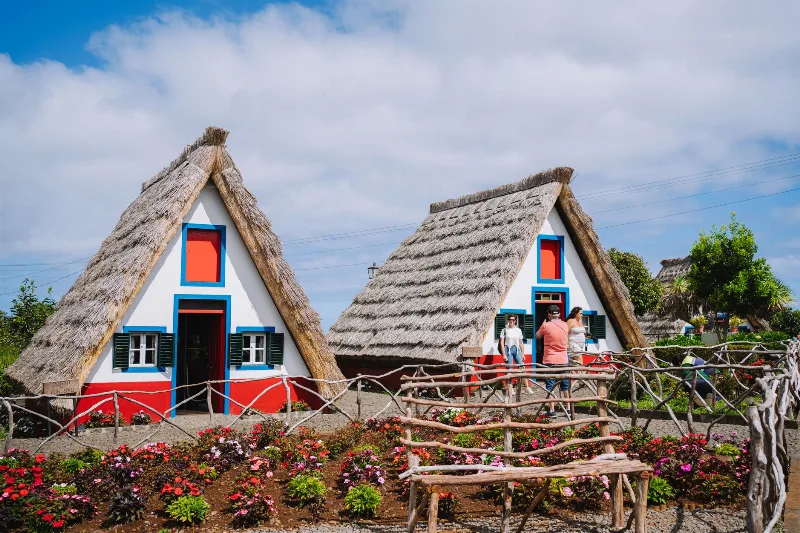
Santana
Santana is a town on Madeira's north coast, known for its steep-roofed thatched houses and for the mountains that rise directly behind it. It is a working Portuguese town rather than a resort, surrounded by terraced fields and laurel forest.
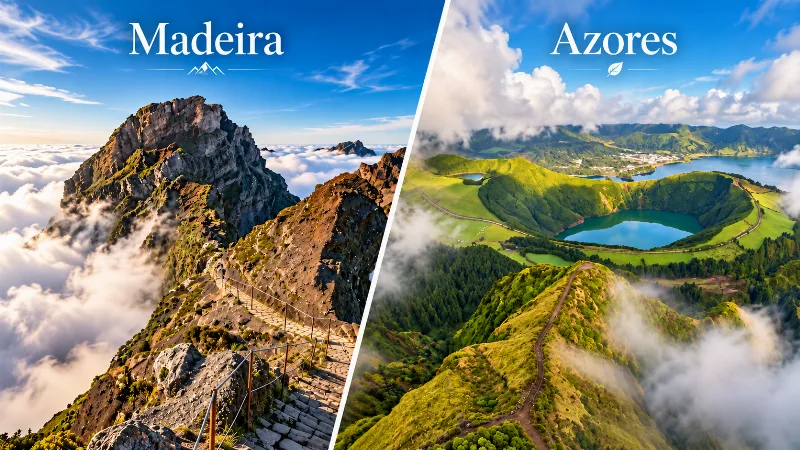
Madeira or Azores: Which Islands Should You Choose?
Madeira and the Azores offer very different Atlantic island experiences, from hiking and volcanic scenery to weather, transport, towns and travel style.
Discovering the Natural Landscapes of Pico Island
Explore discovering the natural landscapes of pico island with a practical guide to notable places, regional landscapes, local heritage and travel planning
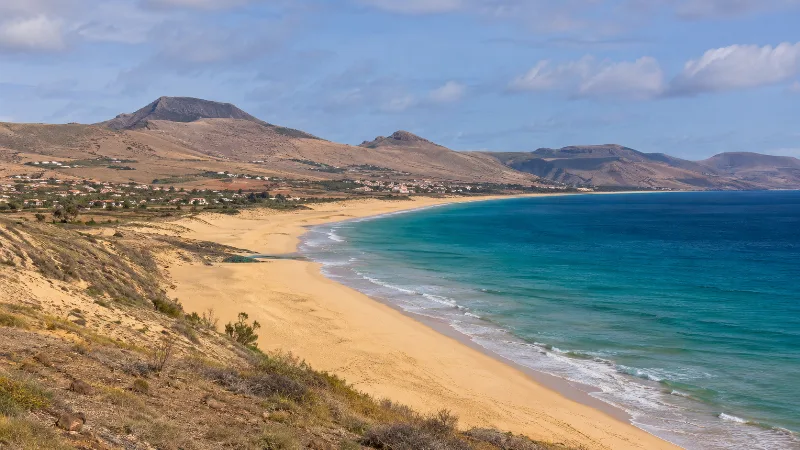
Porto Santo – Golden Sands and Volcanic Hills
Porto Santo combines a long sandy beach with dry volcanic hills, coastal viewpoints and open Atlantic scenery in the Madeira archipelago.
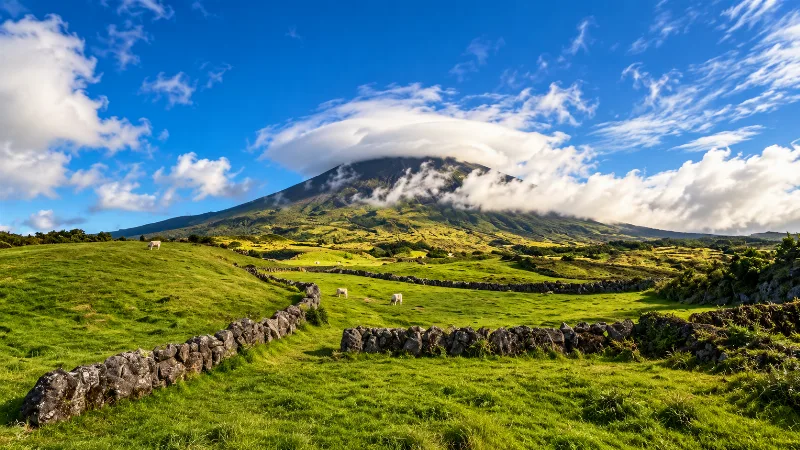
Pico Island
Pico Island combines Portugal’s highest mountain with volcanic coastlines, lava landscapes, vineyards, small settlements and expansive Atlantic scenery.
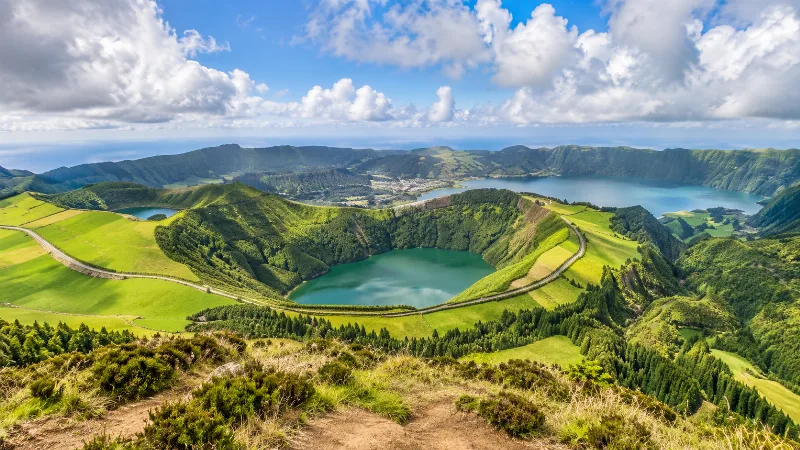
Azores
Discover the Azores through volcanic islands, crater lakes, green landscapes, Atlantic coastlines, hiking, wildlife and distinctive island communities.