
Viseu
A granite city in the Beira Alta of north-central Portugal, Viseu combines an old cathedral quarter, a national museum devoted to Renaissance painting and a position at the heart of the Dão wine region.
Viseu is a city in the Beira Alta, the upland belt of north-central Portugal, and the capital of the district that carries its name. It occupies a broad granite plateau at around 480 metres above sea level, between the Mondego valley to the south and the Dão valley to the north, and much of the historic centre is still paved in granite setts that give the streets a pale grey sheen in strong sunlight. The city is the administrative and commercial focus of the Dão-Lafões sub-region, and its centre is compact enough to cross on foot in about twenty minutes.
Location and general character
Viseu municipality covers just over 500 square kilometres and has a population of roughly 100,000, about half of whom live in the city itself. The built-up area occupies a hilltop and the slopes beneath it, with two principal public spaces: the Rossio, a broad square of cafés and shops in the lower town, and the Adro da Sé, the paved churchyard that forms the ceremonial heart of the upper town. Motorways link Viseu with Aveiro and the coast to the west, Guarda and the Spanish border to the east, and Porto to the north-west, while Coimbra lies about ninety kilometres away on older roads. The climate is Mediterranean in character but distinctly continental at this altitude, with hot, dry summers, wet winters, frequent frosts and occasional snow on the higher ground around the city.
History
The plateau has been settled for a very long time. Rural parishes within the municipality contain megalithic tombs and rock-cut graves, and the hilltop itself shows traces of prehistoric and Roman occupation. North-east of the centre lies the Cava de Viriato, a large octagonal earthwork whose name recalls Viriathus, the Lusitanian leader who resisted Rome in the second century BC, although its actual date and purpose remain disputed among archaeologists. A bishopric existed here by the sixth century, and the town passed through Suebi and Visigothic hands before the Islamic period and its eventual incorporation into the Kingdom of León in the eleventh century. Viseu received a charter in 1123 and a revised one from King Manuel I in 1513. Its medieval walls were later dismantled, and only the Porta do Soar survives as a reminder of the fortified perimeter. The city expanded beyond its old limits in the eighteenth and nineteenth centuries, and the founding of the Polytechnic Institute in 1979 reinforced its role as a regional centre for education and services.
Architecture and the cathedral
The Sé de Viseu dominates the upper town. Begun in the twelfth century and substantially rebuilt in the following two hundred years, it combines a Romanesque core with Gothic additions, a sixteenth-century Manueline ribbed vault over the nave and a facade flanked by two towers. Inside, the painted retable and panels associated with Vasco Fernandes, the Renaissance painter known as Grão Vasco, are among the most important works of Portuguese art of the period, and the Gothic cloister opens onto a quiet arcaded courtyard. Beside the cathedral, the former bishop's palace now houses the national museum dedicated to the painter and his circle. Below the Adro da Sé, the Misericórdia church preserves a mannerist portal, and several baroque churches and nineteenth-century civic buildings fill the streets between the two main squares. Domestic architecture is sober: granite walls, dark window surrounds, wrought-iron balconies and occasional panels of azulejo tiles.
Natural surroundings
Viseu sits in a landscape of rounded granite hills, small rivers and farmland. The Pavia stream runs close to the city, and the Dão and Mondego drain the valleys on either side of the plateau. Vineyards, maize, olive trees and orchards of apples and chestnuts cover the slopes, with oak and pine woods on the higher ridges. To the south-west rises the Serra do Caramulo, a granite range popular for walking and viewpoints, while the higher Serra da Estrela lies further to the south-east. Within the city, the Parque Aquilino Ribeiro provides a central garden with water and shade, and the wooded Mata do Fontelo on the eastern edge combines parkland with sports facilities. Winters are cool and damp, springs are green and long, and summer brings dry heat that turns the surrounding fields pale.
Local culture
Wine is central to the identity of the area. The Dão region surrounds the city, its vines grown on granite and schist soils at altitude and producing reds from Touriga Nacional, Jaen and Alfrocheiro alongside white wines from Encruzado and Malvasia. Small quintas and cooperatives in the neighbouring parishes open their doors for tastings, and wine bars in the centre serve local bottles with regional cheeses and cured meats. Viseu also holds one of the oldest annual fairs in the country, the Feira de São Mateus, documented since the late fourteenth century and held each September with livestock, crafts, music and food stalls. The painter Grão Vasco remains a civic figurehead, represented by a monument in the city, and the story of Viriathus gives the town a historical emblem that appears in local names and celebrations. Day-to-day life follows the rhythms of a provincial service centre: markets, parish festivals, a university-level student population and long lunches in the squares.
Notable places
Nearby destinations
The surrounding region offers several worthwhile excursions. Caramulo, in the hills to the south-west, has a museum of vintage cars and art in a former sanatorium setting, and the mountain roads above it give wide views over the plateau. São Pedro do Sul, to the north, is a spa town with warm mineral springs used since Roman times. Lamego, further north beyond the Douro, has its own cathedral and the baroque stairway of the Santuário de Nossa Senhora dos Remédios. The wine villages around Nelas, Mangualde, Penalva do Castelo and Vouzela sit among vineyards and can be visited along marked wine routes. Coimbra, with its historic university, and the Serra da Estrela, with Portugal's highest mainland peaks, are both feasible as longer day trips from Viseu.
Related content
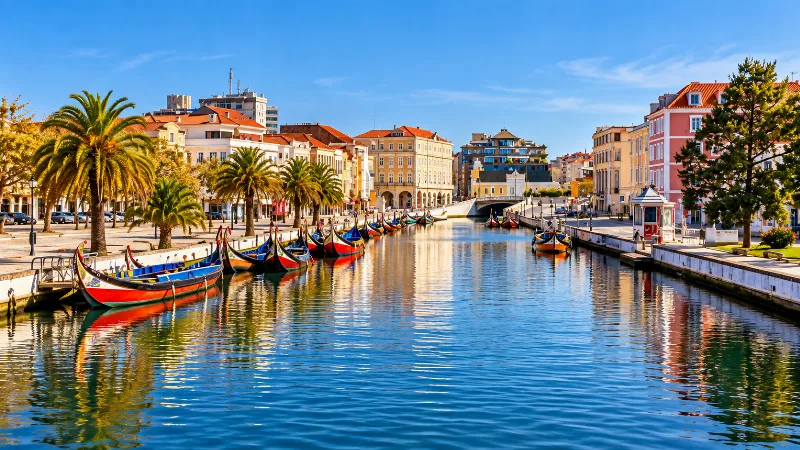
Aveiro
Aveiro is a small coastal-region city with canals, Art Nouveau details, colourful boats and easy access to lagoons and Atlantic landscapes.
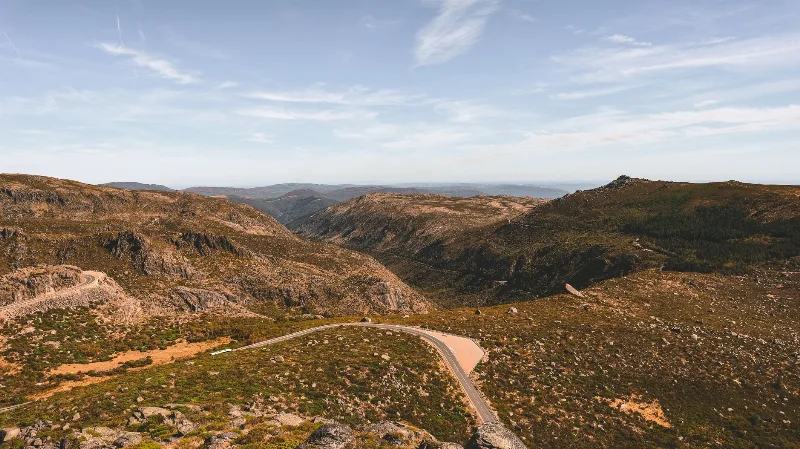
Guarda
Guarda is Portugal's highest city, set on a granite plateau beside the Serra da Estrela. This guide looks at its medieval streets, Gothic cathedral, Jewish heritage and mountain surroundings.
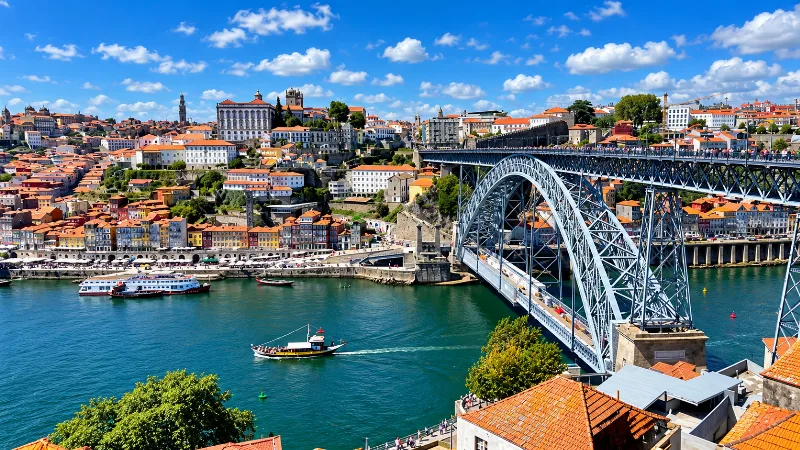
Porto
Porto is a compact northern city of steep streets, granite architecture, riverfront views, historic districts and strong local character.
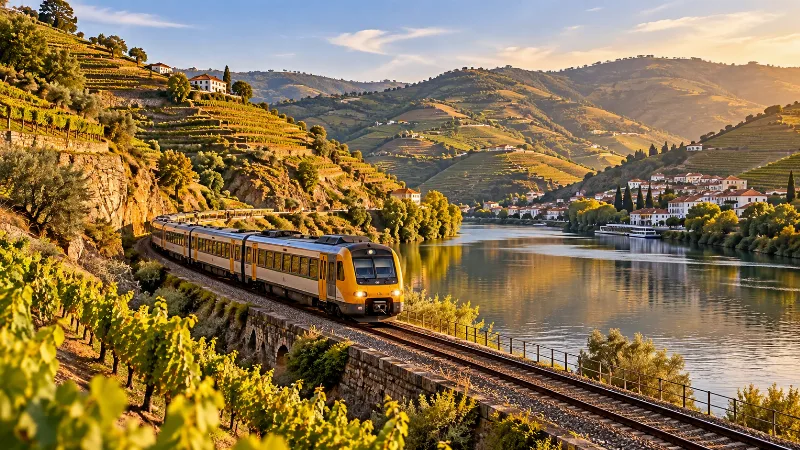
Portugal by Train
Portugal’s rail network connects many major cities and provides a comfortable way to travel between Lisbon, Porto, Coimbra, Braga, Aveiro and the Algarve.