
Guarda
Guarda is Portugal's highest city, set on a granite plateau beside the Serra da Estrela. This guide looks at its medieval streets, Gothic cathedral, Jewish heritage and mountain surroundings.
Guarda is the main city of Portugal's Beira Interior and, at roughly 1,050 metres above sea level, the highest city in the country. It occupies a wide granite plateau in the district that carries its name, with the Serra da Estrela rising to the west and the valley of the Côa opening towards the east. The altitude shapes almost everything here: the air is sharp, winter brings frost and occasional snow, and the skyline of stone towers and grey façades appears to grow straight out of the rock.
A plateau city above the Côa valley
Guarda is a city of around 25,000 people within a municipality of roughly 40,000, and it functions as the administrative and service centre for a large, thinly populated inland region. As district capital it holds the courts, the main hospital and the offices of regional government, while the Polytechnic Institute and its associated schools give the place a younger, more studious edge than its austere appearance suggests. The older streets crowd together on the highest ground, while newer development spreads across the flatter land to the north and east. The A23 motorway links the city with Covilhã and the Spanish border at Vilar Formoso, and the Beira Alta railway passes below the town, connecting it with Coimbra and the coast.
From frontier watch to district capital
The name means "guard", and the settlement began as exactly that: a defended point on a contested border. King Sancho I granted Guarda a charter in 1199, and tradition holds that the population was moved from a nearby hilltop to the present, more defensible site. A bishopric was established in the early thirteenth century, which gave the town a cathedral chapter, clergy and a modest cultural life far from the coast. Once the frontier with Castile was settled in the late thirteenth century, Guarda lost much of its strategic urgency, yet it remained the natural market and administrative centre for the shepherds and farmers of the surrounding plateau. Its later history is quieter but not empty: the bishopric endured, the walls were repaired during the Restoration Wars of the seventeenth century, and in the nineteenth century the town became the seat of a district. Large-scale emigration to France and Switzerland in the twentieth century left its mark on families and on the housing stock, and remittances helped to rebuild parts of the centre.
Granite, Gothic and the cathedral
Almost every historic building in Guarda is made of local granite, which gives the old town a uniform, slightly severe colour and a very solid feel. The focal point is the Sé da Guarda, begun around 1390 and worked on across several centuries. Its west front carries a deeply carved portal, its interior is broad and restrained, and the building shows a clear shift from Gothic forms towards Manueline decoration in the later chapels and doorways. Around it, the medieval street pattern survives largely intact. Squared towers at intervals along the old perimeter recall the town walls, the most visible being the Torre dos Ferreiros, and the arcaded Praça Velha remains the historic heart of civic life. The churches of São Vicente and the Misericórdia, the former episcopal palace and a scatter of houses with wrought-iron balconies and carved stone lintels fill in the picture. Twentieth-century additions, including the polytechnic buildings and the hospital, sit discreetly on the edges rather than intruding on the old centre.
The Serra da Estrela and the surrounding plateau
West of the city, the Serra da Estrela rises to Torre at 1,993 metres, the highest point in mainland Portugal, within a natural park created in 1976. The range holds glacial valleys, notably around the Zêzere, and the springs of the Mondego. From Guarda, the mountain is a constant presence: it dictates the weather, sends cold winds down onto the plateau and draws walkers and winter visitors. The landscape immediately around the city is one of open granite country, broken by drystone walls, olive and holm oak, broom and patches of Pyrenean oak, with rye fields and grazing land between. To the east and north-east, the land falls away towards the Côa, a tributary of the Douro, in whose gorge some of Europe's most important Palaeolithic rock engravings have been recorded.
Jewish heritage, fairs and everyday life
Guarda held a significant Jewish community in the Middle Ages, clustered in its own quarter close to the castle, and the city is known among historians for a group of medieval Hebrew inscriptions recovered from its soil. Street names and interpretive displays keep that memory alive. The city's biggest regular event is the Feira de São Mateus, held each September and rooted in a fair granted in the medieval period; it mixes livestock and agricultural trade with concerts and a funfair. Everyday life follows the rhythm of an inland provincial capital: markets, school runs, churchgoers and students, and a diet built on mountain produce. Sheep's milk cheese made with cardoon thistle in the Serra da Estrela style, rye bread, kid goat, cured pork and hearty bread soups appear regularly on local tables, and the cold winters make them welcome.
Places to see in the city
Beyond the cathedral, the Museu da Guarda occupies the former episcopal palace and gathers archaeology, religious art, painting and epigraphy, including material relating to the Jewish community. The Paço da Cultura stages exhibitions and concerts in a converted historic building, and the surrounding lanes of the old Judiaria reward slow walking for their scale and stonework. The city gates and surviving stretches of wall can be traced on foot, and the belvederes near the highest points of the centre look out over the plateau towards the mountain. On clear days the view extends across the Côa basin, giving a strong sense of how exposed and how strategically placed this settlement has always been.
Towns and landscapes within reach
Guarda makes a practical base for the historic villages of the Beira interior, several of which are among the best preserved in Portugal. Sortelha, granite and walled, and Linhares da Beira, with its castle on a ridge, lie to the south-west, while Belmonte, known for its long-standing Jewish presence, and Trancoso, a medieval town with a castle, sit to the north. Almeida, further north-east near the border, is enclosed by an elaborate star-shaped fortress. To the west, Manteigas, Seia and Gouveia open the way into the Serra da Estrela, and Celorico da Beira is associated with the region's sheep's cheese. The Côa valley, with its rock art and riverside paths, lies within easy driving distance for a day out.
Related content
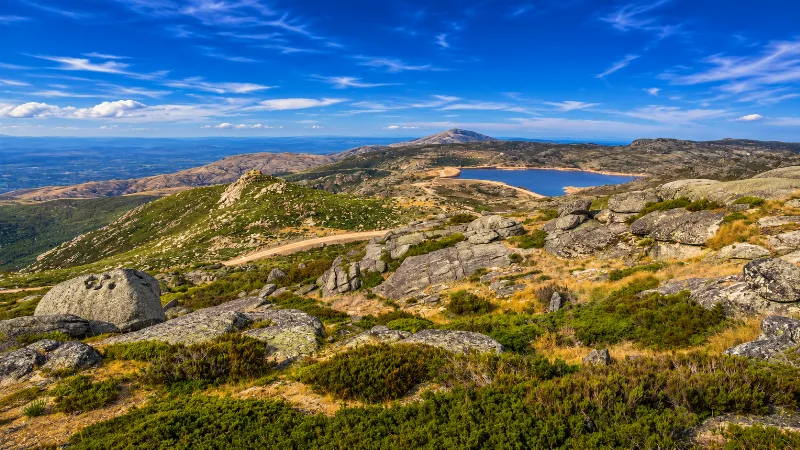
Serra da Estrela
Serra da Estrela is mainland Portugal’s highest mountain range, with granite plateaus, glacial valleys, villages, hiking routes and dramatic seasonal weather.
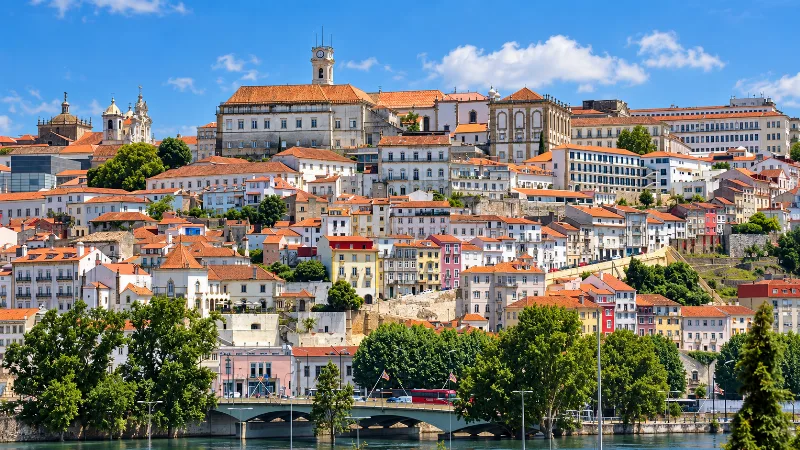
Coimbra
Coimbra combines Portugal’s oldest university traditions with a compact historic centre, river views, medieval streets and a student atmosphere.
The Mondego River Valley from Serra da Estrela to Coimbra
The Mondego is Portugal's longest river to rise and finish entirely within the country, linking the granite heights of Serra da Estrela with the Atlantic at Figueira da Foz. Its valley passes through mountain scenery, wooded gorges, historic towns and a wide agricultural plain.
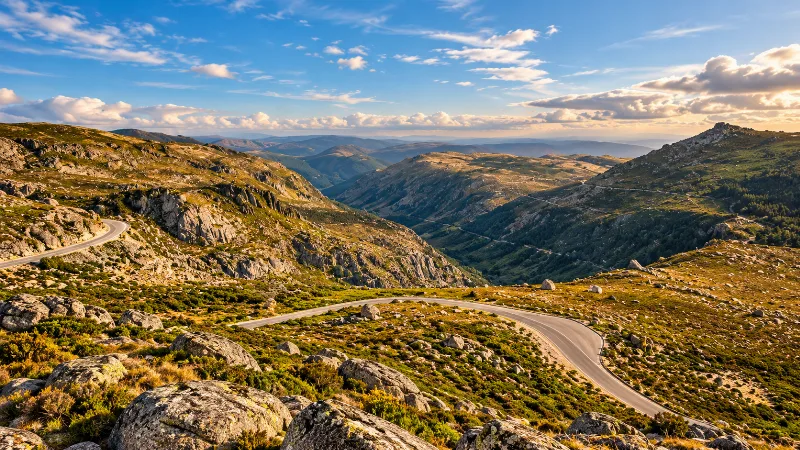
Central Portugal
Discover Coimbra, Aveiro, Serra da Estrela, Atlantic landscapes, mountain villages and the varied historic and natural scenery of central Portugal.
Serra da Estrela Granite Landscape and Glacial Valley
The highest ground in mainland Portugal is a weathered granite massif where ice once carved cirques, trough valleys and moraines. The Zêzere valley preserves some of the clearest glacial scenery in the country.
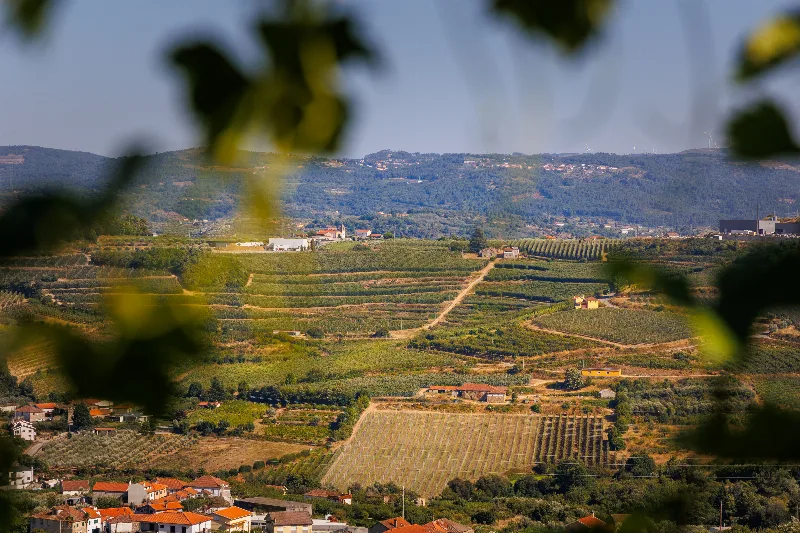
Viseu
A granite city in the Beira Alta of north-central Portugal, Viseu combines an old cathedral quarter, a national museum devoted to Renaissance painting and a position at the heart of the Dão wine region.