
The Mondego River Valley from Serra da Estrela to Coimbra
The Mondego is Portugal's longest river to rise and finish entirely within the country, linking the granite heights of Serra da Estrela with the Atlantic at Figueira da Foz. Its valley passes through mountain scenery, wooded gorges, historic towns and a wide agricultural plain.
The Mondego is the longest river that rises and ends entirely within Portugal, covering roughly 234 kilometres from the western slopes of Serra da Estrela to the Atlantic at Figueira da Foz. Its course crosses a surprising range of landscapes: bare granite uplands, terraced vineyards and pine woods, steep wooded gorges, the old university city of Coimbra, and finally a broad alluvial plain where rice has been grown for centuries. Because the river connects so many distinct regions, the Mondego River valley works as a useful thread for understanding central Portugal as a whole.
The source and upper course in Serra da Estrela
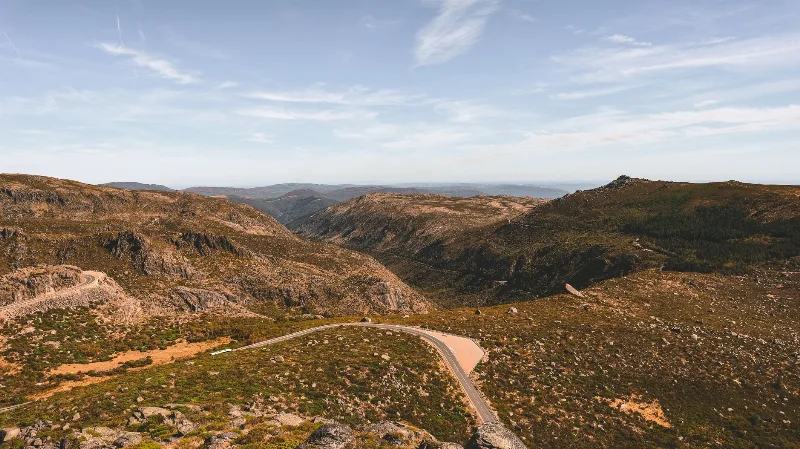
The river begins high on the western side of Serra da Estrela, at around 1,400 metres above sea level, in the district of Guarda. The area is one of granite boulders, thin soils and low shrub, grazed by sheep in summer and covered in snow for part of the winter. Small streams fed by springs and meltwater gather in shallow valleys before forming a recognisable river above Celorico da Beira.
In this upper stretch the Mondego is a fast, clear and cold river, running over rock slabs and forming pools that local people have long used for swimming in warm weather. The surrounding hillsides carry the terraces and smallholdings typical of the Beira Alta interior, along with chestnut, oak and broom. This is also the country of Serra da Estrela cheese, made from the milk of the region's sheep, a product closely tied to the seasons and pastures of the uplands.
Through the Beira interior and the reservoir country
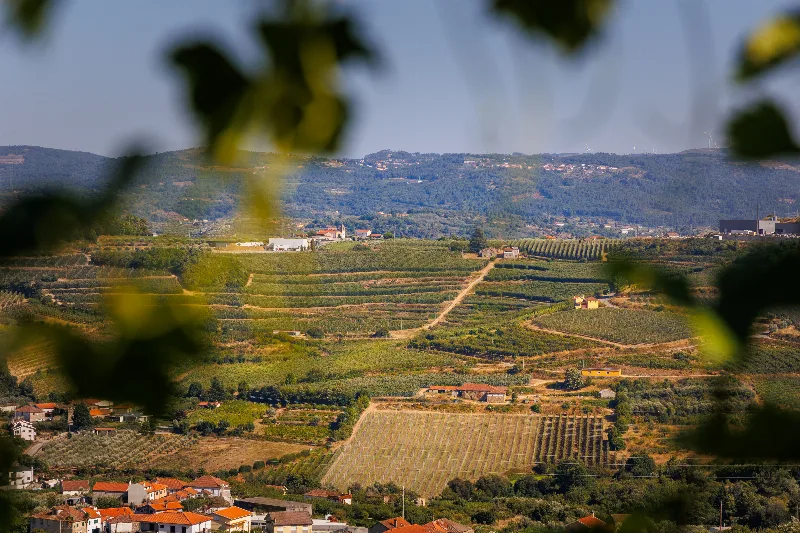
Past Celorico da Beira and Fornos de Algodres the valley opens out, the river slows, and the landscape becomes a patchwork of fields, orchards and pine forest. Towns such as Mangualde, Nelas and Carregal do Sal sit near the water on gentle slopes, while vines climb the hillsides of the surrounding Dão region.
Further downstream the river is joined by tributaries including the Dão, the Alva and, nearer Coimbra, the Ceira. Dams on this middle section have created long, narrow reservoirs, the largest being the Aguieira reservoir, which holds back a considerable body of water in a folded landscape of wooded headlands and quiet inlets. These artificial lakes now shape the character of the valley, providing water for irrigation and power while offering calm water for sailing and canoeing.
Penacova and the wooded gorge
Between the Dão confluence and Coimbra the Mondego cuts through a striking gorge, squeezing between steep slopes of pine, eucalyptus and rock. Penacova, built on the ridge above the river, is the best-known viewpoint over this section, with cliff-top terraces giving long views of the water far below.
At the foot of the gorge lies the Reconquinho river beach, a grassy bank shaded by trees where the water is shallow enough for families. Further along, the riverside hamlet of Livraria do Mondego sits close to the water among old stone walls and gardens. This stretch rewards slow travel: minor roads follow the valley, walking trails trace the terraces, and the combination of shade, moving water and steep relief makes it noticeably cooler than the open plains further east.
Coimbra and the river of students
Coimbra has grown up alongside the Mondego, which separates the historic upper town and its university from the suburb of Santa Clara on the opposite bank. The relationship has not always been comfortable: the medieval monastery of Santa Clara-a-Velha, founded close to the water, was repeatedly flooded and was eventually abandoned in the seventeenth century, with a new convent built on higher ground. The old building has since been excavated and can be visited in the floodplain where it once stood.
On the Coimbra side, riverside parks and tree-lined promenades run along the bank, crossed by a series of bridges including a modern pedestrian bridge with a sinuous, curving deck. Nearby, the gardens of Quinta das Lágrimas contain the Fountain of Tears, traditionally linked to the story of Inês de Castro, one of the most enduring episodes in Portuguese history and literature. The river also gives the city its most familiar views, particularly from the opposite bank, where the tower of the university and the old cathedral rise above the water.
The lower valley, rice fields and the Atlantic mouth
Below Coimbra the valley widens into the Baixo Mondego, a flat plain of irrigation channels and fields. Around Montemor-o-Velho and Soure, water from the river supports extensive rice paddies, and carolino rice from this area is well known in Portuguese cooking for its plump grains and creamy texture. The floodplain also holds marshes and wetlands, notably at Paul de Arzila, where reedbeds and wet meadows attract herons, egrets and migrating birds.
The whole river is rich in wildlife: otters, kingfishers and grey herons are regularly seen, and the banks are lined with alders, willows, poplars and ashes that turn slowly from green to gold in autumn. At Figueira da Foz the Mondego finally meets the sea between the town and the wooded hill of Serra da Boa Viagem, its wide estuary bordered by sand. From mountain spring to ocean beach, the valley offers an unusually complete picture of central Portugal's geography, history and rural life.
Related content
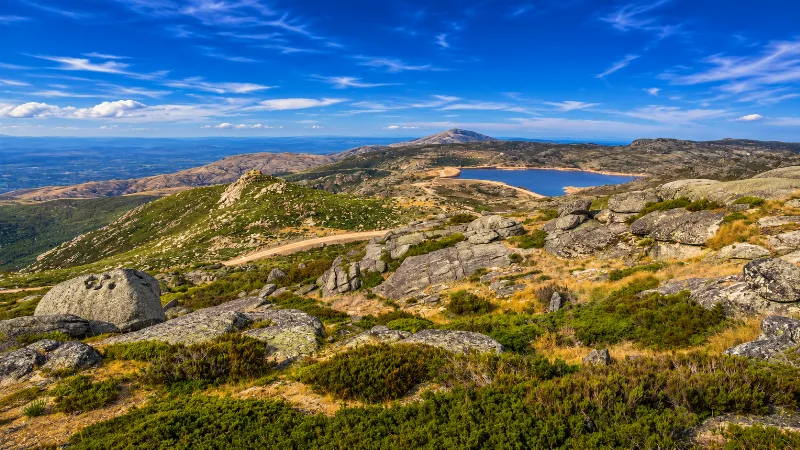
Serra da Estrela
Serra da Estrela is mainland Portugal’s highest mountain range, with granite plateaus, glacial valleys, villages, hiking routes and dramatic seasonal weather.
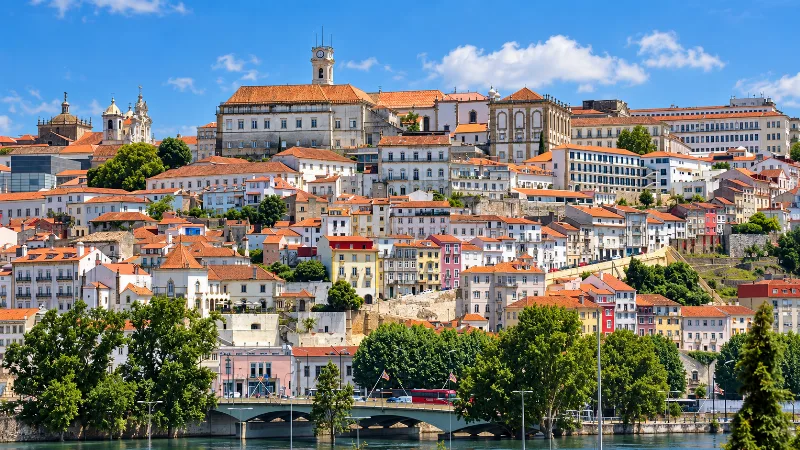
Coimbra
Coimbra combines Portugal’s oldest university traditions with a compact historic centre, river views, medieval streets and a student atmosphere.
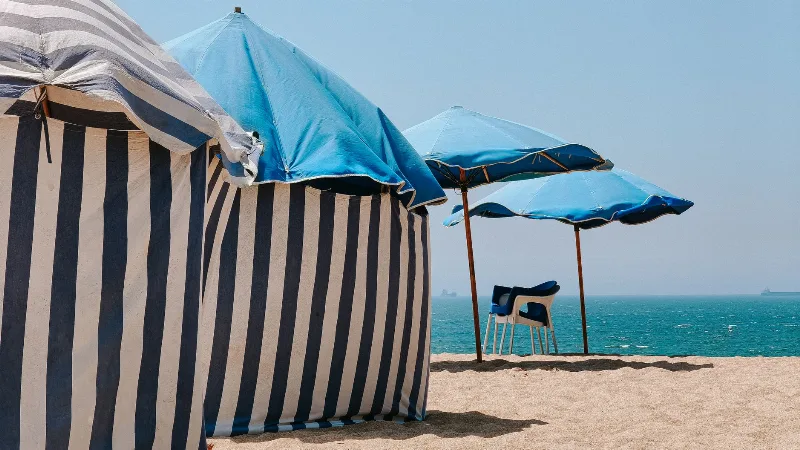
Figueira da Foz
A working river port and seaside city in central Portugal, Figueira da Foz combines an estuary setting, a long Atlantic beachfront and a wooded cape with a lived-in, year-round character.
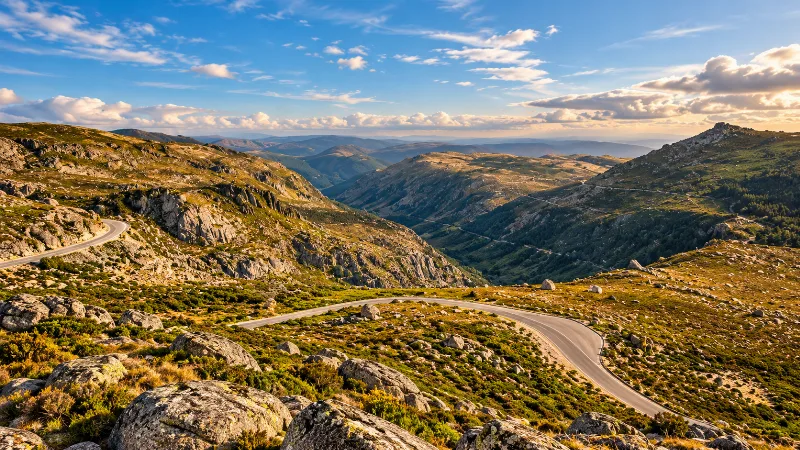
Central Portugal
Discover Coimbra, Aveiro, Serra da Estrela, Atlantic landscapes, mountain villages and the varied historic and natural scenery of central Portugal.
Guarda
Guarda is Portugal's highest city, set on a granite plateau beside the Serra da Estrela. This guide looks at its medieval streets, Gothic cathedral, Jewish heritage and mountain surroundings.
Viseu
A granite city in the Beira Alta of north-central Portugal, Viseu combines an old cathedral quarter, a national museum devoted to Renaissance painting and a position at the heart of the Dão wine region.
Serra da Estrela Granite Landscape and Glacial Valley
The highest ground in mainland Portugal is a weathered granite massif where ice once carved cirques, trough valleys and moraines. The Zêzere valley preserves some of the clearest glacial scenery in the country.
Exploring the Serra da Estrela Mountains
Explore exploring the serra da estrela mountains with a practical guide to notable places, regional landscapes, local heritage and travel planning in Portu