
Figueira da Foz
A working river port and seaside city in central Portugal, Figueira da Foz combines an estuary setting, a long Atlantic beachfront and a wooded cape with a lived-in, year-round character.
Figueira da Foz is a city in the district of Coimbra, in central Portugal, standing on the south bank of the River Mondego where the river broadens into an estuary and reaches the Atlantic. It is one of the larger seaside settlements in the country, combining a commercial port and an old fishing quarter with a wide beachfront, a nineteenth-century casino and a wooded headland rising just to the north.
Location and General Character
The city occupies flat ground beside the river mouth, with the built-up area spreading south and east across the coastal plain and along the estuary towards the rice fields of the Baixo Mondego. The river arrives slowly here, carrying silt, and its channel has shifted more than once over the centuries; the sandbanks and the bar at the entrance have always shaped how ships approach the town. Figueira da Foz lies roughly 45 kilometres west of Coimbra, connected to it by road and by a railway branch line, and it functions as the coast's main service centre between Aveiro and Leiria. Its character is mixed rather than purely holiday-oriented: paper and pulp production, port traffic, fishing and salt all belong to the local economy alongside tourism, and the town remains busy outside the summer months.
History
The Mondego's mouth has been used as a harbour since the medieval period, although the unstable bar and the moving sands made navigation difficult and encouraged the growth of pilotage and maritime trades. Buarcos, the fishing settlement at the foot of the hills to the west, is older than the present city centre and long supplied the crews and boats that worked these waters. Trade expanded in the seventeenth and eighteenth centuries, when the port handled timber, salt, wine and agricultural produce, and a small community of British and other foreign merchants took part in that commerce. A fortress was built beside the water to defend the entrance, and the town gradually acquired the layout of a port: quays, warehouses and merchants' houses behind the shoreline.
Sea bathing changed the place from the nineteenth century onwards. Visitors from Coimbra and further inland came for the air and the water, guesthouses opened along the front, and a casino, founded in the 1880s, gave the resort a social centre. The arrival of the railway branch from Coimbra in the same period made the journey easier and confirmed Figueira da Foz as a seasonal destination for families from the interior.
Architecture and Townscape
The seafront avenue, Avenida do Brasil, forms the town's public drawing room, lined with buildings from the late nineteenth and early twentieth centuries in which rendered façades, patterned tiles and iron balconies are common. Behind it the streets run in a fairly regular grid, with a clock tower marking the older commercial heart and a covered municipal market where fish, vegetables and regional produce are sold. Churches, bank buildings and modest apartment blocks from later decades sit alongside each other without much uniformity. The casino and the fortress, each in its own style, stand as the two most recognisable landmarks on the waterfront, while the port area to the east is dominated by silos, cranes and the long breakwaters that protect the entrance channel.
Natural Surroundings
To the north-west the Serra da Boa Viagem rises to a little over 250 metres, covered in pine and scrub and cut by walking tracks that open onto views of the estuary and the open sea. Beyond it lies Cabo Mondego, a limestone cape whose Jurassic rocks have yielded fossil remains and dinosaur footprints, and which carries a lighthouse at its tip. North of the cape the coastline continues as long sandy beaches backed by dunes and by the extensive pine woods around Quiaios, planted to hold the sand in place.
Inland, the estuary itself is the most important natural feature. Its mudflats, reedbeds and shallow channels attract wading birds and waterfowl, particularly in migration and winter, and the traditional salt pans along the margins are worked again in some places, producing coarse salt and flor de sal. Small freshwater lagoons lie behind the dunes near Quiaios, and the flat farmland of the Mondego valley is given over largely to rice, maize and vegetables.
Local Culture and Everyday Life
Fishing still gives the town much of its identity, especially at Buarcos, where boats are drawn up near the beach and the day's catch reaches the market and the restaurants quickly. Seafood dominates local cooking: sardines grilled outdoors in summer, caldeirada stews, shellfish and rice dishes made with the produce of the valley. The beach is a year-round meeting place for residents as much as visitors, and surfing has become part of the town's self-image, thanks to the sandbank waves formed near the river mouth. Bullfighting retains a following here in the town's nineteenth-century arena, and the summer months bring open-air concerts, processions and street events. The long-established Naval 1º de Maio sports club is another focus of local loyalty.
Notable Places
- Praia da Claridade – the central town beach, backed by a promenade and gardens, and the focus of summer activity.
- Fortaleza de Santa Catarina – a coastal fortification guarding the bar, later used as an official residence and still a prominent feature of the waterfront.
- Casino – a seafront institution dating from the 1880s, with a theatre and concert programme as well as gaming rooms.
- Museu Municipal Santos Rocha – the municipal museum, holding archaeology, ethnography and art collections assembled since the nineteenth century.
- Buarcos – the old fishing quarter on the western edge of the city, with narrow streets, boats and seafood restaurants.
- Cabo Mondego and the Serra da Boa Viagem – the cape and its wooded hill, reached by road or on foot, with cliffs, a lighthouse and wide coastal views.
- Praia do Cabedelo – the sand spit on the southern side of the river mouth, reached by small ferry during the bathing season and popular with surfers.
Nearby Destinations
Inland, Montemor-o-Velho keeps a hilltop castle and a network of old streets above the Mondego floodplain, about twenty kilometres away. Coimbra, with its historic university, cathedral and riverside quarters, is the natural next stop for most visitors. The Roman site of Conimbriga, with its mosaics and excavated houses, lies south-east of the city near Condeixa-a-Velha, while the forest and palace of Buçaco and the spa town of Luso sit further inland beyond Mealhada. Following the coast northwards leads to the beaches of Quiaios, Tocha and Mira, and eventually to Aveiro with its canals and lagoon.
Related content
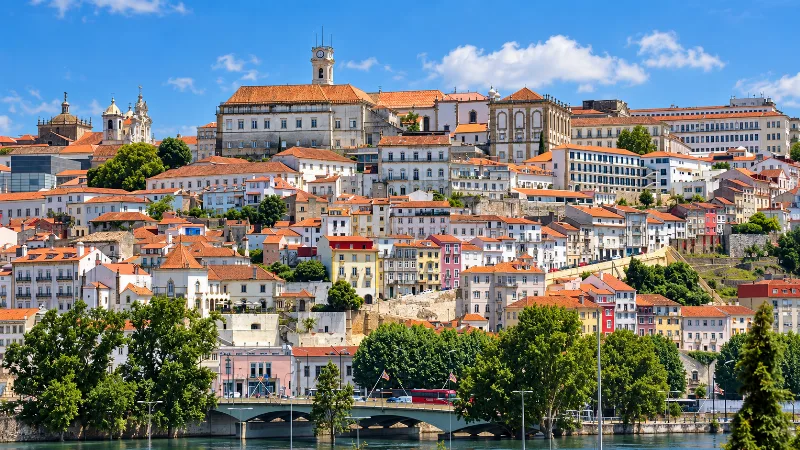
Coimbra
Coimbra combines Portugal’s oldest university traditions with a compact historic centre, river views, medieval streets and a student atmosphere.
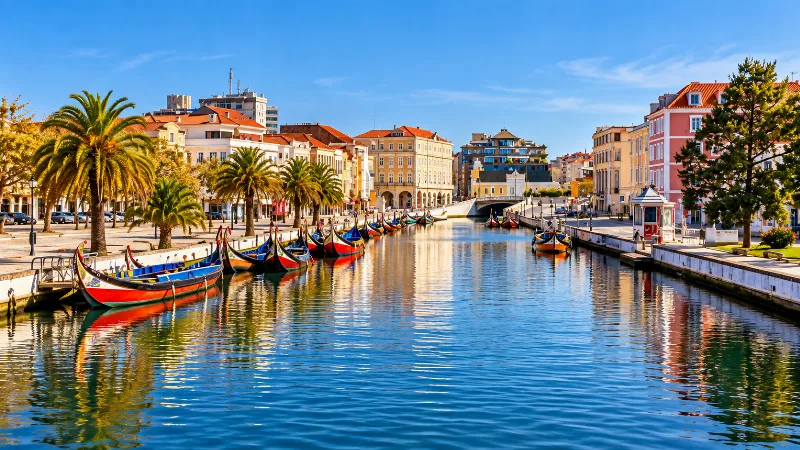
Aveiro
Aveiro is a small coastal-region city with canals, Art Nouveau details, colourful boats and easy access to lagoons and Atlantic landscapes.
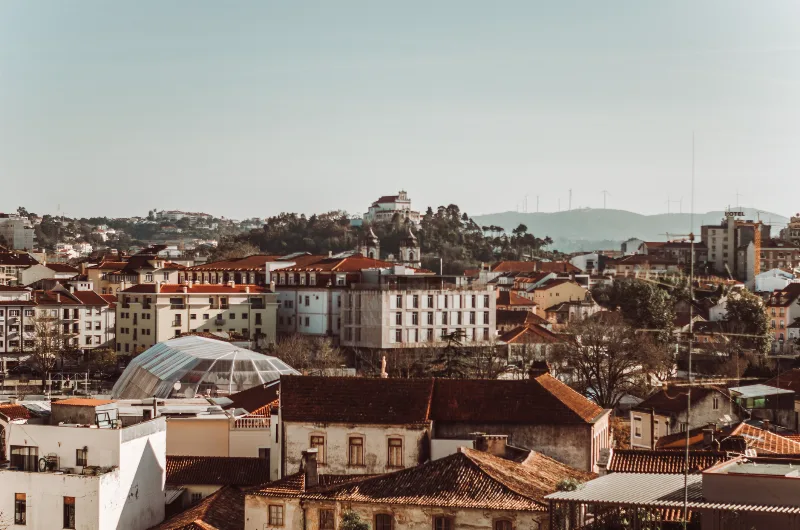
Leiria
Leiria is a central Portuguese city built around a hilltop castle above the River Lis, with a compact historic centre, a long paper-making tradition and a pine forest stretching towards the Atlantic.
The Mondego River Valley from Serra da Estrela to Coimbra
The Mondego is Portugal's longest river to rise and finish entirely within the country, linking the granite heights of Serra da Estrela with the Atlantic at Figueira da Foz. Its valley passes through mountain scenery, wooded gorges, historic towns and a wide agricultural plain.
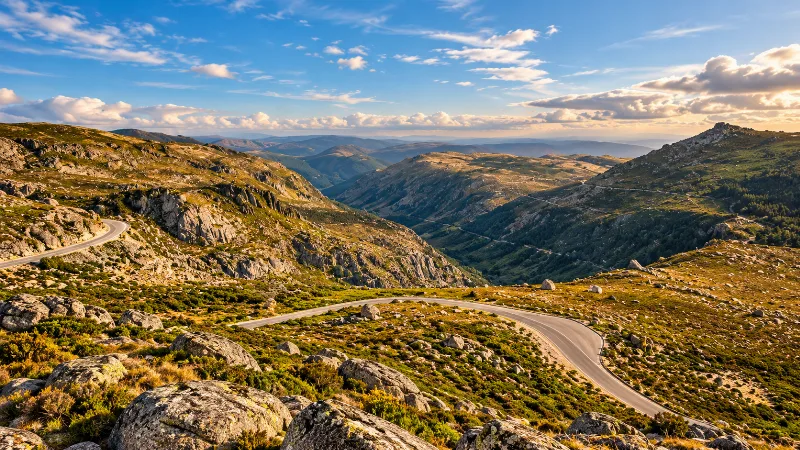
Central Portugal
Discover Coimbra, Aveiro, Serra da Estrela, Atlantic landscapes, mountain villages and the varied historic and natural scenery of central Portugal.