
Fado and Lisbon's Alfama Neighbourhood
Fado is Portugal's most recognisable song form, and Alfama, the oldest quarter of Lisbon, remains its spiritual home. Here is how the music and the lanes where it is sung belong together.
Fado is the song form most closely associated with Portugal: usually a single voice, accompanied by a twelve-string Portuguese guitar and a classical guitar, carrying melodies that are often slow and openly emotional. It took shape in nineteenth-century Lisbon among the dockland districts beside the Tagus and found one of its most enduring homes in Alfama, the old quarter that climbs the hillside below the Castelo de São Jorge.
The Character of Fado
The word fado comes from the Latin fatum, meaning fate. The songs are narrative rather than abstract: they tell stories about love and separation, about the sea and the sailors who leave, about hardship, neighbourhood life and the passage of time. A fado performance is deliberately spare. The singer, known as a fadista, generally stands slightly turned towards the guitarists, often with a dark shawl across the shoulders, and the arrangement leaves space around the voice. Expression matters far more than vocal range.
The Portuguese guitar gives the music its distinctive colour, a bright, metallic, slightly tremulous sound produced by its paired strings. Beneath it the viola provides a steady harmonic floor, and other instruments such as the bass guitar are sometimes added. Lisbon and Coimbra developed separate traditions: the Lisbon style is associated with the city's popular districts, while the Coimbra style, sung largely by students, has a more formal, academic character.
Saudade and the Fado Singer
Fado is usually described in relation to saudade, a Portuguese word with no exact English equivalent. It describes a mixture of longing, absence and affectionate memory, something felt rather than explained. The best fado does not simply sound sad; it balances sorrow with acceptance, and often with a note of defiance or humour. Many songs are conversational and closely tied to particular streets, trades or family histories, which is one reason the repertoire stays closely connected to the city that produced it.
Alfama: Lisbon's Oldest Quarter
Alfama occupies the eastern slope of the hill below the castle, running down towards the Tagus. Its name is generally traced to the Arabic al-hamma, referring to springs or baths, a reminder of the Moorish period. The street plan is older than the Christian conquest of Lisbon in 1147, and the district came through the 1755 earthquake comparatively lightly, so its medieval layout survives.
There are no straight lines here. Lanes twist between houses, open into small squares and turn into flights of steps; washing hangs above doorways and façades are covered in patterned azulejo tiles. The Sé, Lisbon's Romanesque cathedral, stands at the western edge, and the Igreja de São Vicente de Fora and the Panteão Nacional lie to the east. Two terraces, the miradouro of Santa Luzia and the miradouro das Portas do Sol, look out over red roofs towards the river. The neighbourhood is lived in as much as visited: elderly residents, small shops, cats on doorsteps and neighbours talking across the street remain part of the scene.
Fado Houses and Everyday Singing
Alfama holds a concentration of casas de fado, small venues where singing takes place in the evening, usually with several performers taking turns through the night. The rooms are intimate, often decorated with tiles and photographs, and audiences are expected to keep quiet while a song is being sung. Beyond the formal houses, informal singing still happens in tascas and community associations, where amateur fadistas may stand up without warning.
The link between Alfama and music becomes most visible during the Festas de Santo António in June, when the neighbourhood fills with arraiais: street parties with paper garlands, grilled sardines, basil plants in pots and singing that carries on late into the night. Fado is woven into that celebration alongside other popular music.
A Living Heritage
Fado was inscribed on UNESCO's Representative List of the Intangible Cultural Heritage of Humanity in 2011, recognising both the music and the wider practices around it: the making of instruments, the transmission of repertoire between generations and the social settings in which it is performed. Fado schools and a growing number of younger singers continue the tradition, while the Museu do Fado in Alfama documents its history. For a visitor, the neighbourhood is best understood as a place where a musical tradition is still practised rather than displayed, and where the sound of a guitar from an open window is part of the everyday texture of the streets.
Related content
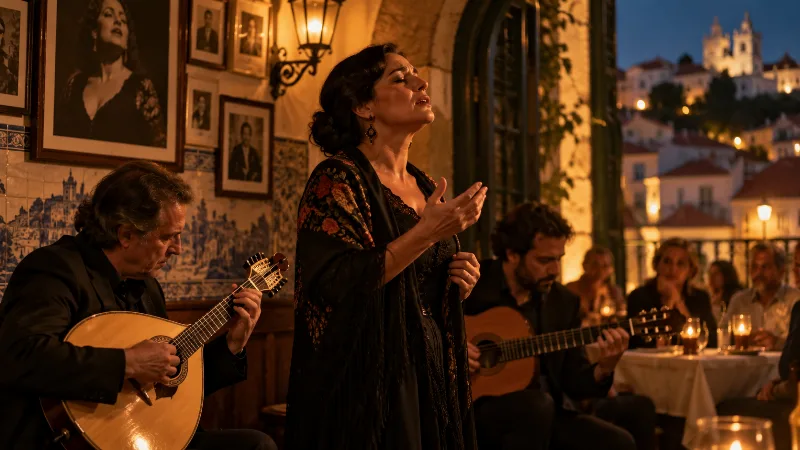
Fado
Fado is one of Portugal’s most distinctive musical traditions, closely associated with Lisbon and Coimbra and shaped by themes of memory, longing and everyday life.
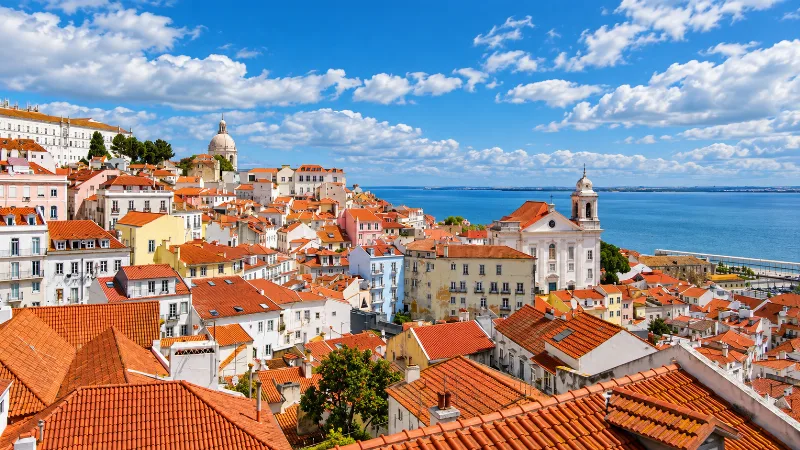
Lisbon
Portugal’s capital combines historic neighbourhoods, river views, tiled façades, viewpoints and an energetic everyday city life.
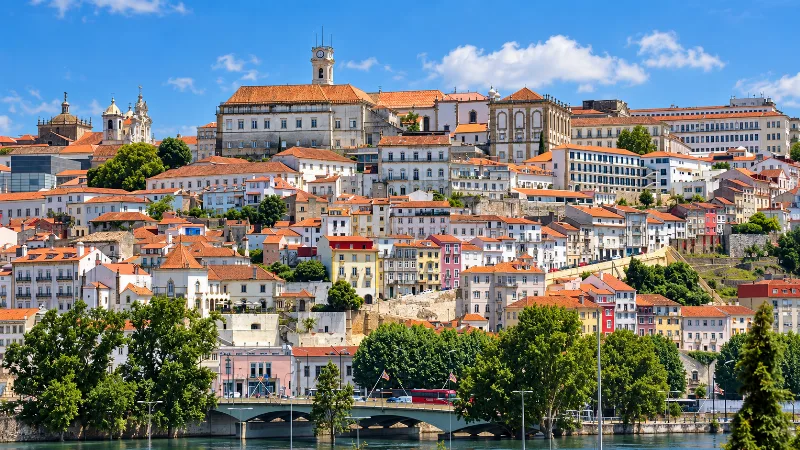
Coimbra
Coimbra combines Portugal’s oldest university traditions with a compact historic centre, river views, medieval streets and a student atmosphere.
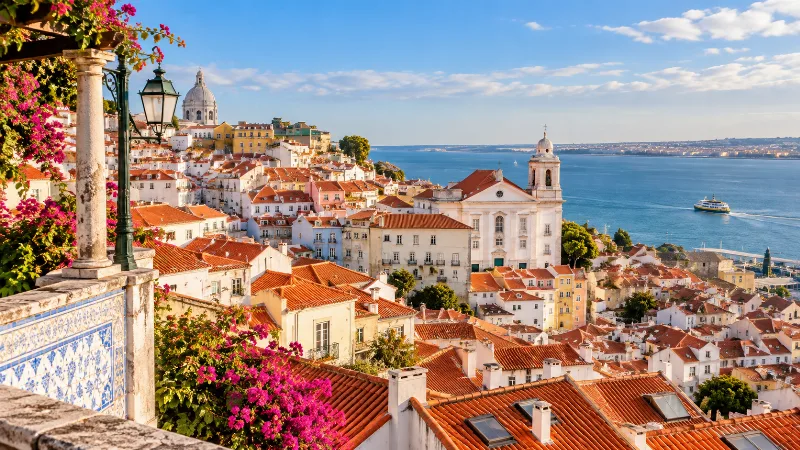
Walk Through Alfama and Lisbon’s Viewpoints
Explore Lisbon on foot through Alfama, Castelo and Graça, combining historic streets, hilltop viewpoints and views across the Tagus.
Lisbon Region
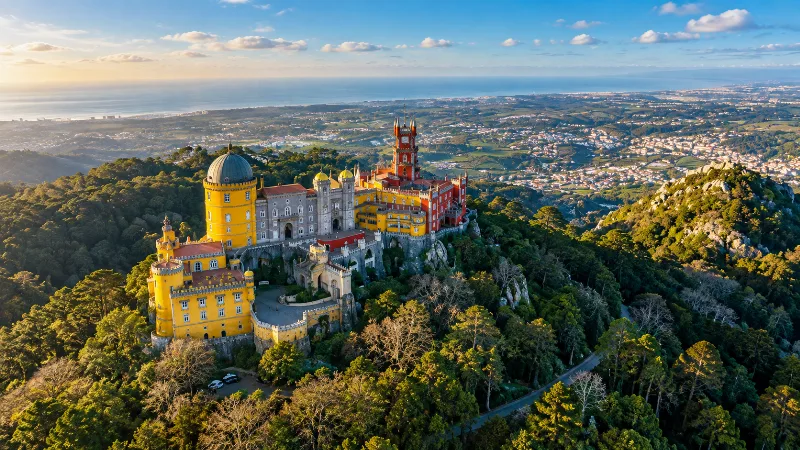
Explore Lisbon, Sintra, Cascais and Cabo da Roca through historic neighbourhoods, palaces, Atlantic scenery and easy day trips from the capital.
Coimbra University and the Joanina Library
Coimbra's historic university occupies the summit of the old town, where students in black capes cross a courtyard that leads to the Joanina Library, one of Europe's most ornate baroque interiors.