
Monsaraz Hilltop Village and Megalithic Sites
Monsaraz is a fortified hilltop village in Portugal's Alentejo, surrounded by wide plains, cork oak groves and a notable cluster of prehistoric stone monuments.
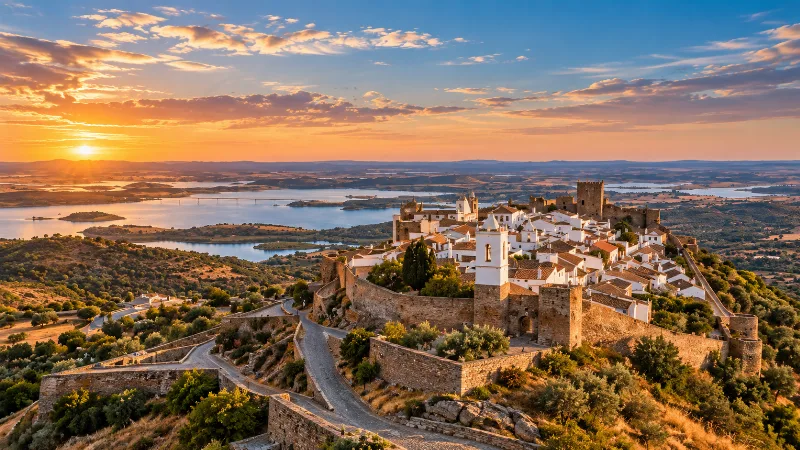
Monsaraz is a small fortified village in the Alentejo region of southern Portugal, built on a granite hilltop above the rolling plains that run towards the Spanish border. Its whitewashed houses, medieval walls and wide views make it a distinctive settlement in the region, while the surrounding countryside holds an unusual concentration of prehistoric stone monuments. Taken together, the village and its megaliths give visitors a compact view of several thousand years of Alentejo history.
A Hilltop Position Above the Guadiana
Monsaraz belongs to the municipality of Reguengos de Monsaraz in the district of Évora. The village occupies a narrow ridge that rises sharply from the surrounding farmland, a position chosen in the medieval period for defence rather than convenience. The hill commands long views across the Alentejo plain and, since the creation of the Alqueva reservoir, over a broad expanse of water to the north. The old settlement was once the seat of its own council, but it lost administrative prominence in the nineteenth century and has remained a small, quietly inhabited place ever since.
Streets, Walls and the Castle
The historic centre is enclosed by a circuit of stone walls entered through arched gates. Inside, cobbled lanes wind between low houses painted in white and trimmed with blue or yellow, with granite doorways and small iron balconies. Bougainvillea and potted plants soften the stone, and the whole village can be walked in under an hour at an easy pace.
The castle stands at the highest point. Its walls and keep survive from the medieval fortification, and the tower offers a wide panorama stretching over rooftops, olive groves and the water beyond. Nearby, a Manueline pillory marks the spot where local justice was once administered, and the parish church of Santa Maria da Lagoa holds a collection of religious art within its whitewashed interior. Several small workshops sell locally made pottery, cork products and woven goods.
The Megalithic Landscape Around Monsaraz
The plains below the village contain a dense scatter of prehistoric monuments, most of them erected during the Neolithic and Chalcolithic periods. These include antas (dolmens), built as burial chambers from upright stones capped with large slabs, and menires, single standing stones whose purpose remains uncertain. The most celebrated group is the Cromeleque do Xerez, an arrangement of dozens of granite blocks set out in a roughly rectangular pattern. It was carefully dismantled and re-erected on higher ground when the Alqueva dam was built and the original site was due to be submerged.
Other monuments are scattered across the farmland nearby. The Anta do Olival da Pega is a substantial dolmen with a long corridor, and the Menir do Outeiro is a notably tall standing stone. Many of these sites can be reached on footpaths or minor roads, and several are signposted with short explanatory panels. Interpretations of their original use vary, and archaeologists continue to debate the rituals and beliefs behind their construction.
Lake Alqueva and the Wider Countryside
The construction of the Alqueva dam on the Guadiana transformed the local landscape, creating a large artificial lake whose arms reach close to the foot of the hill. The water has brought new habitats for birds and a different kind of scenery to a traditionally dry region. The area also forms part of a certified dark sky reserve, and the absence of light pollution makes the night sky unusually clear.
Away from the water, the land is given over to cork oak woodland, olive groves, vineyards and cereal fields, worked in the familiar Alentejo pattern of large estates and scattered farmsteads. The combination of a well-preserved hilltop village, accessible prehistoric monuments and open countryside makes Monsaraz a place where the layers of Portuguese history are readily apparent.
Related content
Alentejo
Discover Alentejo through Évora, whitewashed towns, cork-oak landscapes, vineyards, regional food and the broad rural interior of southern Portugal.
Évora
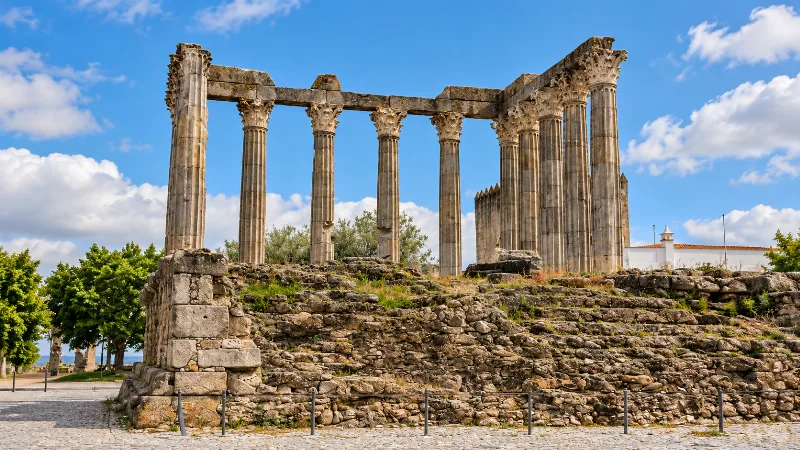
Évora is a historic Alentejo city of Roman remains, whitewashed streets, medieval walls, churches and a slower inland Portuguese rhythm.
Best Places to Visit in the Alentejo
Explore best places to visit in the alentejo with a practical guide to notable places, regional landscapes, local heritage and travel planning in Portugal.
Exploring the Historic Town of Monsaraz
Explore exploring the historic town of monsaraz with a practical guide to notable places, regional landscapes, local heritage and travel planning in Portug
Marvão Hilltop Fortress and Schist Village
Perched on a rocky ridge in the Serra de São Mamede, Marvão combines a hilltop fortress, schist-built lanes and wide views over the Alentejo borderlands.
Best Regions to Visit in Portugal
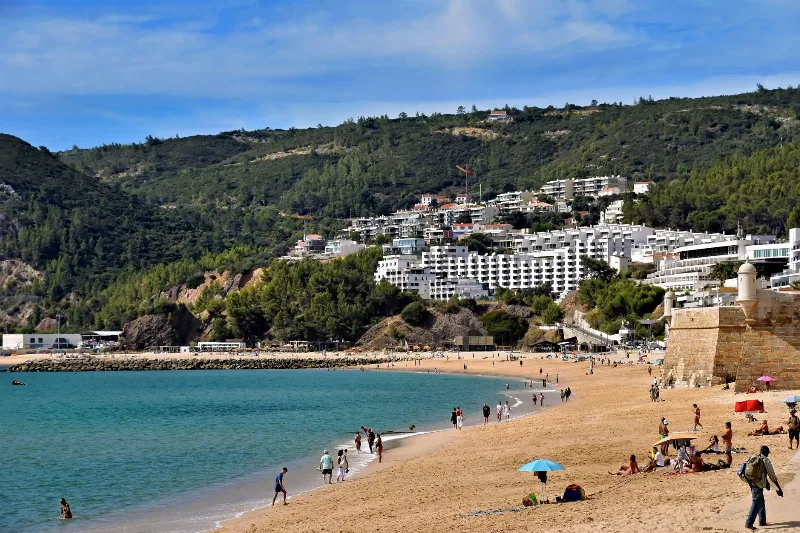
Discover Portugal's most popular travel regions, from the historic cities of Lisbon and Porto to the beaches of Algarve, the countryside of Alentejo and the Atlantic islands.