
Ovos Moles de Aveiro and the Tradition of Conventual Sweets
Ovos moles de Aveiro are the most famous expression of Portugal's conventual pastry tradition, a smooth egg-yolk and sugar sweet sealed inside wafer-thin shells. Their story links Portuguese convents, Atlantic sugar and the maritime character of Aveiro.
Ovos moles de Aveiro are among the most distinctive sweets in Portugal: a dense, silky paste of egg yolk and sugar enclosed in paper-thin wafer shells shaped like fish, shells and small barrels. The name means "soft eggs", and it describes both the texture and the essential simplicity of the recipe, which relies on little more than yolks and sugar syrup. More than a regional speciality, ovos moles are the best-known survivor of a much broader Portuguese tradition of conventual pastry, a style of confectionery developed in religious houses and still made according to methods that have changed remarkably little.
What Makes Ovos Moles de Aveiro Distinctive
The sweet has a uniform golden-yellow colour and a smooth, slightly grainy consistency that comes from cooking strained yolks with sugar syrup until the mixture thickens enough to hold its shape. It is not baked, so there is no crust or crumb; the flavour is rich, sweet and strongly of egg, with a faint caramel note from the syrup. The wafer casing, known as obreia, is made from flour and water and is so thin that it softens almost immediately against the filling. Ovos moles are also sold simply in small cups without a shell, to be eaten with a spoon.
Ovos moles de Aveiro hold Protected Geographical Indication status, which sets out the ingredients, the production area around Aveiro and the permitted shapes. Those shapes are a direct reference to the city's relationship with water: fish, shells, boats and barrels all appear, echoing the canals and the lagoon on which Aveiro has always depended.
The Convent Origins of Portugal's Egg Sweets
Conventual pastry grew out of the practical conditions of Portuguese religious life. Egg whites were needed in large quantities for two purposes: starching and stiffening the linen of habits and altar cloths, and clarifying wine. The yolks that remained were too valuable to discard, and the convents had both the sugar and the time to experiment. In Aveiro, several houses, including the Mosteiro de Jesus, are associated with the early development of the recipe.
Sugar itself was an Atlantic commodity, arriving from Madeira and later from Brazil, and it was expensive enough to make sweets a mark of prestige. Convents sold their confectionery to support themselves and supplied it to wealthy families, whose kitchens later preserved the recipes after the religious orders were dissolved in 1834. Many of Portugal's most celebrated desserts exist because those handwritten recipe books passed into private hands.
How the Sweets Are Prepared
Production begins with a sugar syrup cooked to a precise concentration, to which sieved egg yolks are added. The mixture is stirred over gentle heat until it thickens and pulls away from the pan, then cooled and passed through a sieve to remove any lumps. In the traditional method the paste is piped into the wafer shapes by hand, a task that requires speed, since the obreias become fragile once filled. Skill lies in the consistency of the syrup: too little cooking and the filling will not hold, too much and it becomes stiff and dull.
The Wider World of Conventual Pastry
Ovos moles belong to a family of sweets spread across the country, each shaped by local ingredients. In Lisbon, the pastéis de nata associated with Belém share the same yolk-rich ancestry. Further north and inland, toucinho do céu combines almonds, sugar and yolks into a dense, moist cake, while Sintra is known for small cheese-and-almond queijadas. The Algarve has its own almond and egg confections, and the Alentejo produces pão de rala, made with bread, sugar and yolk. Names such as papos de anjo and barrigas de freira preserve the memory of the convents where they originated.
What unites them is a shared grammar of ingredients: sugar, egg yolks and often almonds, combined without flour or with very little. Many are intensely sweet by modern standards, and are traditionally served in small portions alongside coffee or a glass of fortified wine.
Ovos Moles in Aveiro Today
In Aveiro, ovos moles are sold in pastelarias and markets throughout the old town, often in wooden boxes that reflect the city's craft traditions. They are eaten as a small treat rather than a dessert, and they remain a point of local identity: the sweet appears at festivals, in gift shops and in the windows of long-established confectioners. For visitors, the sweet is a compact introduction to a broader idea — that Portuguese confectionery is not simply a matter of cakes and pastries, but a record of religious life, Atlantic trade and the ingenuity of cooks who made something lasting from what was left in the bowl.
Related content
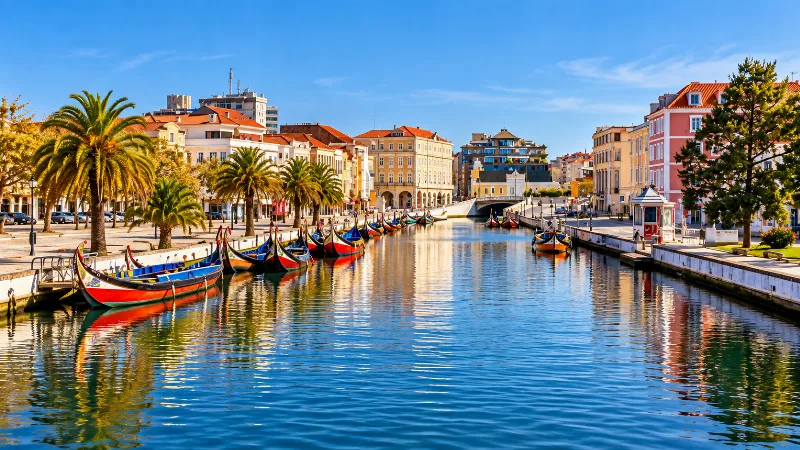
Aveiro
Aveiro is a small coastal-region city with canals, Art Nouveau details, colourful boats and easy access to lagoons and Atlantic landscapes.

Madeira
Explore Madeira through Funchal, dramatic mountains, levada walks, subtropical gardens, volcanic coastlines and distinctive Atlantic island landscapes.
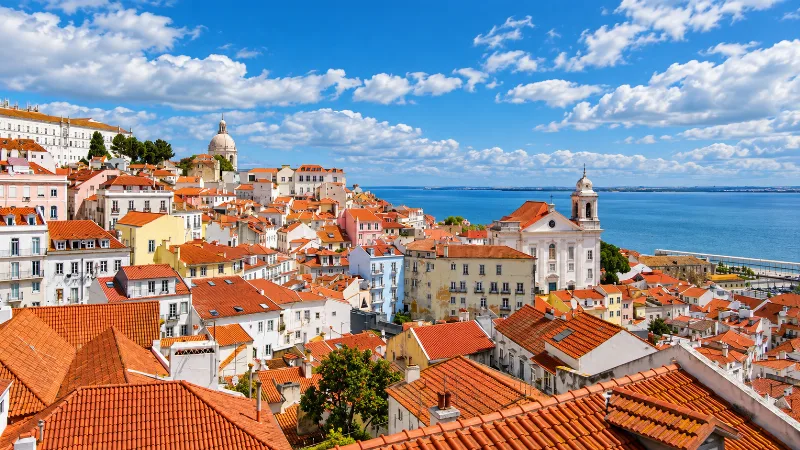
Lisbon
Portugal’s capital combines historic neighbourhoods, river views, tiled façades, viewpoints and an energetic everyday city life.
Pastéis de Nata and the Portuguese Custard Tart Tradition
Pastéis de nata are small custard tarts with a blistered, caramelised top and a shatteringly crisp pastry case. Their story runs from monastery kitchens to the counter of almost every Portuguese bakery.

Central Portugal
Discover Coimbra, Aveiro, Serra da Estrela, Atlantic landscapes, mountain villages and the varied historic and natural scenery of central Portugal.
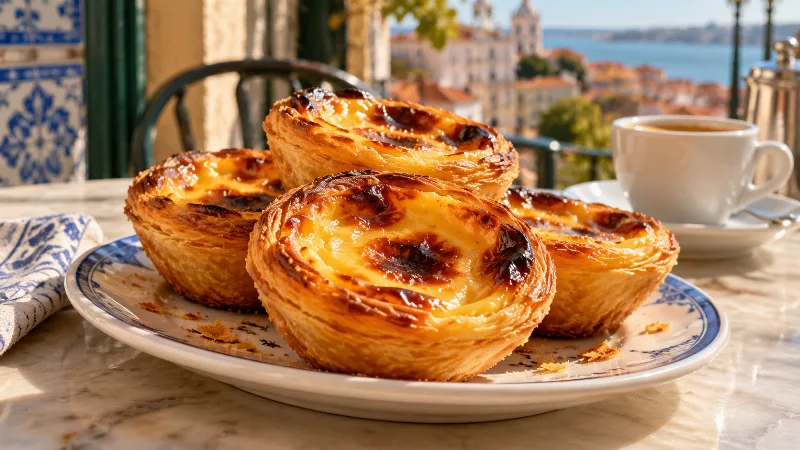
Pastel de Nata
Pastel de nata is Portugal’s famous custard tart, combining crisp laminated pastry with a rich baked custard and a deeply caramelized surface.