
Mafra
Mafra is a Portuguese town built around an enormous Baroque palace-convent, whose basilica, library and walled royal hunting park together form a UNESCO World Heritage site.
Mafra is a town in the Lisbon district whose centre is overshadowed, almost literally, by a single building. The palace-convent of Mafra, with its domed basilica and twin bell towers, stands at the northern edge of the old town, and the wooded hills of the former royal hunting park rise beyond it. The rest of the place is modest by comparison: whitewashed houses, a knot of narrow streets, cafés facing the monument's forecourt, and traffic heading west towards the Atlantic.
Location and general character
Mafra lies in the north-west of the Lisbon metropolitan area, roughly 40 km from the capital and about 8 km from the sea, in the region known as the Oeste. The municipality covers some 291 square kilometres and is divided into eleven parishes, running from the inland town itself to the coastal parish of Ericeira and the smaller centres of Malveira and Venda do Pinheiro. Its landscape mixes farmland, pine woods, low limestone hills and a short Atlantic frontage of cliffs and small beaches.
The area has changed quickly. Census figures show the municipal population rising from around 54,000 in 2001 to about 86,500 in 2021, one of the fastest growth rates in the country, helped by the A8 and A21 motorways and by residents who commute to Lisbon or Sintra. Even so, the town has kept the shape of a provincial market centre, and open country begins within a few minutes' walk of the palace.
History
Mafra was a small, old settlement long before the palace existed. It was taken from the Moors in the twelfth century, during the same campaign that brought Lisbon under Afonso Henriques, and a royal census of 1527 counted only 191 households in the area, four of them in the town itself. Its fortunes changed completely under King João V, who is said to have vowed to found a Franciscan convent if he were granted an heir. The first stone was laid on 17 November 1717 to a design by the German-born architect Johann Friedrich Ludwig, drawing on Roman models and on earlier schemes attributed to Filippo Juvarra, with the works directed by the kingdom's chief engineer, Custódio Vieira. The basilica was consecrated on 22 October 1730, the king's birthday, although building continued for decades afterwards.
The project was financed largely by gold and diamonds from Brazil and absorbed enormous numbers of workers; one estimate from 1730 puts the workforce at around 45,000. Napoleonic troops occupied the palace during the Peninsular War and removed many of its tapestries and much of its silver. After the religious orders were suppressed in 1834 the convent passed to the army, and in the mid-nineteenth century the royal family used the building as a summer residence. The monarchy fell in 1910 and the palace became a museum; in 2019 the complex, together with its garden and hunting park, was inscribed on the UNESCO World Heritage list.
Architecture
The royal building is laid out as a vast quadrangle of local lioz limestone, some 38,000 square metres in extent, containing roughly 1,200 rooms and 156 staircases. The basilica forms the central axis, flanked by the king's and queen's palaces, each with its own projecting turret and separate entrance, while the convent closes the rectangle around an inner courtyard. The library occupies the far end, a long Rococo hall with a marble floor and about 36,000 volumes, including incunabula and manuscripts. Inside the church are 58 statues by Italian sculptors, an important collection of liturgical vestments, and six organs built between 1792 and 1807 and designed so that they could be played together.
The two facade towers hold carillons of 92 bells cast in Antwerp and Liège, still among the largest historic sets of their kind in Europe. The site also worked as a school: the sculptor Alessandro Giusti ran a workshop there, and Joaquim Machado de Castro, the leading Portuguese sculptor of the eighteenth century, trained on the project. Techniques learned at Mafra were later applied to the rebuilding of Lisbon after the 1755 earthquake.
Natural surroundings
Behind the palace lies the Tapada Nacional de Mafra, a walled estate of about 1,200 hectares created by royal decree in the 1740s for hunting, timber, grazing and water supply. Its boundary wall runs for some 22 kilometres and stands two to three metres high along much of its length. Mixed woodland, pasture and reservoirs now support red and fallow deer, wild boar and birds of prey, and marked trails allow walking and cycling through the enclosure. Four small forts belonging to the Lines of Torres Vedras survive inside it, one of which has been restored.
The smaller Jardim do Cerco, a formal garden of about nine hectares, was laid out on the north-eastern side of the building with geometric beds and a central lake fed by water channelled from the Tapada through aqueducts and tunnels. Water management on this scale, using springs, adits and reservoirs, was essential to both garden and palace, and fragments of the system remain visible.
Local culture and everyday life
Mafra is a working town rather than a museum village. The palace dominates the skyline, but daily life revolves around the streets below it: parish churches, schools, bakeries and cafés, a municipal holiday on Ascension Thursday, and an annual festival in honour of the Blessed Sacrament on the second Sunday of September. Traditional bread baking and clay pottery remain associated with the area, and the basilica's organs and carillons draw concert audiences from well beyond the municipality. Part of the convent still houses a military establishment, which gives the town a quiet garrison character.
Cultural life is not confined to the town centre. In Ericeira, fishing and surfing shape the local economy, while the outlying parishes keep their own saints' days, processions and small summer fairs, many of them tied to the agricultural calendar.
Notable places
- The palace-convent of Mafra, where the basilica, royal apartments, convent rooms, eighteenth-century hospital and library can be visited.
- The Jardim do Cerco, with its lake, clipped parterres and surviving water features.
- The Tapada Nacional de Mafra, with its trails, deer herds and the restored Forte do Juncal.
- The church of Santo André in the old centre, the town's parish church, which has sixteenth-century origins.
- The Atlantic beaches of the municipality, including São Julião and the coves around Ericeira.
Nearby destinations
Ericeira, about 10 km west, is a fishing village turned surf centre and holds World Surfing Reserve status. Sintra, with its own UNESCO-listed landscape of palaces and wooded hills, lies roughly 20 km to the south. Torres Vedras to the north sits at the heart of the Lines of Torres Vedras, while the walled town of Óbidos and the fishing port of Peniche lie further up the coast. Lisbon can be reached by motorway in under an hour, and buses connect the town with Ericeira, Sintra and the capital.
Related content
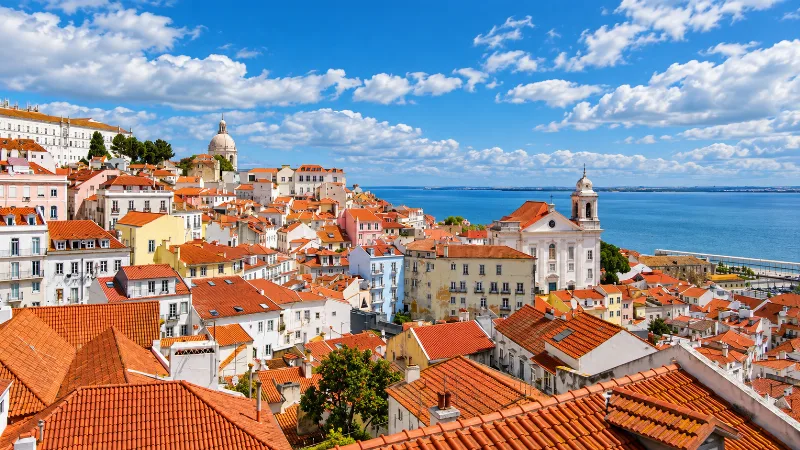
Lisbon
Portugal’s capital combines historic neighbourhoods, river views, tiled façades, viewpoints and an energetic everyday city life.
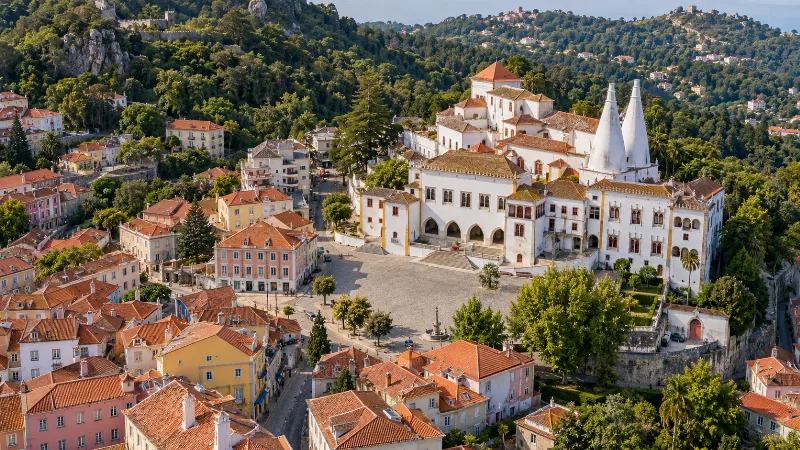
Sintra
Sintra combines hilltop palaces, wooded slopes, historic estates and a compact old town within easy reach of Lisbon.
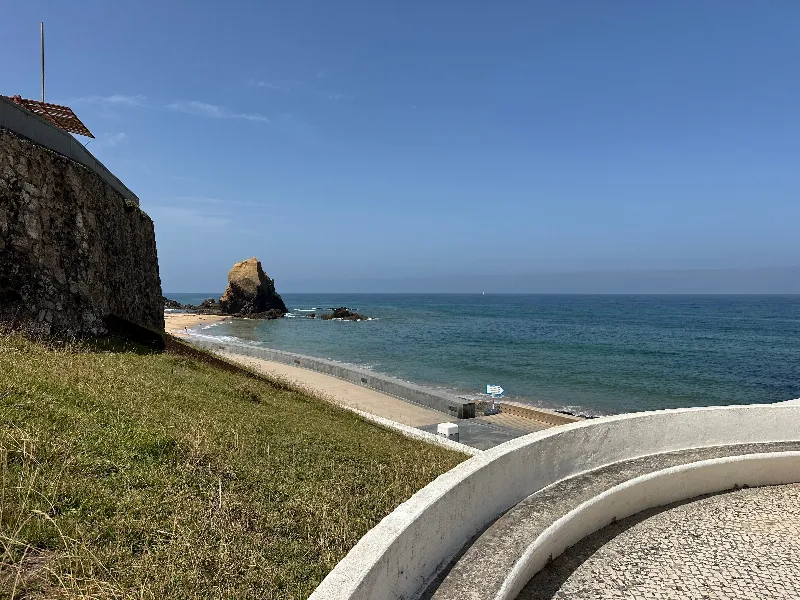
Torres Vedras
Torres Vedras is an agricultural town in Portugal's Oeste region, known for its hilltop castle, its long wine-growing tradition and the Lines of Torres Vedras, the fortifications that halted Napoleon's army north of Lisbon.
Mafra National Palace and Basilica
North-west of Lisbon, the Mafra National Palace brings together a royal residence, a basilica and a Franciscan convent in one vast Baroque composition, complete with a celebrated library and two historic carillons.
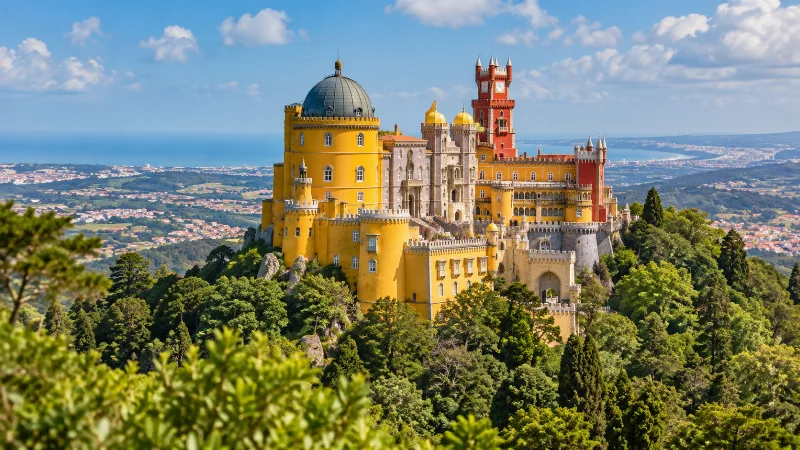
Spend a Day in Sintra
Plan a full day in Sintra with palaces, forested hills, historic streets and practical guidance for travelling from Lisbon.
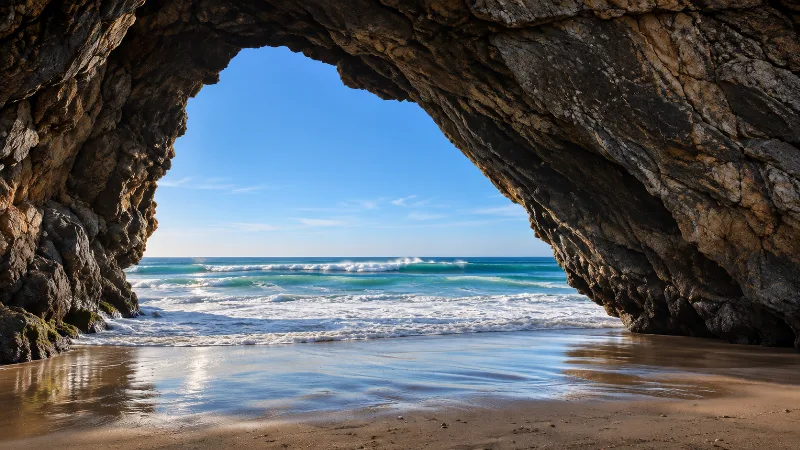
Praia da Adraga – Atlantic Scenery near Sintra
Praia da Adraga is a beach near Sintra, framed by rocky headlands, sculpted cliffs and Atlantic waves.