
Mafra National Palace and Basilica
North-west of Lisbon, the Mafra National Palace brings together a royal residence, a basilica and a Franciscan convent in one vast Baroque composition, complete with a celebrated library and two historic carillons.
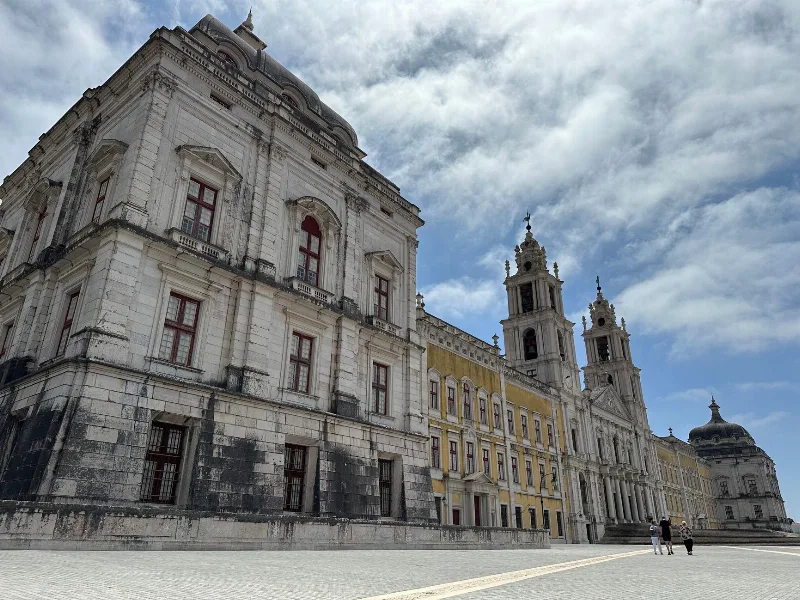
The Mafra National Palace, or Palácio Nacional de Mafra, rises from the edge of a small town about thirty kilometres north-west of Lisbon. Rather than a single building, it is an enormous unified composition that gathers a royal palace, a basilica and a Franciscan convent behind one continuous stone façade. Construction began in the early eighteenth century, and the complex is now recognised as one of the most ambitious achievements of Baroque architecture in Portugal, having joined the UNESCO World Heritage List in 2019.
How Mafra Palace Came to Be Built
Tradition links the foundation of the complex to a vow made by King John V, who promised to raise a great convent if his marriage were blessed with children. Work began in 1717 under the direction of the German-born architect Johann Friedrich Ludwig, known in Portugal as João Frederico Ludovice, who had trained in Rome and brought Italianate ideas north with him. The project was financed largely by gold arriving from Brazil, and it consumed an extraordinary workforce drawn from across the kingdom over several decades.
The scale is difficult to grasp at first sight. The main façade stretches for more than two hundred metres, and the building covers an area of roughly forty thousand square metres, making it one of the largest palace complexes in Europe. The basilica was consecrated in 1730, on the king's birthday, while finishing works on the palace and convent continued in stages for many years afterwards.
The Basilica at the Centre of the Composition
The basilica occupies the central axis of the building and is flanked by symmetrical towers, giving the whole façade its balance. Its front is dressed in pale stone, while the interior makes generous use of coloured marble arranged in geometric patterns across the floor, walls and altars. A dome crowns the crossing, and the twin towers hold two carillons whose bells were cast in the Low Countries, forming one of the largest historic collections of its kind in Europe.
Perhaps the most remarkable feature inside is a group of six historic organs, built in the early nineteenth century and arranged across the two sides of the transept. Their combined voices were designed to fill the nave from different directions, and the instruments survive as a rare example of an ensemble conceived as a single architectural and musical whole.
The Library and the Royal Apartments
Beyond the basilica, long corridors lead to the palace rooms and to one of the most celebrated spaces in Portugal: a library roughly eighty-eight metres in length, laid out in a Rococo style with a patterned stone floor and pale wooden shelving. It holds around thirty-six thousand volumes, including early printed books and rare editions, and is regarded as one of the finest historic library interiors in the country.
The library has an unusual guardian. A small colony of bats is permitted to live behind the shelving, emerging at night to feed on insects that might otherwise damage the bindings — an arrangement that has become part of the building's identity. Nearby, the royal apartments retain furnishings, paintings and decorative schemes that trace the palace's use by the Portuguese court over successive reigns.
The Convent and the Working Life of the Palace
The Franciscan convent was never merely an annexe. Its corridors are lined with rows of small monastic cells, and visitors can also see a refectory, an infirmary and a kitchen dominated by an immense chimney and iron cooking equipment designed to feed a very large community. The friars lived alongside the court, so that devotional and ceremonial life ran in parallel with the business of a royal household.
This dual character explains much of the building's layout: the palace looks outward towards the town, while the convent's long dormitories turn inward around courtyards, preserving silence and enclosure in the middle of an immense official residence.
Architecture and Setting
Mafra is a study in symmetry. Local limestone and marble give the whole complex a cool, luminous tone that changes with the light, and the composition is best understood from a distance, where the towers, dome and wings read as a single silhouette above the roofs of the town. The building sits on a gentle rise, so that it can be seen from far across the surrounding farmland.
The Tapada and the Surrounding Countryside
Directly behind the palace lies the Tapada Nacional de Mafra, a walled royal hunting park enclosed by a wall of some twenty-one kilometres. Its rolling terrain is covered with cork oak, pine and scrub, and it supports deer, wild boar and numerous birds of prey. Marked trails allow walkers to explore the estate, which offers a striking contrast to the formality of the palace façades.
The countryside around Mafra belongs to the Oeste region, a landscape of vineyards, orchards and low hills that runs towards the Atlantic. The coastal town of Ericeira lies a short distance to the west, and the whole area combines agricultural traditions with a long history of royal patronage.
Mafra in Portuguese Culture
The palace occupies a firm place in Portuguese literature. José Saramago's novel Memorial do Convento, published in 1982 and translated as Baltasar and Blimunda, uses the construction of the complex as the backdrop for a story about power, faith and the labour of ordinary people. For many readers, the novel permanently linked the building with the thousands of anonymous workers who raised it.
Music remains part of the site's character too, with the basilica's organs and the tower carillons counted among its most valued treasures. Whether approached as an example of Baroque planning, a musical monument or a document of royal ambition, Mafra rewards a slow visit: the building is less a single attraction than a whole world enclosed within four long walls.
Related content
Mafra
Mafra is a Portuguese town built around an enormous Baroque palace-convent, whose basilica, library and walled royal hunting park together form a UNESCO World Heritage site.
Lisbon
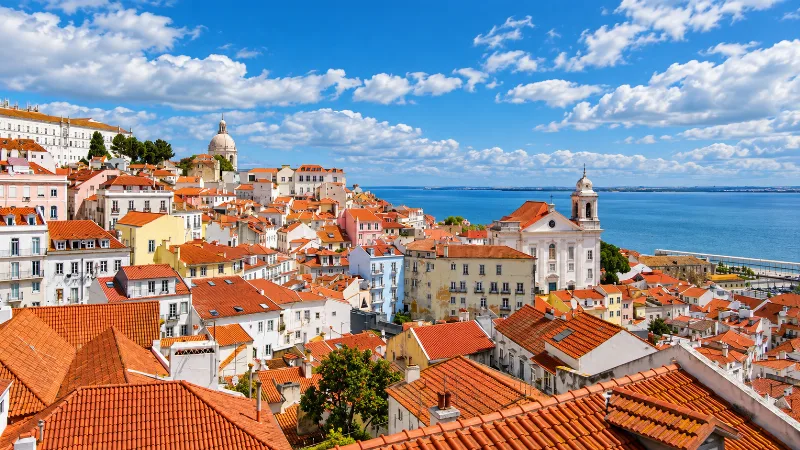
Portugal’s capital combines historic neighbourhoods, river views, tiled façades, viewpoints and an energetic everyday city life.
Torres Vedras
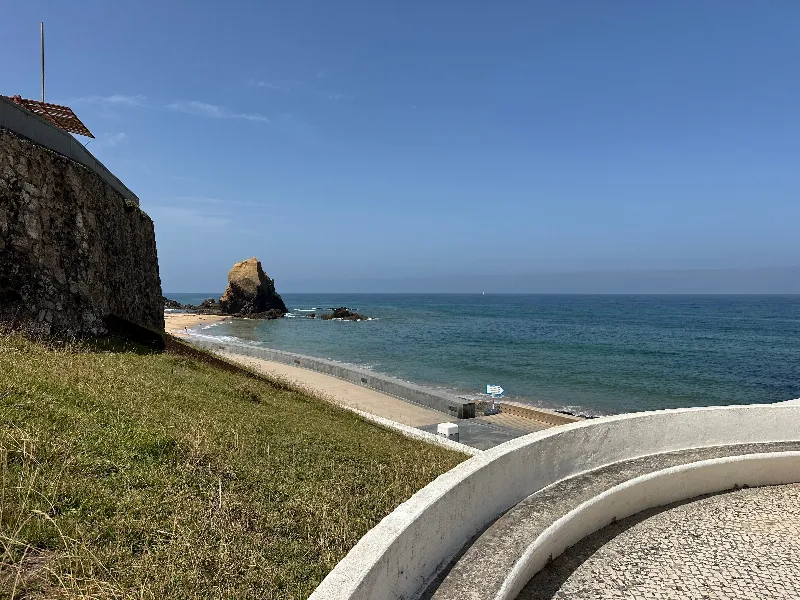
Torres Vedras is an agricultural town in Portugal's Oeste region, known for its hilltop castle, its long wine-growing tradition and the Lines of Torres Vedras, the fortifications that halted Napoleon's army north of Lisbon.
Sintra
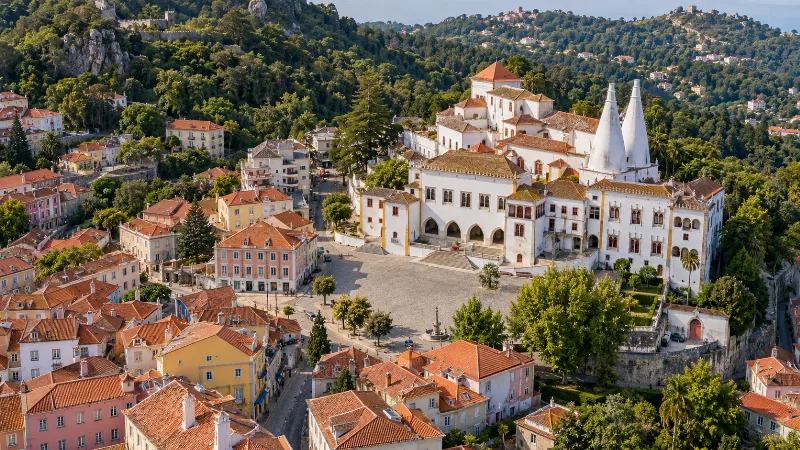
Sintra combines hilltop palaces, wooded slopes, historic estates and a compact old town within easy reach of Lisbon.
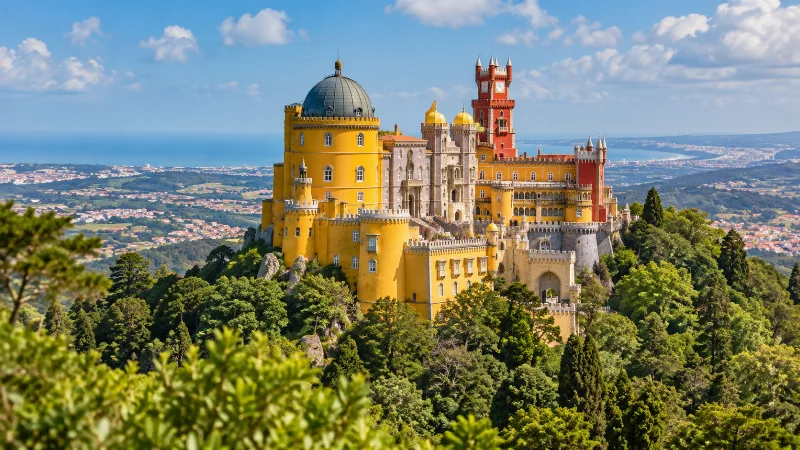
Spend a Day in Sintra
Plan a full day in Sintra with palaces, forested hills, historic streets and practical guidance for travelling from Lisbon.
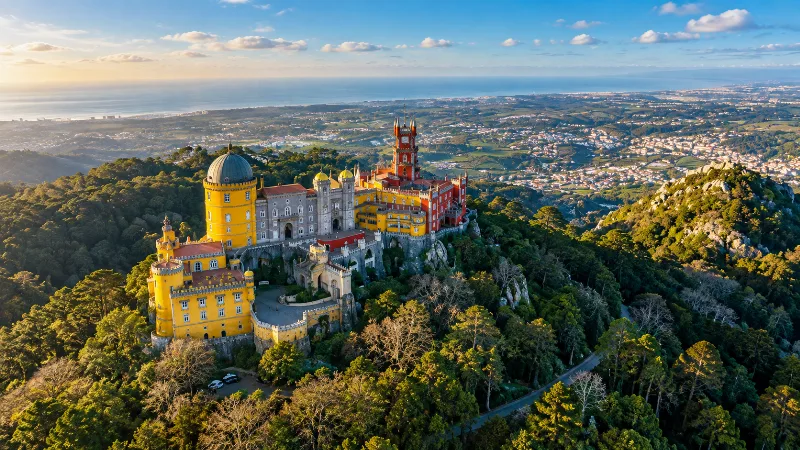
Lisbon Region
Explore Lisbon, Sintra, Cascais and Cabo da Roca through historic neighbourhoods, palaces, Atlantic scenery and easy day trips from the capital.
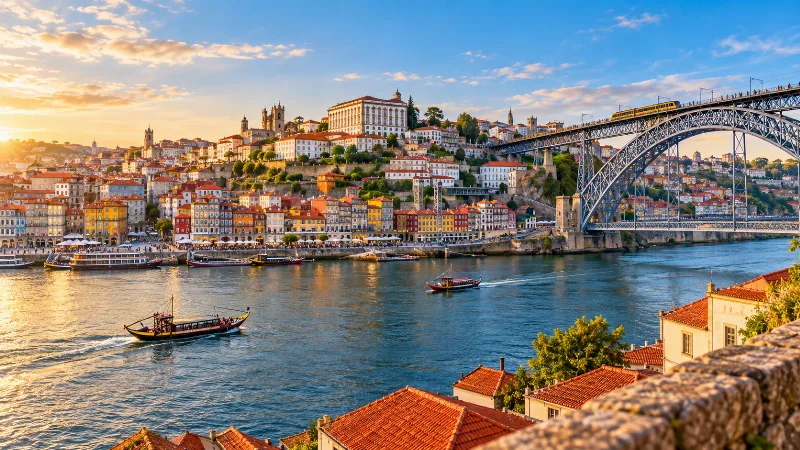
Portugal in 7 Days
A seven-day Portugal itinerary works best when it focuses on a small number of regions instead of trying to cover the entire country at speed.
Exploring the Palaces of Sintra
Explore exploring the palaces of sintra with a practical guide to notable places, regional landscapes, local heritage and travel planning in Portugal.