
Peniche
Peniche is a working fishing town on a rocky Atlantic peninsula in central Portugal, enclosed by a fortress that later became a political prison and now houses a national museum. Its cliffs, surf beaches and the offshore Berlengas islands shape daily life as much as the harbour does.
Peniche lies on Portugal's central Atlantic coast, in the district of Leiria and roughly 80 kilometres north of Lisbon. It is a working town rather than a resort: the harbour on the sheltered side of the peninsula still lands sardines and other shoaling fish, the fish auction and canning plants provide employment, and the older streets huddle inside and around a fortress that once guarded the approaches to Lisbon. The open ocean is visible from most of the town, and the Berlengas, a small granite archipelago, sit on the horizon to the west.
A peninsula joined to the mainland
The town stands on a rocky peninsula about four kilometres long that narrows towards Cabo Carvoeiro at its western end. In the Middle Ages the site was an island, separated from the mainland by a channel; sand drifting along the coast gradually built the low isthmus that now links it to the shore, and by the seventeenth century the connection had stabilised. The silting that created this neck of sand also choked the old harbour of Atouguia da Baleia, a few kilometres inland, which lost its maritime role to Peniche.
Two distinct areas make up the town. The historic quarter occupies the rock, with narrow streets and low houses, while the later town spreads across the sandy isthmus around the port and the long beach on its eastern side. The municipality has around 15,000 residents, and although tourism and surfing now bring in significant income, fishing and fish processing still give the place its working character.
From island to fortified town
Archaeological evidence shows long use of the area, including occupation of the Gruta da Furninha, a cave site with deposits from the Middle Palaeolithic to the Chalcolithic. In the thirteenth and fourteenth centuries the anchorage served fishermen and whale hunters operating from Atouguia, and the nearby islet of Baleal takes its name from that trade. Peniche itself remained a small, thinly populated dependency of Atouguia until 1609, when it was elevated to the status of vila and became a municipal seat in its own right.
Its position on the sea route to the capital made it strategically valuable. A round bastion was begun in 1557–58, walls were added in the following decade, and the defences were strengthened again in the seventeenth century as part of a wider coastal system that also included the forts at Consolação, Baleal and on Berlenga. The earthquake of 1 November 1755 and the tsunami that followed damaged buildings and part of the town wall. Sardine fishing and the canning industry expanded through the nineteenth and twentieth centuries, drawing migrants from the surrounding countryside, and Peniche was granted city status in 1987.
The fortress, the walls and the old town
The Fortaleza de Peniche follows an irregular polygon that adapts to the rocky ground, with bastions, curtains, a ravelin protecting the only landward gate and a wet ditch on the landward side; on the seaward side the walls rise directly from the cliff. The Chapel of Santa Bárbara stands within the enclosure, and the complex was classified as a national monument in 1938. It was adapted for use as a prison from 1807 onwards and served as a political prison during the Estado Novo, between 1933 and 1974. In 1960 a group of prisoners escaped, among them the Communist leader Álvaro Cunhal. The building now holds the National Museum of Resistance and Freedom, opened in 2017, which includes reconstructed prison spaces alongside displays on the region.
Inside the old walls the streets are narrow and mostly pedestrian, lined with whitewashed houses, stone doorframes and small shops. The parish church of São Pedro and the Misericórdia church are the principal religious buildings in the centre, both rebuilt or altered after the 1755 earthquake. Outside the walls, the town is more ordinary: apartment blocks, warehouses and boatyards cluster along the road to the port.
Cliffs, islands and open Atlantic
The western coast is a line of limestone cliffs cut into platforms and gullies, with fossil-bearing rock exposed at several points. Near Cabo Carvoeiro, the lighthouse of 1796 stands above the sea, and short paths lead to rock formations such as the Papôa and the Nau dos Corvos. The Berlengas lie about ten kilometres offshore and form the only island nature reserve on the Portuguese mainland, established in 1981 and later recognised as a UNESCO biosphere reserve. Berlenga Grande is roughly 1.5 kilometres long and rises to about 85 metres, with granite stacks, seabird colonies and the seventeenth-century Fort of São João Baptista. Boats run from Peniche harbour in the warmer months, and landings are limited to protect the site.
South and east of the peninsula the water is calmer. The beaches at Consolação and Baleal offer shelter for families, while Supertubos, on the long Atlantic beach at Medão Grande, produces fast, hollow waves that have made the town a fixture on the international surfing circuit.
Fishing, lace and the rhythm of the year
The fleet works mainly with purse seines, targeting sardine, mackerel and horse mackerel, and the pattern of the year still follows fishing seasons, quotas and the weather rather than the visitor calendar. Alongside the port, bobbin lace has been made in Peniche for more than four centuries. It was traditionally work for women whose husbands were at sea, providing income when fishing failed, and it is still taught and sold in the town; the Museu da Renda de Bilros documents the craft and hosts an annual competition that began in 1990.
Religious festivals remain important. The celebrations in honour of Nossa Senhora da Boa Viagem, patron of fishermen, include a procession at sea, and the Candle Festival at the sanctuary near Cabo Carvoeiro brings pilgrims from neighbouring municipalities on the third Sunday of October. Carnival is widely observed. Fish dominates the table: caldeirada, seafood rice, grilled sardines and carapau, with simple grilled fish sold at the harbour end of town.
Places worth seeking out
- Fortaleza de Peniche: the fortress and its National Museum of Resistance and Freedom, at the southern edge of the old town.
- Museu da Renda de Bilros: a small museum in the historic centre devoted to the town's bobbin lace.
- Igreja de São Pedro: the main parish church, at the heart of the old streets.
- Sanctuary of Nossa Senhora dos Remédios: a partly rock-cut chapel near Cabo Carvoeiro, decorated with eighteenth-century tiles.
- Cabo Carvoeiro: the headland and its lighthouse, with views along the cliffs and out to the islands.
- Supertubos and Papôa: the surfing beach south-east of town and the rock formations on the northern shore.
Along the coast and inland
Baleal, a short drive north, is a former island attached by sand, with a small fort and a bay sheltered on one side. Inland, Atouguia da Baleia preserves the church of São Leonardo and the fragments of a medieval castle that once defended the old estuary port. Óbidos, about 15 kilometres to the east, is a walled town with a castle and an aqueduct; Lourinhã, roughly 20 kilometres north, is known for its Late Jurassic fossils and museum; and the lagoon at Foz do Arelho marks the mouth of the Óbidos inlet further up the coast. Nazaré, with its clifftop viewpoint and winter waves, lies about 45 kilometres to the north.
Related content
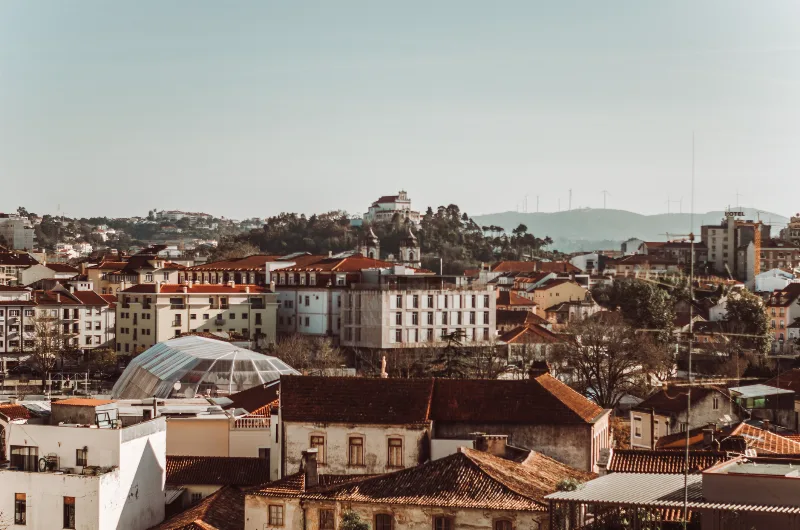
Leiria
Leiria is a central Portuguese city built around a hilltop castle above the River Lis, with a compact historic centre, a long paper-making tradition and a pine forest stretching towards the Atlantic.
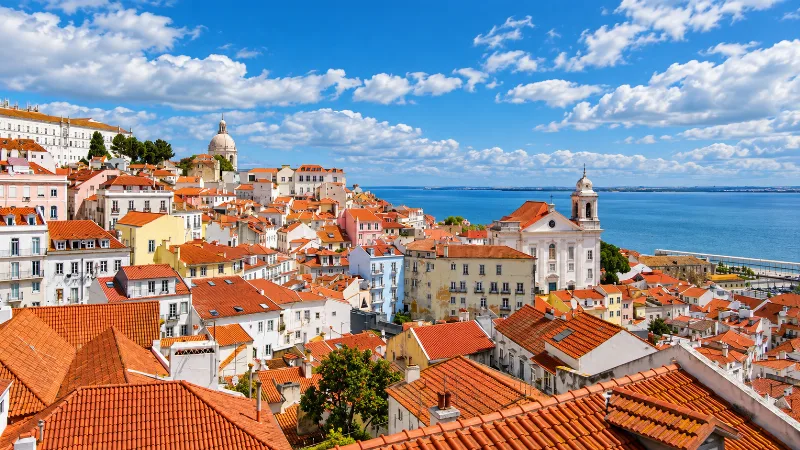
Lisbon
Portugal’s capital combines historic neighbourhoods, river views, tiled façades, viewpoints and an energetic everyday city life.
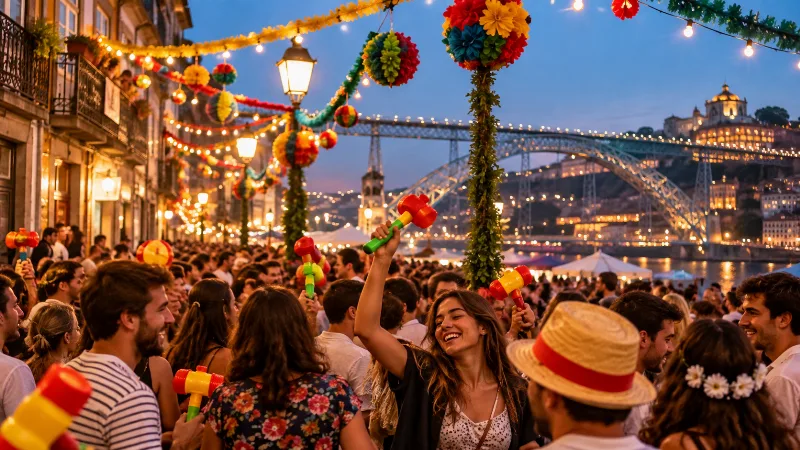
São João
São João is Porto’s major midsummer celebration, filling the city with street gatherings, music, decorations, food, fireworks and long-standing local traditions.
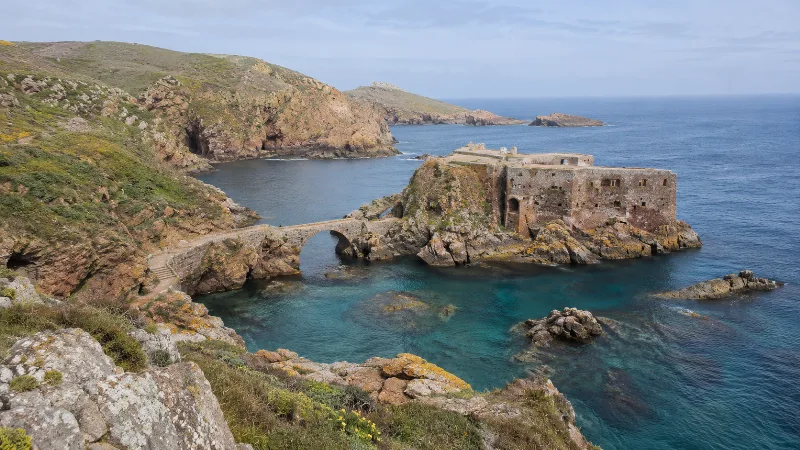
Berlengas – Rocky Islands off the Coast of Peniche
The Berlengas are a small Atlantic archipelago off Peniche, known for granite cliffs, clear water, seabirds and a coastal fortress.
Berlengas Archipelago Cliffs and Fortress
The Berlengas archipelago off Peniche combines granite cliffs, important seabird colonies and the historic Fortress of São João Baptista in a protected Atlantic setting.
Things to Do in Peniche
Explore things to do in peniche with a practical guide to notable places, regional landscapes, local heritage and travel planning in Portugal.