
Santa Maria da Feira
A city and municipality in Portugal's Aveiro district, Santa Maria da Feira grew up around a medieval castle and a famous annual fair. It combines a historic centre with a heavily industrialised landscape, cork processing above all.
Santa Maria da Feira is a city and municipality at the northern edge of the Aveiro district, in Portugal's Norte region, and forms part of the Área Metropolitana do Porto. Known locally as Feira, it lies on the corridor between Porto and Aveiro, about 30 kilometres south of Porto, and is chiefly recognised for its medieval castle, its cork industry and a summer historical festival that takes over the town for well over a week.
Location and general character
The municipality covers roughly 216 square kilometres and is divided into 21 parishes. It recorded 136,674 residents in the 2021 census, a modest decline on 2011 after more than a century of continuous growth. The built-up area is not one compact town but a dense web of former villages — Argoncilhe, Lourosa, Fiães, São João de Ver, Mozelos, Paços de Brandão and others — which have merged along roads and industrial estates. Three of them, Santa Maria da Feira, Fiães and Lourosa, hold city status, and the central parishes grouped into a single administrative union hold around 19,800 people.
The municipality borders Vila Nova de Gaia and Gondomar to the north, Arouca to the east, Oliveira de Azeméis and São João da Madeira to the south, and Ovar and Espinho to the west. It has no coastline, although the Atlantic lies only about 15 kilometres away at Espinho. The A1 motorway between Porto and Lisbon crosses the municipality, with an interchange close to the city, and the A29 also passes through. The town has no station on the main north–south railway; the nearest are at Ovar and Esmoriz.
History
Excavations on the castle hill have yielded material from the Late Bronze Age, the Iron Age and the Roman period, including altars dedicated to a local deity. The settlement below the hill appears in documents as the civitas of Santa Maria in the tenth century, when it served as the military and administrative centre of a wide territory reaching towards the Vouga. Local tradition maintains that the lords of the castle supported Afonso Henriques in the campaign that ended at São Mamede in 1128.
The name Feira derives from a market held beside the castle from the early twelfth century, which became one of the most important in the north of the country; the town that grew around it was known simply as Feira. In 1472 Afonso V created the county of Feira and granted the title to Rui Pereira, and a royal charter followed in 1514. When the family line failed around 1700 the estate passed to the Casa do Infantado, and a severe fire shortly afterwards began a long decline in which the castle fell into ruin. Reconstruction was begun by the municipality in 1887, accelerated after a royal visit in 1908, and the monument was classified in 1910. The town remained Vila da Feira until 14 August 1985, when it was elevated to city status and formally adopted the name Santa Maria da Feira. Over the twentieth century the parishes industrialised quickly, with cork, footwear, metalwork and plastics displacing agriculture as the main employers.
Architecture
The castle is the defining structure. Its walls follow an irregular plan and are crowned with battlements, cruciform arrow slits and later openings for firearms. The tall square keep is reinforced by corner turrets topped with conical pinnacles, and the entrance is covered by a barbican and a ditch cut into rock. Inside, a well is reached by a spiral staircase, and ruins of a seventeenth-century manor house stand in the parade ground. An octagonal Baroque chapel from 1656, dedicated to Nossa Senhora da Encarnação, leans against the outer wall.
Below the hill, the older streets of the centre cluster around the sixteenth-century Convento do Espírito Santo, usually called the Convento dos Lóios, which now houses the municipal museum and its archaeological collections. The parish church of the Espírito Santo and the Misericórdia church, from which the winter procession once set out, stand nearby. Around them the townscape mixes nineteenth-century town houses, late twentieth-century apartment blocks and low industrial halls. On the edge of the city, close to the castle, the Europarque events complex spreads over 78 hectares and six buildings and hosts congresses, concerts and trade events.
Natural surroundings
The land is gently rolling, drained by small rivers such as the Cáster and the Uíma, which cut shallow valleys through granite and sandy soils. Woodland of maritime pine and eucalyptus alternates with small fields of maize, vines and vegetable plots, but settlement is dense and the countryside is fragmented rather than wild. The coast at Espinho, the lagoon of the Ria de Aveiro to the south and the hills around Arouca and Freita to the east are all within easy reach. In the parish of Caldas de São Jorge, warm mineral springs gave rise to a small spa resort.
Local culture and everyday life
The Festa das Fogaceiras, held on 20 January and a municipal holiday, is the town's oldest tradition. It fulfils a vow made to São Sebastião in 1505, when plague was sweeping the area: girls dressed in white, with coloured sashes, carry sweet bread called fogaça on their heads in a civic procession to the parish church, where the loaves are blessed. The fogaça is shaped to suggest the castle keep and its four pinnacles, and the same ceremony is repeated by emigrant communities in Brazil, Venezuela and South Africa.
Since 1996 the Viagem Medieval has recreated a medieval court around the castle for almost a fortnight each summer, with each edition taking a different reign or episode as its theme. Imaginarius, a street theatre festival first staged in 2001, adds a second large event to the calendar. Day to day, the municipality functions largely as an industrial and commuter district: many residents travel to Porto for work, parish associations and Holy Week observances remain strong, and the noise of the cork and footwear factories is as familiar as the castle skyline above the town.
Notable places
- The castle, open to visitors and offering wide views over the town and surrounding hills.
- The Museu Convento dos Lóios, the municipal museum in the former convent, holding archaeology, art and local history.
- The Museu do Papel in Paços de Brandão, opened in 2001 and devoted to the paper industry that shaped that parish.
- The museum at Santa Maria de Lamas, known for miniature models of Portuguese monuments made from cork.
- The spa hamlet of Caldas de São Jorge, with its springs and wooded setting.
- The Iron Age hillfort site at Romariz, one of the area's earliest defended settlements.
Nearby destinations
Espinho, about 15 kilometres west, offers beaches, a seafront promenade and a long-established fish auction. Ovar, to the south-west, sits beside the Ria de Aveiro and is noted for its tiled façades and carnival. São João da Madeira, immediately south, has a museum devoted to hat-making, while Porto lies about 30 kilometres north and Aveiro, with its canals and salt pans, roughly 40 kilometres south. Inland, Arouca combines a former monastery with a geopark and the wooded Paiva valley.
Related content
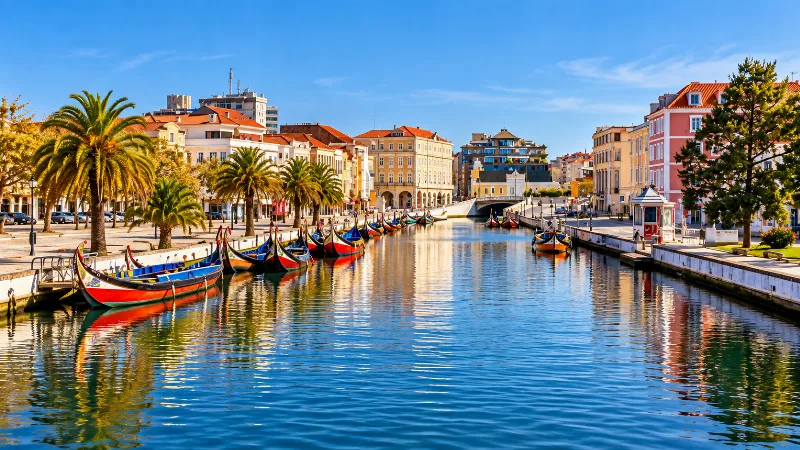
Aveiro
Aveiro is a small coastal-region city with canals, Art Nouveau details, colourful boats and easy access to lagoons and Atlantic landscapes.
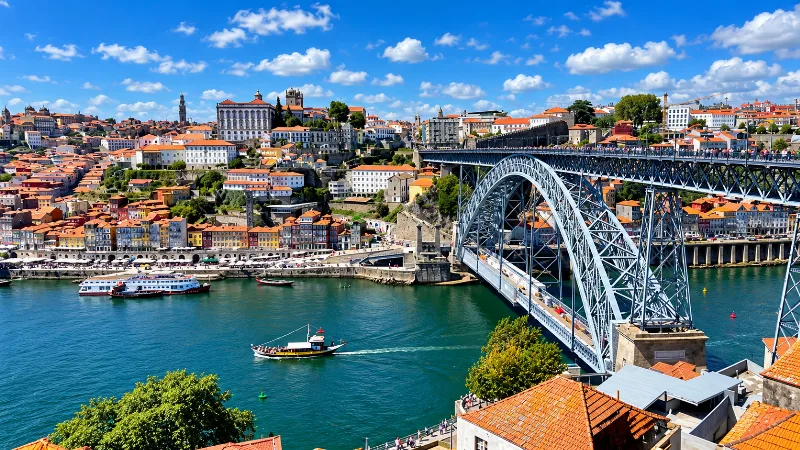
Porto
Porto is a compact northern city of steep streets, granite architecture, riverfront views, historic districts and strong local character.
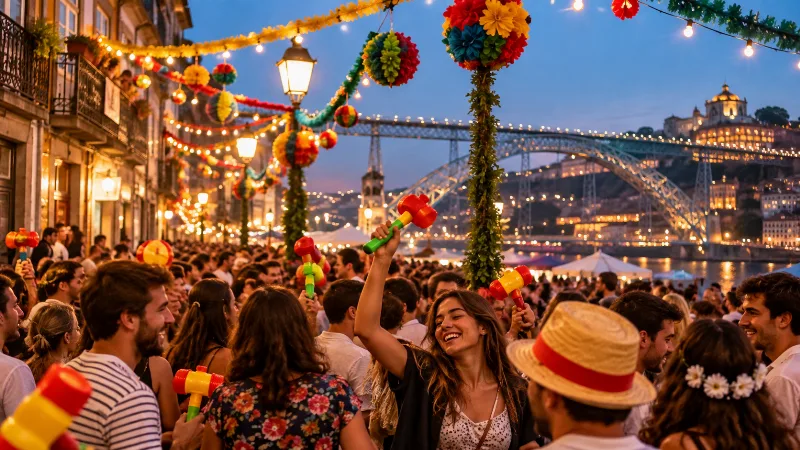
São João
São João is Porto’s major midsummer celebration, filling the city with street gatherings, music, decorations, food, fireworks and long-standing local traditions.
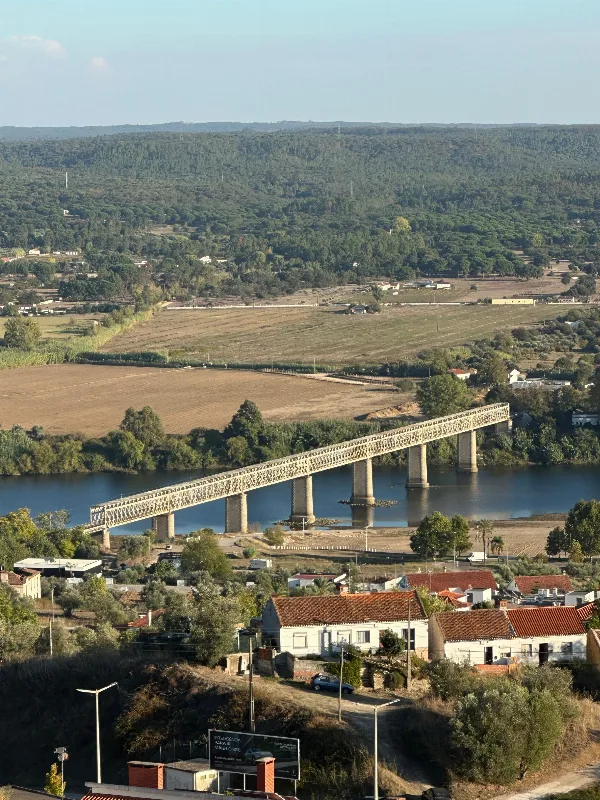
Santarém
A Ribatejo town set on a plateau above the River Tagus, Santarém is known for its cluster of Gothic churches, its medieval street plan and its long relationship with the farmland below.
Barcelos
A Minho town built around a medieval bridge and a long-running Thursday fair, Barcelos is the home of Portugal's rooster legend and a living centre of popular craft.
Tomar
Tomar combines the Convent of Christ, historic streets, riverside gardens and architectural heritage connected to the Knights Templar and the Order of Christ.