
Santarém
A Ribatejo town set on a plateau above the River Tagus, Santarém is known for its cluster of Gothic churches, its medieval street plan and its long relationship with the farmland below.
Santarém is a city of around 30,000 people set on a broad plateau above the right bank of the River Tagus, some eighty kilometres north-east of Lisbon. It is the capital of its district and the traditional centre of the Ribatejo, the region of river plains, cattle and horses that stretches along the Tagus. From the southern edge of the old town the ground falls away steeply to the river and to the flat farmland beyond, a view that has shaped both the town's defences and its character. The number and quality of its medieval churches have long earned Santarém the nickname of Portugal's Gothic capital.
Location and general character
The municipality covers about 550 square kilometres and is divided into eighteen parishes, with a population of roughly 58,700 at the 2021 census. The city itself occupies the crown and southern slope of the plateau, where the historic centre clusters inside the line of the old walls, while most modern housing, industry and retail have spread north and east towards the station and the motorway. Santarém is an administrative and service centre for a wide rural area and a junction on the main Lisbon–Porto railway, which puts much of the city within commuting distance of the capital. Summers are hot and dry, winters mild and damp, and the exposed edge of the plateau catches a wind that is a familiar topic of local conversation.
History
The site was occupied in Roman times as Praesidium Iulium Scalabis, a town of some importance in the province of Lusitania, and its inhabitants still call themselves escalabitanos. After periods of Visigothic and then Moorish rule, the town was taken in 1147 by Afonso Henriques in a night assault on the castle led by the knight Mem Ramires, several months before the capture of Lisbon. A popular tradition links the name Santarém to Santa Iria, a holy woman venerated locally. Under the early Portuguese monarchy Santarém was often a royal residence and hosted several meetings of the Cortes, and it remained a substantial noble town throughout the later Middle Ages; the Eucharistic miracle venerated here is recorded from the thirteenth century. Its political weight declined once the court was permanently based in Lisbon, but it continued as a regional legal, ecclesiastical and market centre, and the coming of the railway in the second half of the nineteenth century tied it firmly to the Lisbon economy.
Architecture
Santarém's architectural reputation rests on its Gothic churches, and on the fact that several phases of the style can be read side by side within a small area. The Igreja da Graça, begun in 1380 for the Augustinian order and completed in the following century, is the largest. Its west front is flamboyant Gothic, with a sculpted portal and a great rose window said to have been cut from a single block of stone, while the interior follows the wide-naved conventions of the mendicant orders. Inside are the tombs of Pedro Álvares Cabral, who commanded the fleet that reached Brazil in 1500, and of Pedro de Meneses, the first governor of Ceuta, whose tomb rests on carved lions.
The Igreja de São João de Alporão, begun in the twelfth century, shows the transition from Romanesque to Gothic through a severe façade and a portal of five receding arches. Santa Clara, founded in the thirteenth century, and Marvila, rebuilt in the sixteenth with a Manueline doorway and a tiled interior, add later layers, as does the church of Santo Estêvão, now known as the Igreja do Santíssimo Milagre, whose Renaissance interior survives behind a plain front. Around them the old streets are lined with whitewashed and azulejo-clad houses, wrought-iron balconies and a few aristocratic townhouses, with the Torre das Cabaças, a fifteenth-century clock tower twenty-two metres high, rising above the roofs of the lower town.
Natural surroundings
Below the plateau the Lezíria stretches to the river: an alluvial plain of fields and grazing land, cut by drainage channels and dotted with the low islands, or mouchões, that the Tagus builds and shifts within its bed. The soil is rich and the farming intensive, with rice, maize, tomatoes, fodder and vines, and the plain is also where bulls and horses are raised. Winter rain can still lift the river over its banks, which is why embankments and pumping stations are such a visible part of the landscape. North and west of the city the ground rises into the charneca, a drier country of cork oak, umbrella pine, olive groves and rough pasture with very few settlements. The floodplain is good bird country, especially in the wetter months, and the lanes and tracks below the town are used by walkers and cyclists.
Local culture and everyday life
Santarém is the market and service town for the Ribatejo, and the region's equestrian and cattle culture is part of ordinary life rather than a show laid on for visitors. Campinos, the herdsmen of the plain, still work cattle on horseback with a long pole, wearing the red waistcoat, green cap and sash of their calling, and the city's bullring, the Praça de Toiros Celestino Graça, hosts shows during the season. In June the Feira Nacional da Agricultura, held jointly with the Feira do Ribatejo at the exhibition ground on the edge of the city, fills Santarém with livestock competitions, machinery, food stalls, horse events and a parade of campinos and riders through the streets. The municipal holiday falls on 19 March, the feast of Saint Joseph, marked by a fair and religious ceremonies, and devotion to the Santíssimo Milagre remains strong, with the shrine on a recognised pilgrimage route.
Everyday eating is plain and generous: açorda, migas, rice dishes, grilled or pickled fish from the river and beef from local herds, served in modest tascas as much as anywhere else. The polytechnic, the district's schools and the hospital keep the city busy through the week, and the trains to Lisbon carry a steady flow of commuters in both directions.
Notable places
The best introduction to the city is the Jardim das Portas do Sol, a garden laid out inside the surviving walls of the castle at the highest point of the plateau, looking straight down over the river and the Lezíria. Nearby, the Torre das Cabaças houses a small museum devoted to timekeeping, with sundials and clocks on display and a wide view from the top floor; the eight ceramic pots on its iron frame were once thought to amplify the sound of the bell. The church of São João de Alporão holds the municipal collection of medieval sculpture and tombs, including the elaborate sepulchre of Duarte de Meneses brought from the Franciscan convent. The Museu Diocesano displays religious art in a building next to the seminary, and the Casa do Brasil, beside the Graça church and the statue of Cabral, occupies a house linked to the navigator's family. Praça Sá da Bandeira is the commercial heart of the plateau, with the covered market and the surrounding shopping streets, and steep roads and stairways drop from the old town to the riverside.
Nearby destinations
The surrounding region is easy to explore from Santarém. Golegã, upriver, is the country's horse capital and holds the national horse fair in November; Almeirim is known for its stone soup and its riverfront; Alpiarça has the Casa dos Patudos, the house-museum of the republican politician José Relvas. To the north, Rio Maior has working salt pans inland from the coast, and the sanctuary at Fátima lies about half an hour away by road. Further north, the Convent of Christ at Tomar and the castle of Almourol, on its island in the Tagus, make a full day out, as does Constância, where the Zêzere meets the Tagus. Lisbon is roughly an hour away by train or motorway, and the Atlantic beaches around Peniche and Nazaré are within reach for a longer excursion.
Related content
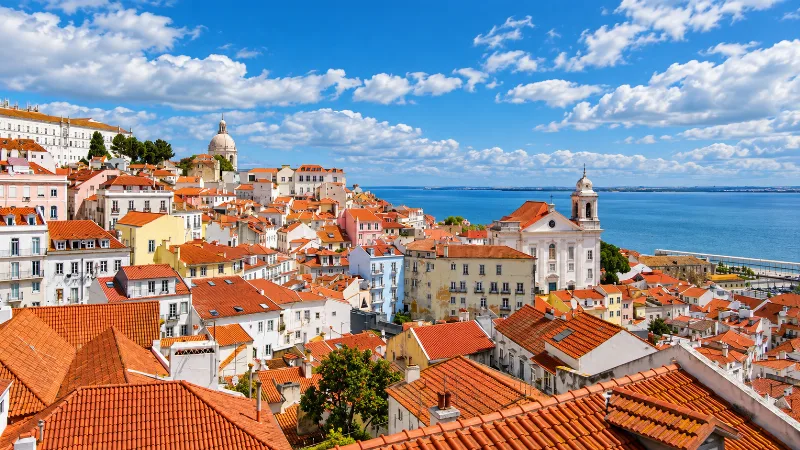
Lisbon
Portugal’s capital combines historic neighbourhoods, river views, tiled façades, viewpoints and an energetic everyday city life.
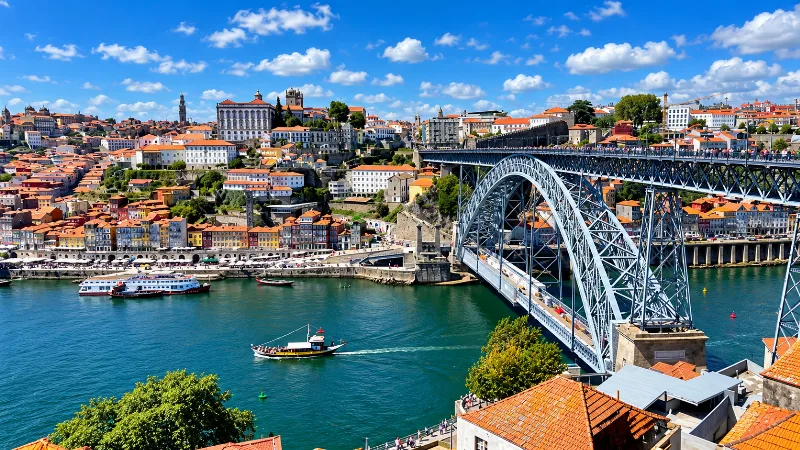
Porto
Porto is a compact northern city of steep streets, granite architecture, riverfront views, historic districts and strong local character.
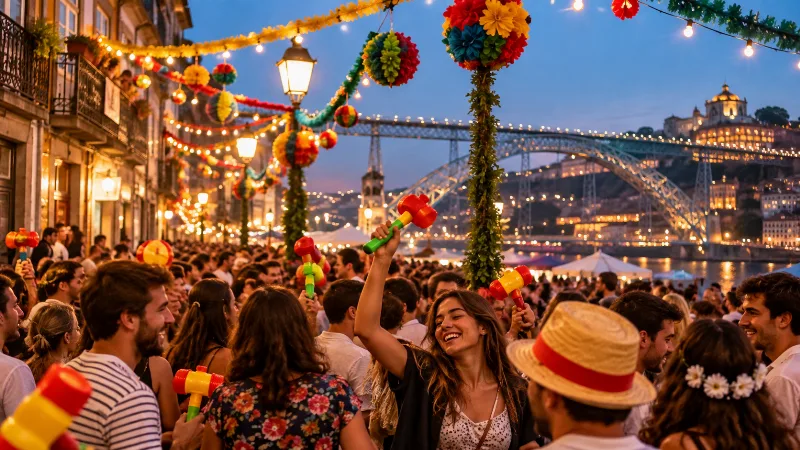
São João
São João is Porto’s major midsummer celebration, filling the city with street gatherings, music, decorations, food, fireworks and long-standing local traditions.
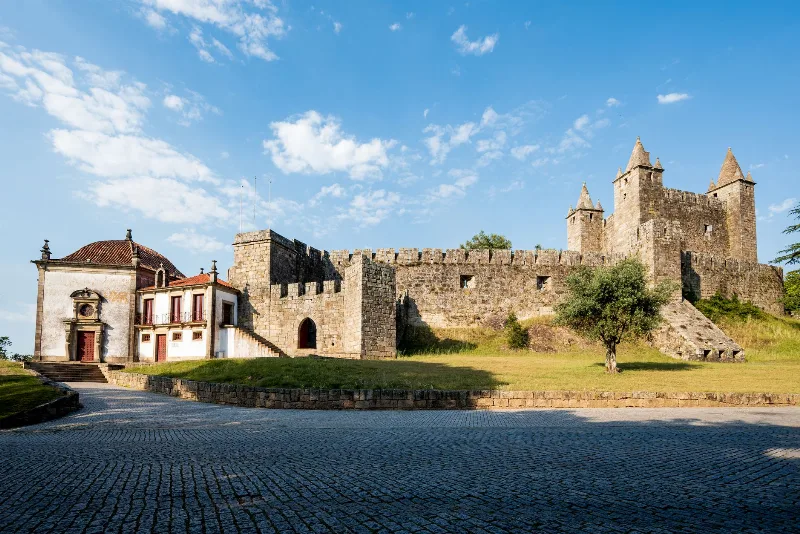
Santa Maria da Feira
A city and municipality in Portugal's Aveiro district, Santa Maria da Feira grew up around a medieval castle and a famous annual fair. It combines a historic centre with a heavily industrialised landscape, cork processing above all.
Porto's Ribeira Waterfront and Historic Bridges
Porto's Ribeira is the old riverside quarter on the north bank of the Douro, a dense grid of arcaded streets and tiled façades watched over by a succession of iron and concrete bridges.
Alcobaça
A small town in central Portugal that grew up around one of Europe's best-preserved Cistercian abbeys, with a medieval monastic complex at its heart and a valley of orchards beyond it.