
The Tagus Estuary and its Wetland Birds
The wide, shallow waters of the Tagus Estuary form one of Western Europe's most important wetlands, where mudflats, salt pans and marshes support vast numbers of resident and migratory birds within easy reach of Lisbon.
East and south of Lisbon, the River Tagus slows and spreads into a broad, shallow inland sea before turning towards the Atlantic. This is the Tagus Estuary, known in Portuguese as the Estuário do Tejo, and the wide central expanse of water is nicknamed the Mar da Palha, the "sea of straw", after the pale shimmer of its surface in low light. Covering roughly 320 square kilometres, it ranks among the largest estuaries in Western Europe and forms the most significant wetland in Portugal. For anyone interested in birds, it is also one of the most rewarding places in the country, holding internationally important numbers of waterfowl, waders and birds of prey within sight of the capital.
Geography and Landscape of the Tagus Estuary
The estuary begins where the river widens near Vila Franca de Xira and stretches downstream past Alcochete and Montijo towards Lisbon and the sea. Its character changes with the tide. At low water, extensive mudflats and sandbanks emerge across the middle of the basin, cutting the surface into channels; at high water, much of that ground disappears beneath a flat, reflective sheet. The northern shore is bordered by the flat alluvial plain of the Lezíria, a patchwork of pasture, rice fields and drainage channels. To the south, low sandy shores, salt pans and marshy inlets lie around Alcochete, Samouco and the Seixal area. The result is a landscape of unusual openness, with wide skies, strong light and a horizon broken only by distant hills and the low profile of Lisbon.
Mudflats, Salt Pans and Marshes
The estuary's value for wildlife lies in the variety of habitats packed into a relatively compact area. Intertidal mud is the most important: rich in invertebrates such as ragworms, cockles and small crustaceans, it provides feeding grounds that are exposed and then covered twice a day. Bordering the mud are salt marshes of glasswort, sea purslane and cordgrass, which shelter birds at high tide and stabilise the sediment. Traditional salt pans, worked for centuries around Samouco and Alcochete, add another layer, with shallow evaporation ponds and raised banks that suit birds nesting and feeding in open, salty conditions. Inland, freshwater marshes, reedbeds and flooded rice fields offer a contrast to the saline channels, and the mix of all these environments is what makes the estuary so productive.
Wetland Birds of the Tagus Estuary
In winter the estuary can hold well over a hundred thousand waterbirds, a figure that places it among the most important sites in Iberia. Black-tailed godwits feed in dense flocks on the mud, often alongside bar-tailed godwits, curlews, redshanks, grey plovers, dunlins and avocets. Shelducks, wigeon, teal and pintail gather on the open water, while little egrets, grey herons and spoonbills work the shallows. Greater flamingos are regular in small groups, particularly in the salt pans and the calmer southern inlets, and glossy ibis have become a familiar sight in recent decades. Black-winged stilts and Kentish plovers nest on the drier margins, and the marshes support breeding marsh harriers and, in places, little bitterns and kingfishers. Caspian terns and ospreys appear on passage, and the open skies above the flats are rarely empty.
Seasonal Rhythms of Migration
The estuary sits on the East Atlantic flyway, the route followed by birds moving between breeding grounds in northern Europe and wintering areas in southern Europe and Africa. Autumn brings a gradual arrival of waders and ducks that have bred in Iceland, Scandinavia and Siberia, and numbers build through the winter before the return movement in spring. Late summer and early autumn are particularly interesting for passage waders, when species bound further south pause on the flats to feed and moult. Even in midsummer the estuary remains alive with breeding birds, moulting ducks and roosting flocks, so there is no season in which the wetland is quiet.
Places to Watch Birds Around the Estuary
The Tagus Estuary Nature Reserve, the Reserva Natural do Estuário do Tejo, was established in 1976 and covers much of the intertidal area and the surrounding shores. Its facilities near Alcochete include hides and trails that look out over the mudflats, and the nearby traditional salt pans at Samouco are managed with birds in mind. On the northern bank, the EVOA visitor and observation area beside the Lezíria at Vila Franca de Xira has a series of lagoons and hides suited to both freshwater and saline species. Public tracks along the rice fields of the Lezíria, the banks around Ponta da Erva and the shoreline of the Seixal bay and Corroios marsh on the south bank all offer good viewpoints. Tides matter: the two or three hours either side of high water generally bring birds closer to the shore as the flats are covered.
Conservation and Careful Visiting
The estuary's bird populations depend on the survival of its mud, which is sensitive to dredging, pollution and disturbance. Feeding waders are easily displaced by walkers, dogs and low-flying drones, particularly in cold weather when they need to feed almost continuously. Visitors who stay on marked paths, use the hides, keep noise low and observe roosting flocks from a distance help to keep the site productive. Seen with patience, the Tagus Estuary offers a reminder that a major European capital can still share its doorstep with one of the continent's great natural spectacles.
Related content

Lisbon
Portugal’s capital combines historic neighbourhoods, river views, tiled façades, viewpoints and an energetic everyday city life.
The Rice Fields and Marshlands of the Sado Estuary
A concise introduction to the rice-growing plains and wetland habitats of the Sado Estuary around Comporta, and to the seasonal patterns that shape this Atlantic landscape.
The Salt Pans of Castro Marim and Sapal Nature Reserve
A look at the traditional salt pans and tidal marshes around Castro Marim in the eastern Algarve, where hand-harvested salt, wading birds and the Guadiana estuary exist side by side.
Palmela
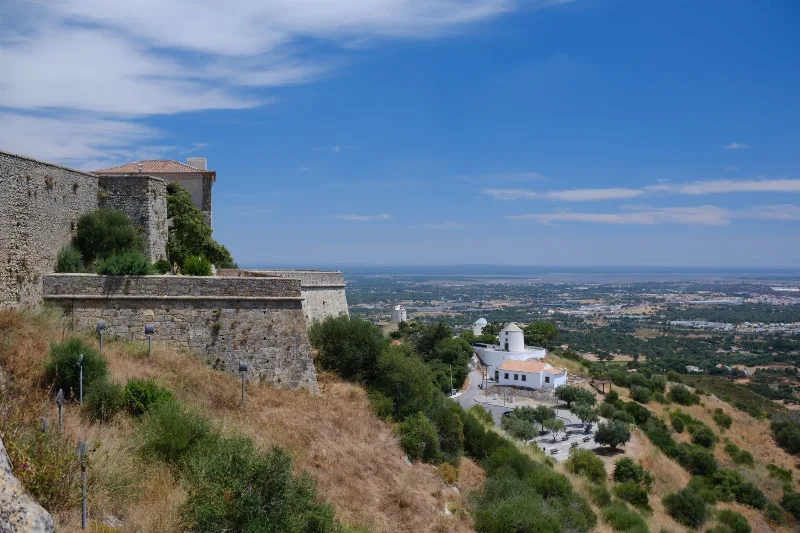
A hilltop town in the Setúbal district, Palmela combines a long medieval castle wall, sandy-soil vineyards and wide views over the plain between the Tagus and the Sado estuary.

Lisbon Region
Explore Lisbon, Sintra, Cascais and Cabo da Roca through historic neighbourhoods, palaces, Atlantic scenery and easy day trips from the capital.
Ria Formosa – Lagoons and Barrier Islands of the Algarve
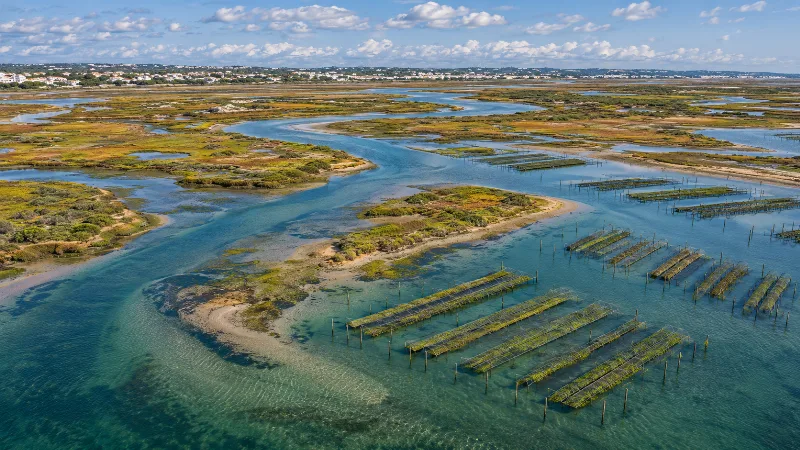
Ria Formosa is a coastal lagoon system in the Algarve, with barrier islands, salt marshes, sandy beaches and diverse birdlife.
Explore Ria Formosa by Boat
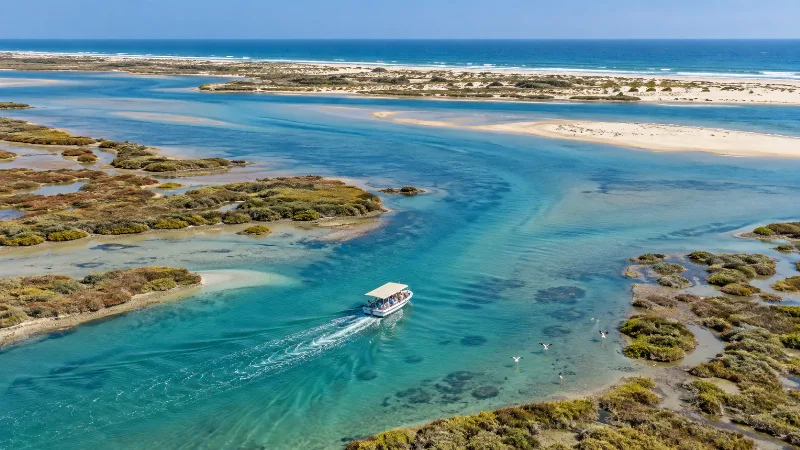
Discover the Algarve’s lagoon channels, wetlands and barrier islands on a boat trip through Ria Formosa.
Arrábida Natural Park – Green Hills and Sheltered Bays
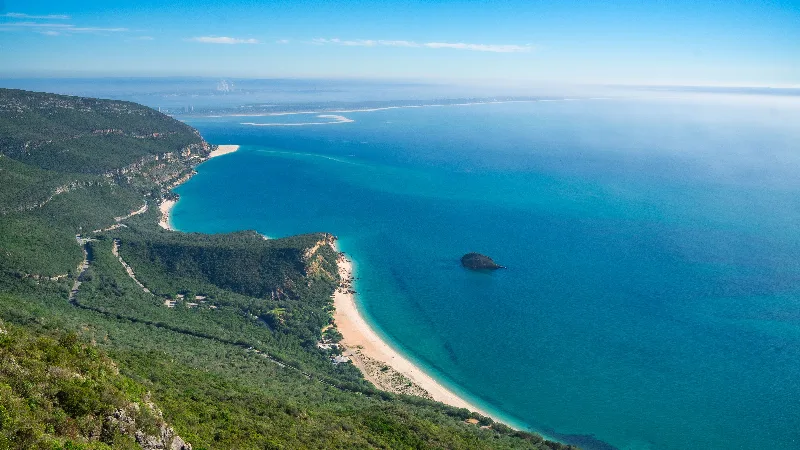
Arrábida Natural Park combines limestone hills, Mediterranean vegetation and sheltered beaches along the coast near Setúbal.