
Almourol Castle on the Tagus River
Almourol Castle rises from a small granite island in the Tagus, a compact medieval fortress with Templar associations and wide views across the river valley of the Ribatejo.
Almourol Castle — the Castelo de Almourol — stands on a low granite island in the middle of the Tagus River, in the Ribatejo region of central Portugal. Its silhouette is one of the most recognisable in the country: a tight cluster of walls, battlements and tall cylindrical towers gathered on a rocky outcrop barely larger than the fortress itself, with the broad river flowing past on every side. Reaching it requires a short boat crossing, and that approach, with the castle growing steadily closer across the water, is part of what makes the place memorable.
An island fortress in the middle of the Tagus
The island lies in the stretch of the Tagus that runs between the towns of Vila Nova da Barquinha and Constância, close to the old river crossing at Tancos. Because the granite island was naturally defensible, it was occupied long before Portugal existed as a kingdom; traces of earlier settlement have been identified on the site, and the position was clearly valued by successive peoples who controlled the river. What visitors see today, however, is essentially a medieval structure, later restored, whose proportions feel remarkably human-scale. The castle is not a sprawling palace complex but a compact stronghold, and it can be walked around in a modest amount of time.
The Templar connection and medieval history
Almourol is closely associated with the Knights Templar, who were granted extensive lands and responsibilities along the Tagus in the twelfth century as the young Portuguese kingdom sought to secure its frontiers. The castle is traditionally linked to Gualdim Pais, the order's master in Portugal, under whose authority the site was refortified. It formed part of a wider defensive chain that watched over the river, alongside strongholds such as those at Tomar and Zêzere, controlling movement along a waterway that was both a route and a boundary. With the suppression of the Templars in the fourteenth century, the castle passed to the Order of Christ, and in later centuries its military importance faded. It was classified as a national monument in the early twentieth century and underwent restoration work in the mid-twentieth century, which gave it much of its present tidy, unified appearance.
Architecture and layout
The plan is essentially a walled enclosure following the shape of the rock, reinforced by several towers. A tall keep rises above the rest, and the battlemented curtain walls connect a series of smaller round towers, giving the fortress the slightly irregular, organic outline typical of military architecture adapted to awkward terrain. Inside, the spaces are narrow and austere: a small courtyard, short flights of stone steps, doorways set into thick walls and openings that frame sudden views of the water. The masonry is granite, grey and weathered, and the whole structure is wrapped in vegetation — shrubs, mosses and trees that soften the stone and make the island feel greener than its defensive purpose might suggest.
Approaching Almourol Castle and the surrounding river landscape
Access is by small boat from the riverbank, a crossing of only a few minutes that gives a fine sense of the castle's setting. From the water, the relationship between the fortress and the river becomes clear: the island commands a wide reach of the Tagus, with low hills, olive groves and farmland on either bank. The river here is broad and generally calm, and the light changes constantly across its surface.
The surrounding countryside rewards a slower visit. Nearby Constância sits above the meeting point of the Zêzere and the Tagus, a small town of narrow streets and river views. Barquinha and the riverside areas around Tancos offer quiet paths along the water, and the wider region is characterised by pine woods, cork oak, market gardens and the flat fertile fields of the Ribatejo. Birdlife is abundant along the river margins, and the valley is well suited to walking, cycling and simply watching the water go by.
Almourol is best understood as a place where architecture, history and landscape meet in a single view. Its appeal lies less in scale than in setting: a small, sturdy medieval fortress holding its ground in the middle of one of the Iberian peninsula's great rivers.
Related content
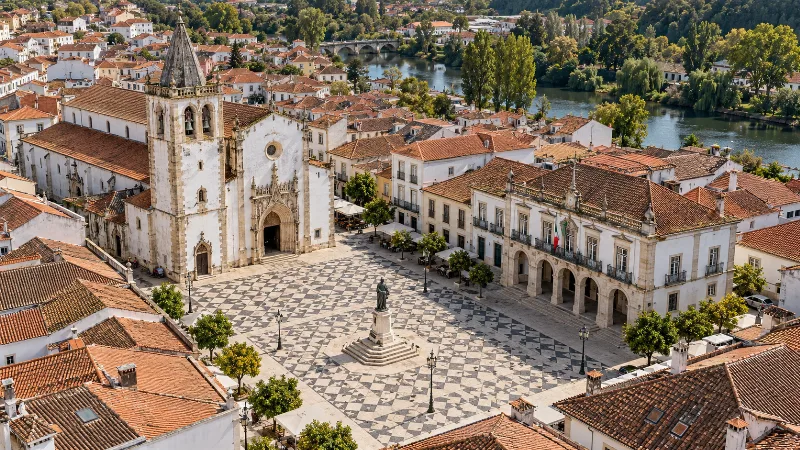
Tomar
Tomar combines the Convent of Christ, historic streets, riverside gardens and architectural heritage connected to the Knights Templar and the Order of Christ.
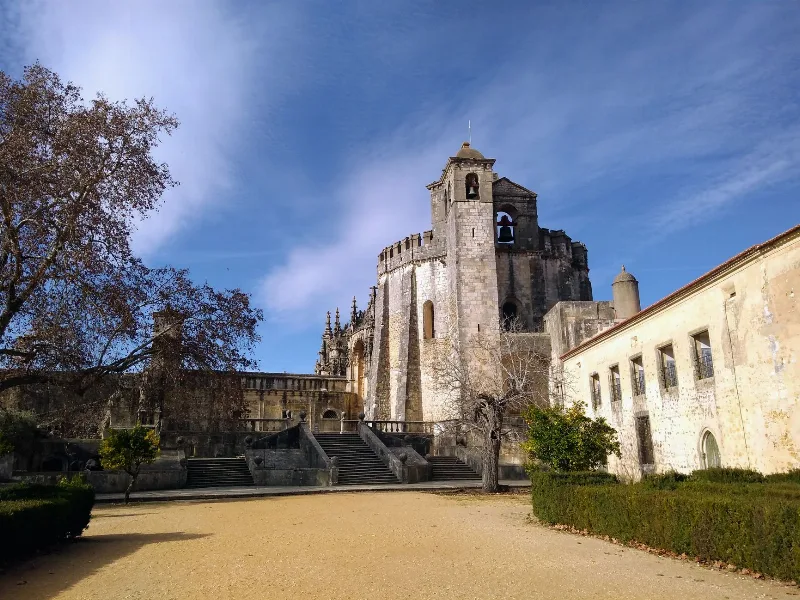
Tomar
Tomar is a riverside town in central Portugal whose skyline is dominated by the Convento de Cristo, a UNESCO-listed complex raised around a Templar castle. A gridded historic centre, a long aqueduct and a four-yearly flower festival give it a character of its own within the Ribatejo.
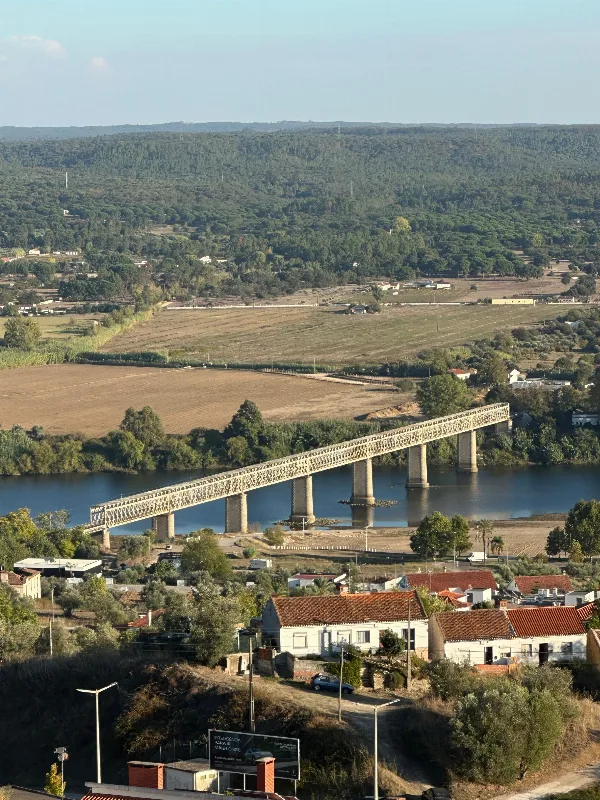
Santarém
A Ribatejo town set on a plateau above the River Tagus, Santarém is known for its cluster of Gothic churches, its medieval street plan and its long relationship with the farmland below.
The Convent of Christ in Tomar and Templar Heritage
A fortified monastery above the River Nabão, the Convent of Christ preserves the legacy of the Knights Templar alongside some of Portugal's most celebrated Manueline stonework.
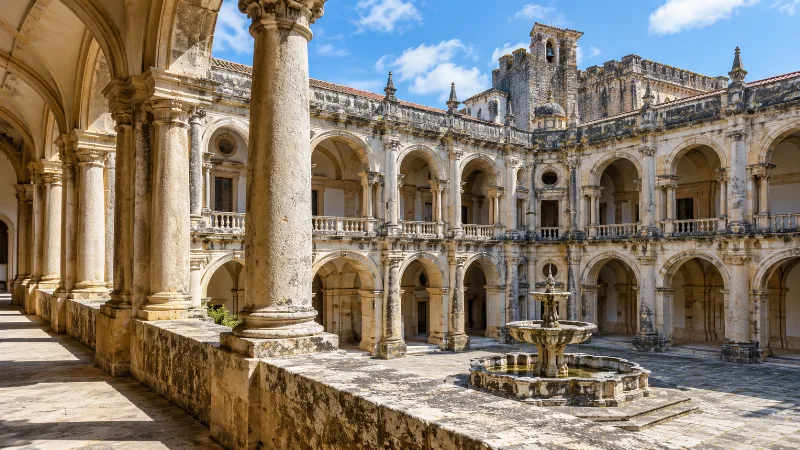
Discover Tomar’s Convent of Christ
Explore the Charola, cloisters and Manueline details of the Convent of Christ, then continue into Tomar’s historic centre.
Exploring the Historic Town of Tomar
Explore exploring the historic town of tomar with a practical guide to notable places, regional landscapes, local heritage and travel planning in Portugal.
Festa dos Tabuleiros in Tomar
Every four years the streets of Tomar fill with towering trays of bread and flowers, carried on the heads of local girls in one of Portugal's most distinctive religious processions.
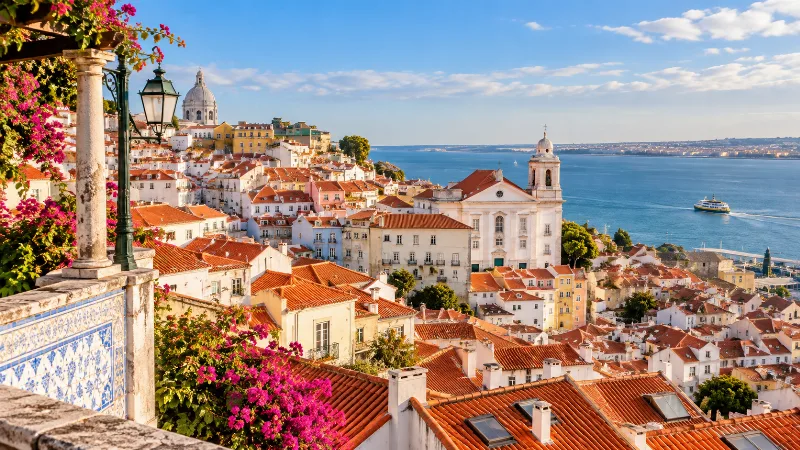
Walk Through Alfama and Lisbon’s Viewpoints
Explore Lisbon on foot through Alfama, Castelo and Graça, combining historic streets, hilltop viewpoints and views across the Tagus.