
Festa dos Tabuleiros: Tomar's Festival of Flower-Decked Trays
Every four years the streets of Tomar fill with towering trays of bread and flowers, carried on the heads of local girls in one of Portugal's most distinctive religious processions.
The Festa dos Tabuleiros is a festival held in the central Portuguese city of Tomar roughly every four years, usually spanning several days in late June or early July. Its centrepiece is a procession in which hundreds of girls and young women walk through the historic streets balancing tall, flower-covered trays on their heads, each accompanied by a young man. The event is rooted in centuries of devotion to the Holy Spirit and has been recognised within Portugal's national inventory of intangible cultural heritage.
Origins in the cult of the Holy Spirit
The festival belongs to a wider tradition of Holy Spirit devotion found across Portugal and the Azores, expressed locally through small chapels known as impérios, several of which stand in Tomar's older quarters. These brotherhoods were historically associated with charitable works, and the distribution of bread and meat to the poor lies at the heart of the celebrations. Queen Isabel of Aragon, venerated for her generosity in the fourteenth century, is often linked to the growth of these customs. Over the centuries the charitable impulse was gradually wrapped in ceremonial display, producing the procession seen today.
The making of a tabuleiro
A tabuleiro is a square tray built up in tiers and crowned with a dove, the symbol of the Holy Spirit. Traditionally it holds thirty small loaves of bread, arranged in rows and interspersed with paper flowers in red, white and green, along with ears of wheat and a circlet at the top. The finished construction is remarkably tall — custom dictates that it should be roughly the height of the girl carrying it, which makes the balancing act all the more impressive. The loaves are baked locally in the weeks beforehand, and families often begin assembling their trays days in advance.
The procession through Tomar
Participants dress in white, with ribbons and sashes in the festival colours, and walk in ordered ranks along a route that passes the principal churches and squares of the old town. The procession is accompanied by marching bands and by decorated ox-carts carrying offerings of wheat, bread and produce from the surrounding countryside. Because the trays are heavy and the route is long, the young men walk beside each carrier to steady the load at intervals. Spectators line the streets and balconies, and the mood is festive rather than solemn, though the religious framing is never far from view.
Bread, meat and the sharing of the bodo
Alongside the parade, the festival includes the bodo, a distribution of bread and meat that recalls the original charitable purpose of the brotherhoods. Other ceremonies include the blessing of the trays and the display of offerings in the streets. Because the whole city takes part, the event depends on a wide network of volunteers, bakers, florists and parish groups, and it functions as a collective statement of local identity as much as a religious observance.
Visiting Tomar around the festival
Tomar itself rewards a longer stay. The Convento de Cristo, a former stronghold of the Knights Templar and later of the Order of Christ, sits on a hill above the town and contains a celebrated circular charola and a richly carved Manueline window. Below it, the river Nabão winds past well-kept gardens, old mills and pedestrian streets lined with cafés. Because the festival is held only every four years, visitors should check the current timetable in advance; outside those years, the town's impérios, churches and museum collections still illustrate the traditions that sustain it.
Related content
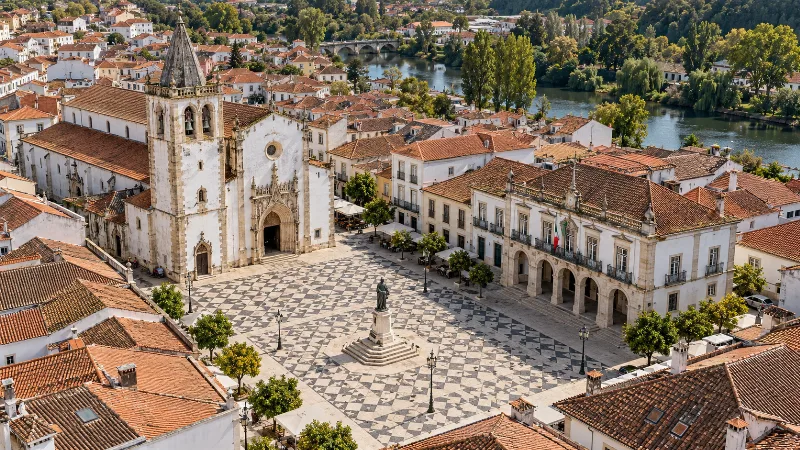
Tomar
Tomar combines the Convent of Christ, historic streets, riverside gardens and architectural heritage connected to the Knights Templar and the Order of Christ.
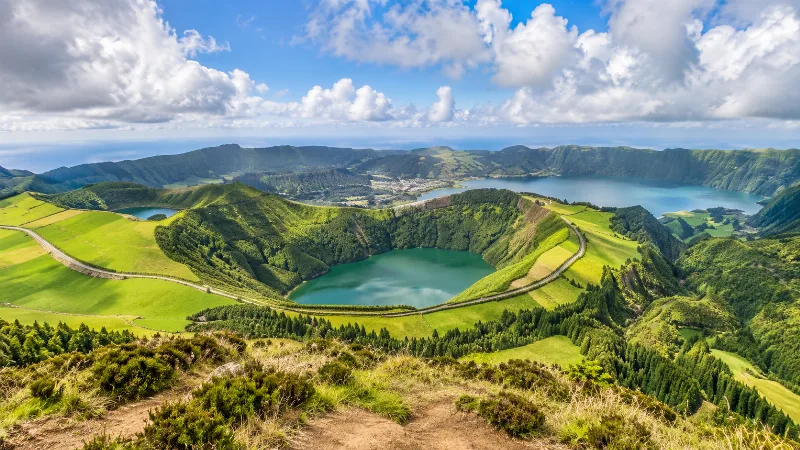
Azores
Discover the Azores through volcanic islands, crater lakes, green landscapes, Atlantic coastlines, hiking, wildlife and distinctive island communities.
The Convent of Christ in Tomar and Templar Heritage
A fortified monastery above the River Nabão, the Convent of Christ preserves the legacy of the Knights Templar alongside some of Portugal's most celebrated Manueline stonework.
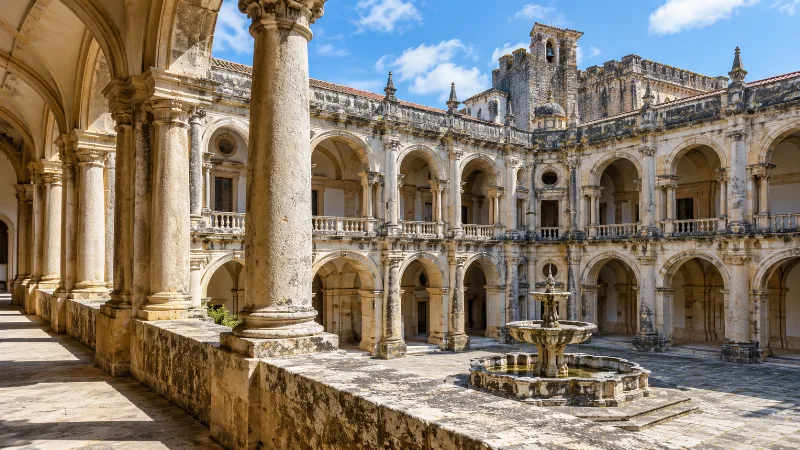
Discover Tomar’s Convent of Christ
Explore the Charola, cloisters and Manueline details of the Convent of Christ, then continue into Tomar’s historic centre.
Exploring the Historic Town of Tomar
Explore exploring the historic town of tomar with a practical guide to notable places, regional landscapes, local heritage and travel planning in Portugal.
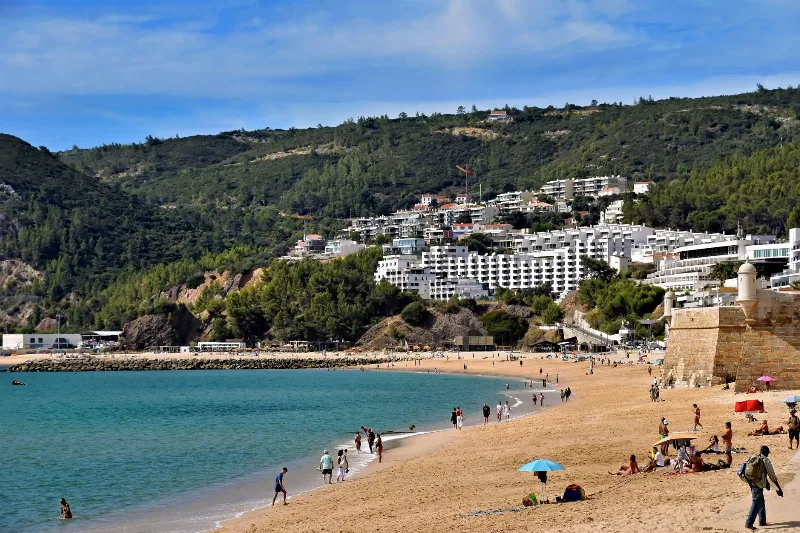
Best Regions to Visit in Portugal
Discover Portugal's most popular travel regions, from the historic cities of Lisbon and Porto to the beaches of Algarve, the countryside of Alentejo and the Atlantic islands.
Santarém
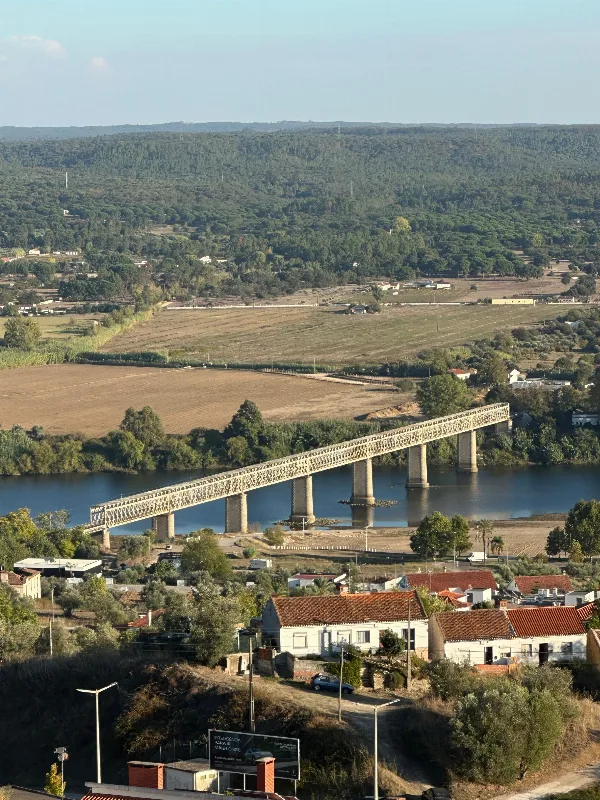
A Ribatejo town set on a plateau above the River Tagus, Santarém is known for its cluster of Gothic churches, its medieval street plan and its long relationship with the farmland below.
Ponte de Lima
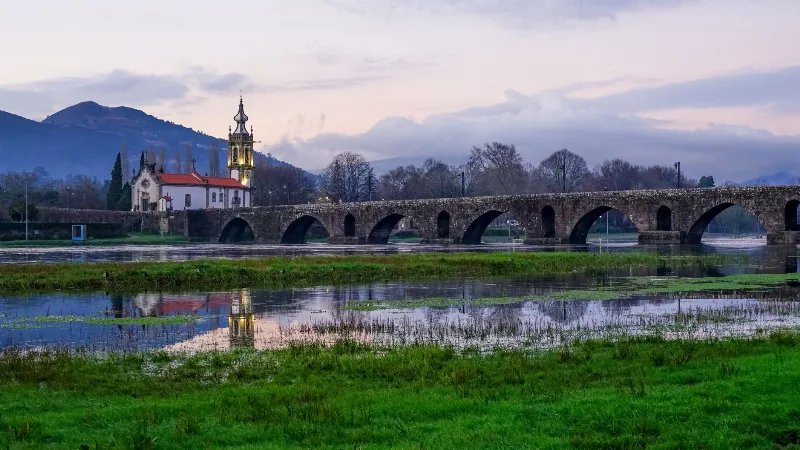
Ponte de Lima straddles the River Lima in Portugal's Minho, where a Roman and medieval bridge, granite streets and riverside gardens shape one of the north's oldest settlements.