
Ponte de Lima
Ponte de Lima straddles the River Lima in Portugal's Minho, where a Roman and medieval bridge, granite streets and riverside gardens shape one of the north's oldest settlements.
Ponte de Lima is a small town in the Lima valley in the far north-west of Portugal, in the district of Viana do Castelo and the historic province of Minho. Its name comes directly from the long stone bridge across the River Lima, and that crossing has shaped almost everything else about the place: the line of its streets, its medieval defences, its market trade and its role on the pilgrimage road to Santiago de Compostela. A charter granted by Queen Teresa in 1125, before Portugal existed as an independent kingdom, is the basis of the town's long-standing claim to be the oldest in the country.
Where Ponte de Lima lies
The town stands on the left bank of the Lima roughly 20 kilometres inland from the Atlantic, about 25 kilometres south-east of Viana do Castelo and some 35 kilometres north of Braga by road. The municipality extends well beyond the historic centre into a scatter of small parishes, farmland and wooded hills, with the river running through the middle of it. Granite underlies most of the area, and grey stone appears everywhere in walls, kerbs, door frames and the older houses. The climate is Atlantic rather than Mediterranean: mild and wet in winter, often cloudy, and damp enough in summer to keep the valley green into August. The old centre is compact and slopes gently down towards the water, with the broad Largo de Camões as its main square and narrow streets behind it rising towards the line once followed by the town walls.
From Roman crossing to walled town
Roman writers associated the Lima with Lethe, the river of forgetfulness, and local tradition holds that the legionaries of Decimus Junius Brutus refused to cross until their commander had done so and called them by name from the far bank to prove his memory intact. A tile panel on a corner of the municipal market retells the episode. More concretely, the Antonine Itinerary places a stopping point called Limia here on the road between Braga and Tude, and the first bridge is generally dated to the first century AD. A settlement grew up at the crossing, and Queen Teresa's charter of 1125 confirmed its privileges; the surviving confirmation document carries the date 1163 because records of the period used the Hispanic era, which runs 38 years ahead of the Christian calendar. Work on the walls began in 1359 and was finished around 1370, close in time to the rebuilding of the bridge, and for centuries this was the only safe crossing of the Lima. Most of the walls and gate towers were demolished in the second half of the nineteenth century to allow the town to expand, and the stone was reused in houses and paving.
Architecture and the old town
The bridge is the town's defining structure and has been protected as a national monument since 1910. It is really two bridges joined end to end. The section on the town side is a fourteenth-century Gothic work of pointed arches carried on heavy piers with triangular cutwaters and small openings above them, which reduce the weight of the structure and allow floodwater to pass at height. A stone cross bearing the town's arms stands at the midpoint of the paved deck, and traffic and pedestrians still share the roadway. Beyond the church of Santo António da Torre Velha, the older stretch continues over what is now dry ground on five visible round arches, broader and rougher than the medieval work, with the stump of the Torre Velha beside it. The Capela do Anjo da Guarda, a small Romanesque and Gothic chapel on the far bank, was rebuilt in the eighteenth century after flood damage. In the town itself, the Igreja Matriz, the two surviving towers of São Paulo and da Cadeia on the Passeio 25 de Abril, and a number of granite manor houses with carved coats of arms above their doorways give the streets their particular character.
The river and its surroundings
The Lima rises in the hills of Galicia, crosses into Portugal upstream of Ponte de Lima and reaches the sea at Viana do Castelo. Within the town its banks are lined with planes, alders and willows, and the wide Avenida dos Plátanos and the riverside walks are used daily by walkers, runners and cyclists. Sandbanks and small islands appear when the water is low; in winter the river can rise quickly and has flooded the lower streets many times over the centuries. The valley floor is given over to maize, potatoes, vegetables and the trellised vines from which Vinho Verde is made, while the surrounding hills carry pine, eucalyptus and remnants of oak woodland. The Parque do Arnado provides open lawns and play areas close to the centre, and the wooded slopes of the Serra de Arga lie to the west.
Local culture and everyday life
A fortnightly market of medieval origin is still held on the river sand, and the trading instinct behind it remains visible in the shops and cafés around the Largo de Camões. Vinho Verde from the Lima sub-region is the local wine, and a municipal centre near the river explains its production. The calendar is busy with events that are rooted in religious and agricultural custom rather than staged for visitors. On the day before Corpus Christi, the Vaca das Cordas ritual brings a bull into the streets, where it is led three times around the parish church before being taken down to the riverside; the tradition is documented from before 1646. That night, flower carpets are laid along the processional route. In June the Festa do Vinho Verde e dos Produtos Regionais fills the exhibition ground, and in September the Feiras Novas, the town's largest annual fair, combines a religious feast with music, processions and stalls. The International Garden Festival, held on the riverside from late May to the end of October, has commissioned temporary gardens from designers since the early 2000s and was recognised at the Garden Tourism Awards in 2013.
Notable places in the centre
- The Roman and medieval bridge, best seen from the riverside paths on either bank.
- Largo de Camões, the main square, laid out after the demolition of the old gate towers in the 1850s and 1860s.
- The Igreja Matriz, a Gothic parish church much altered in later centuries, standing among the oldest streets.
- The Torres de São Paulo and da Cadeia, the last substantial fragments of the medieval wall.
- The Museu dos Terceiros, in a former convent church, with religious sculpture, gilded woodwork and azulejo panels.
- The Paço do Marquês, a former noble residence now used for exhibitions on the town's history.
Nearby destinations
Viana do Castelo, with its seafront, funicular and hilltop sanctuary, is the natural next stop and can be reached in half an hour by car or by train from the station a few kilometres outside town. Upstream, Ponte da Barca and Arcos de Valdevez sit in quieter stretches of the same valley, and beyond them the Peneda-Gerês National Park offers mountain roads, terraced slopes and villages such as Sistelo. Braga and Barcelos are both within easy reach for a day, and the Minho estuary towns of Caminha and Vila Nova de Cerveira lie to the north-west along the Spanish border.
Related content
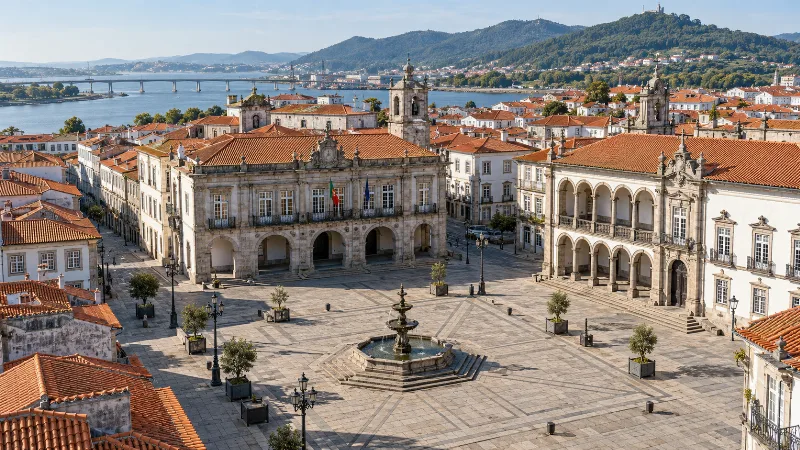
Viana do Castelo
Viana do Castelo combines historic squares, maritime heritage, Atlantic beaches and hilltop views over the Lima River estuary.
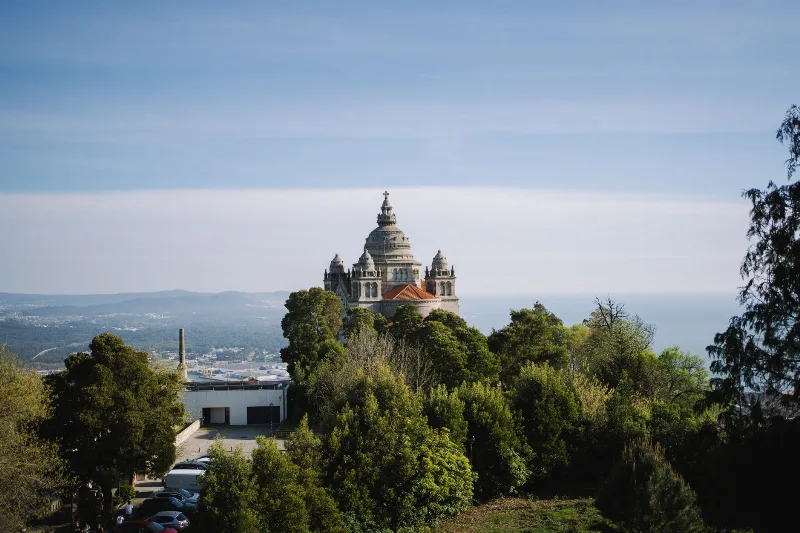
Viana do Castelo
A compact Atlantic city at the mouth of the Lima in northern Portugal, known for its medieval streets, its seafaring past, the sanctuary on Monte de Santa Luzia and the gold-embroidered costumes paraded each August.
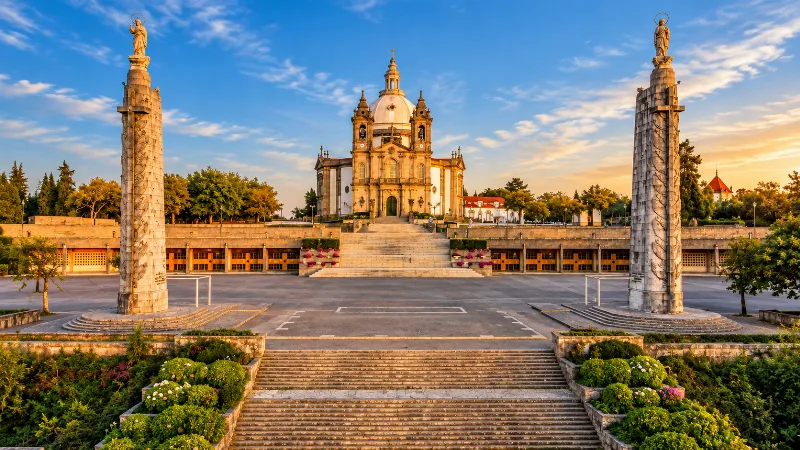
Braga
Braga is a historic northern city known for religious heritage, elegant squares, baroque architecture and a lively modern centre.
Vinho Verde and the Lima Valley Vineyards
The Vinho Verde region of north-west Portugal is defined by granite ground, Atlantic rain and densely planted vineyards. The Lima valley, one of its sub-regions, shows how landscape and local tradition shape the wines.
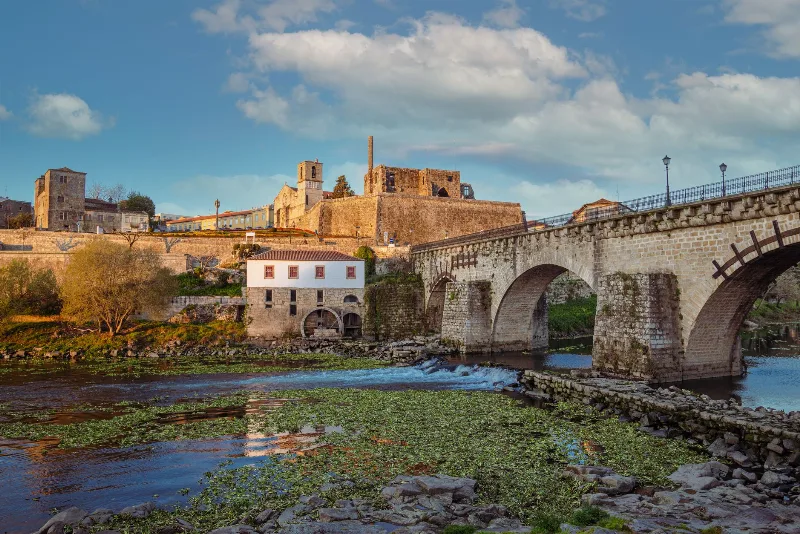
Barcelos
A Minho town built around a medieval bridge and a long-running Thursday fair, Barcelos is the home of Portugal's rooster legend and a living centre of popular craft.
Things to See in Viana do Castelo
Explore things to see in viana do castelo with a practical guide to notable places, regional landscapes, local heritage and travel planning in Portugal.