
The Convent of Christ in Tomar and Templar Heritage
A fortified monastery above the River Nabão, the Convent of Christ preserves the legacy of the Knights Templar alongside some of Portugal's most celebrated Manueline stonework.
Rising above the town of Tomar in central Portugal, the Convent of Christ is a fortified monastic complex whose story begins with the Knights Templar. Set on a wooded hill above the River Nabão, it brings together a circular twelfth-century church, a castle and a succession of cloisters built over five centuries. Recognised as a UNESCO World Heritage Site since 1983, the complex records the passage of a military order that became a Portuguese institution, and of the architects who transformed a defensive stronghold into one of the country's most richly ornamented monuments.
A frontier castle founded by the Knights Templar
The origins of the site are tied to Gualdim Pais, a Portuguese knight who had fought in the Holy Land and who, around 1160, established a Templar headquarters on this hill. The land lay close to the frontier with Moorish territory, and the order was charged with defending and settling the region. The castle that grew here retains its keep, its walls and a gate bearing an inscription commemorating its foundation. What survives today is not a ruin but a working architectural ensemble, in which defensive masonry sits directly alongside the halls and chapels of a later monastery.
The Charola and its circular plan
At the heart of the Convent of Christ stands the Charola, a sixteen-sided rotunda modelled on the Church of the Holy Sepulchre in Jerusalem. This circular form, unusual in Portuguese ecclesiastical architecture, was characteristic of Templar churches and reflects the order's devotion to the Jerusalem shrine. In the sixteenth century the rotunda was retained and wrapped in a larger rectangular nave, so that the original Romanesque core is now experienced as an inner chamber. Its columns, capitals and painted panels reward slow looking, and the contrast between the dim, rounded older space and the tall nave beyond it is one of the building's most distinctive qualities.
Manueline architecture and the famous window
The Convent of Christ is a showcase of Manueline architecture, the Portuguese late Gothic style that combines maritime motifs, rope-like carving and elaborate vegetal ornament. The best-known example is the window of the Chapter House, attributed to Diogo de Arruda and completed in the early sixteenth century. Its carved surround brings together armillary spheres, mast-like columns, coral, oak leaves and the cross of the Order of Christ, and it is widely regarded as a masterpiece of the style. Similar carving appears on the western façade and in the ornamental portals added during the same period of royal patronage.
Cloisters, dormitories and the aqueduct of Pegões
Beyond the church, a series of cloisters unfolds in a sequence that reads like a history of Portuguese architecture, from Gothic arcades to Renaissance arcades designed by João de Castilho and on to mannerist and baroque work. Long dormitories, a refectory and a chapter room reveal the rhythms of monastic life. To supply the growing community with water, a six-kilometre aqueduct known as the Aqueduto dos Pegões was constructed in the late sixteenth and early seventeenth centuries, its arches crossing the fields and valleys to the west of the town.
From the Templars to the Order of Christ
When the Templars were suppressed in the early fourteenth century, their Portuguese property and role were transferred to a new body, the Order of Christ, founded in 1319. Under this successor order the convent became a centre of royal and maritime ambition; Henry the Navigator held the title of its governor, and the order's cross was carried on Portuguese ships during the Age of Discovery. The building campaign of the following centuries was largely funded by the wealth that flowed back from those voyages.
The town of Tomar below the walls
Tomar grew up alongside the convent, laid out on a grid of streets characteristic of medieval planned towns. The Praça da República holds the sixteenth-century town hall and the church of São João Baptista, while the Gothic church of Santa Maria do Olival, burial place of several Templar masters, stands on the opposite bank of the Nabão. Riverside gardens on the island of Mouchão offer a shaded view back towards the hill, and the town's four-yearly Festa dos Tabuleiros, with its flower-decked processions, keeps an old tradition alive. Taken together, castle, monastery and town form a coherent ensemble in which military, religious and civic history remain legible in stone.
Related content
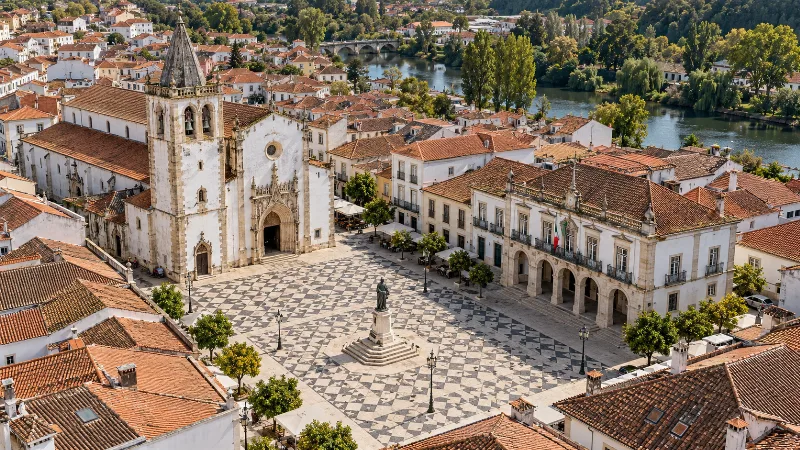
Tomar
Tomar combines the Convent of Christ, historic streets, riverside gardens and architectural heritage connected to the Knights Templar and the Order of Christ.

São João
São João is Porto’s major midsummer celebration, filling the city with street gatherings, music, decorations, food, fireworks and long-standing local traditions.
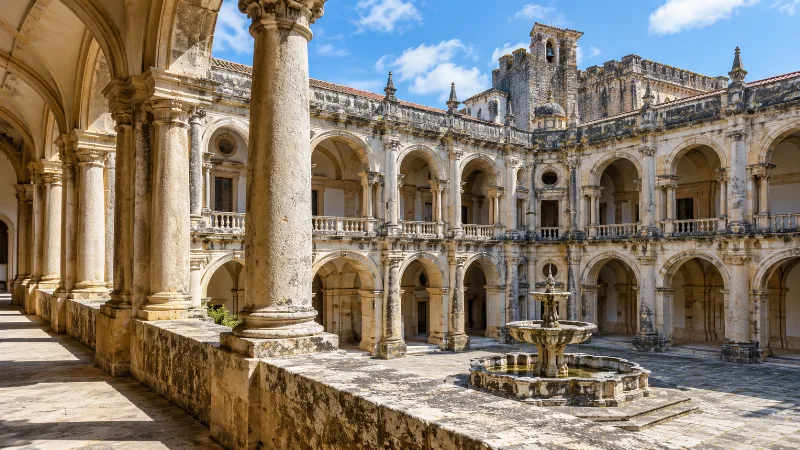
Discover Tomar’s Convent of Christ
Explore the Charola, cloisters and Manueline details of the Convent of Christ, then continue into Tomar’s historic centre.
Exploring the Historic Town of Tomar
Explore exploring the historic town of tomar with a practical guide to notable places, regional landscapes, local heritage and travel planning in Portugal.
Festa dos Tabuleiros in Tomar
Every four years the streets of Tomar fill with towering trays of bread and flowers, carried on the heads of local girls in one of Portugal's most distinctive religious processions.
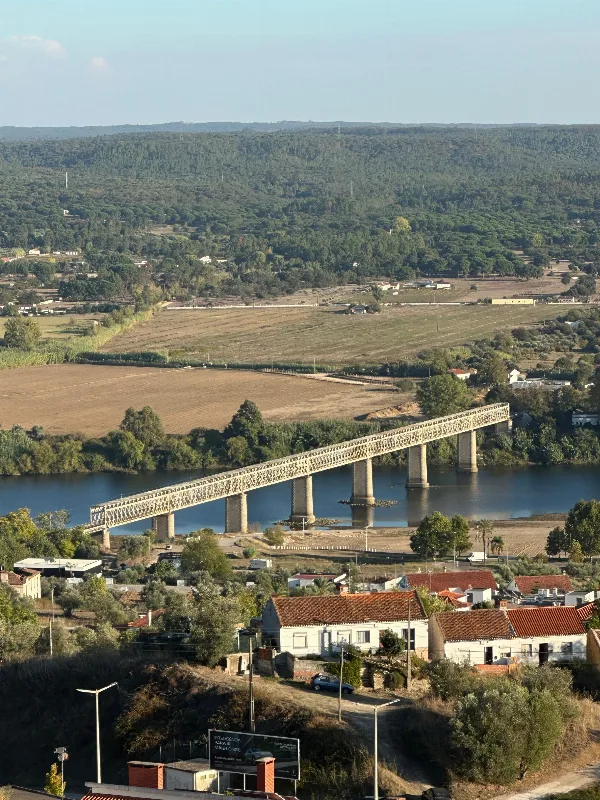
Santarém
A Ribatejo town set on a plateau above the River Tagus, Santarém is known for its cluster of Gothic churches, its medieval street plan and its long relationship with the farmland below.
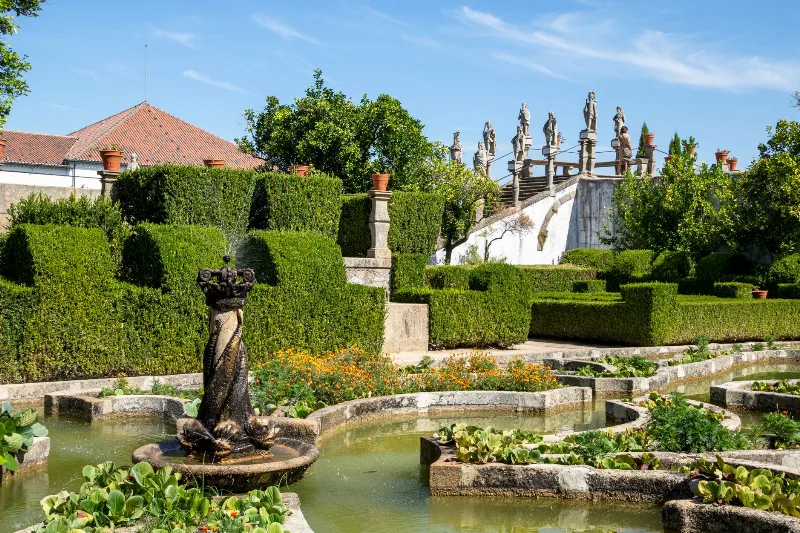
Castelo Branco
Castelo Branco is the district capital of Portugal's Beira Baixa, a hill town known for its Templar castle ruins, a baroque episcopal garden and a long tradition of silk-on-linen embroidery.
Santa Maria da Feira
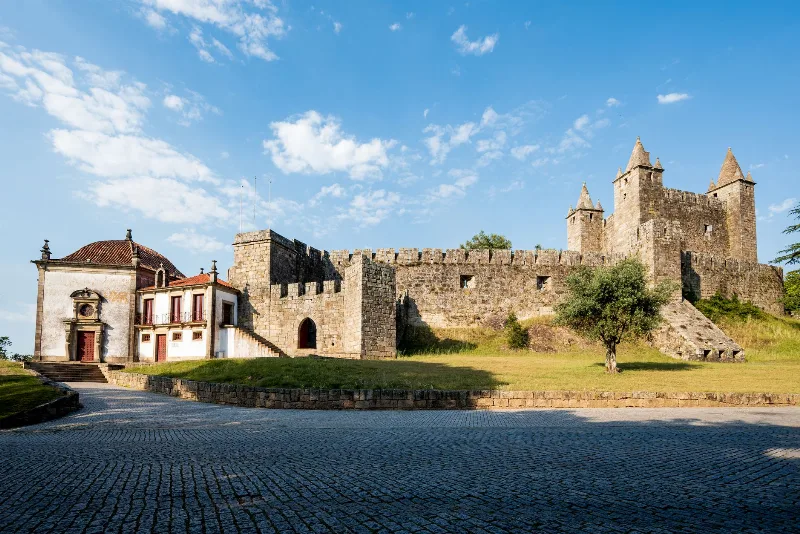
A city and municipality in Portugal's Aveiro district, Santa Maria da Feira grew up around a medieval castle and a famous annual fair. It combines a historic centre with a heavily industrialised landscape, cork processing above all.