
Castelo Branco
Castelo Branco is the district capital of Portugal's Beira Baixa, a hill town known for its Templar castle ruins, a baroque episcopal garden and a long tradition of silk-on-linen embroidery.
Castelo Branco is the capital of the district of the same name in the Beira Baixa, the dry interior of central-eastern Portugal, and it stands on the slope of a granite hill about sixteen kilometres north of the River Tagus. The surrounding country is open and thinly settled: cork oak and holm oak woods, olive groves, pasture and low rounded hills running east towards the Spanish frontier. The city is a working provincial centre rather than a resort, and its interest lies in a compact historic core, the remains of a Templar castle, an unusually inventive baroque garden and a craft tradition that is still practised locally.
Location and general character
The municipality is among the largest in Portugal, extending over roughly 1,438 square kilometres, yet its population density is under forty people per square kilometre. Most of that territory is forest, rough pasture and small villages, and the city itself occupies only a fraction of it. As district capital and the seat of a diocese, Castelo Branco supplies the hospital, secondary schools, courts, administrative offices and wholesale markets on which a wide rural hinterland depends, and it keeps a certain amount of light industry descended from its nineteenth-century textile trade. It is reached by the A23 motorway and by the Beira Baixa railway line, which connects the city with Lisbon, Coimbra and Guarda.
The climate is Mediterranean with marked continental features. July and August average above 24°C, December, January and February below 10°C, and annual rainfall stays under 800 millimetres, with July, August and September effectively dry. The result is a landscape of drought-tolerant trees and shrubs, olive and cereal cultivation, and a strong contrast between the heat of high summer and the cold, clear days of winter.
History
The hill above the present centre is thought to have carried a fortified settlement known as Castra Leuca in the Roman period, and the modern name appears in documents of the early thirteenth century. In 1182 a local noble donated land called Vila Franca da Cardosa to the Order of the Temple; in 1213 the settlement received its own charter, confirmed by Pope Innocent III two years later, and in 1214 King Afonso II formally granted the territory to the Templars, who were made responsible for its defence and repopulation. The castle they built between about 1214 and 1230 became the nucleus of the town, and King Dinis stayed there in 1285 while inspecting fortifications along the border. Roughly a century and a half later, under Afonso IV, the Order of Christ enclosed the growing settlement with a second wall of eleven towers and four gates.
The sixteenth century brought prosperity and institutions. A new charter was granted by Manuel I in 1510, João III awarded the town the title of Vila Notável in 1535, and at the end of the century the Bishop of Guarda, Nuno de Noronha, built the episcopal palace on the edge of the town as a winter residence. In 1771 José I raised Castelo Branco to city status and created the diocese, which turned the church of São Miguel into a cathedral. The nineteenth century saw the French invasions, the arrival of the railway and the growth of a textile industry in the city and its neighbouring parishes; the twentieth brought the formal role of district capital in 1959 and, in its second half, the rural depopulation that affected the whole interior.
Architecture
The old town rises in terraces from the lower streets towards the castle hill, and its lanes are lined with sixteenth- to eighteenth-century houses, several of them entered through Manueline doorways carved with rope mouldings and armillary spheres. Above them stand the castle ruins, comprising stretches of perimeter wall and the keep of the former commanders' palace, and inside the enclosure the church of Santa Maria do Castelo, much altered over the centuries and holding the tomb of the poet João Roiz de Castel Branco. The cathedral of São Miguel, the Misericórdia church and the remains of the Convento da Graça represent the town's religious architecture.
Secular building of the eighteenth and nineteenth centuries clusters around the episcopal palace, whose garden walls carry blue-and-white azulejo panels showing views of the city and copies of sixteenth-century drawings of the castle. The palace itself, a long building with a renaissance portal, now houses the municipal museum, and behind it the bishops' terraced garden drops away in flights of steps, box hedges and water channels. Granite dominates throughout, from kerbstones to doorframes, giving the older streets their grey, slightly austere appearance.
Natural surroundings
Castelo Branco lies on the boundary between granite country to the north and schist to the south, and the municipality is drained by two tributaries of the Tagus, the Ponsul to the east and the Ocreza to the west, both running in valleys that deepen as they approach the main river. South of the city the Tagus forms the border with Spain, and the land along it belongs to the Tagus International Nature Park, also designated a UNESCO biosphere reserve; the same area is a special protection zone for birds, shared with the valleys of the Erges and the Ponsul. Griffon vultures, black storks and red kites nest in the cliffs, and the river terraces hold Mediterranean scrub, olive groves and small orchards.
Within the municipality, the Santa Águeda reservoir on the Ponsul supplies water and provides a wide sheet of open water in an otherwise dry landscape. North-west of the city rise the granite ridges of the Serra da Gardunha, partly covered by a regional protected landscape and by Natura 2000 woodland, while further north the higher Serra da Estrela closes the horizon on clear days. Between the hills the plateau supports extensive stands of holm oak and cork oak, eucalyptus plantations, and the small walled fields of cereals, vines and olives that are characteristic of the Beira Baixa.
Local culture
Embroidery is the city's best-known tradition. Worked in silk on home-woven linen, it is documented between the seventeenth and nineteenth centuries and uses a characteristic loose stitch, often called the Castelo Branco stitch, which gives the silk its even sheen. Designs were drawn on the linen in ink before stitching and range from flowers, trees and birds to paired figures and elaborate medallions; some reflect patterns absorbed through Portugal's trade with Asia, others follow renaissance and baroque ornament. The pieces were made as bedspreads and household linen and formed part of a bride's trousseau, and the style survives through an atelier-school established in 1976 at the municipal museum and through a small number of working embroiderers.
Sheep and goat keeping shape the food of the region. The local cured ewe's-milk cheese, Queijo da Beira Baixa of the Castelo Branco type, is set with cardoon thistle rather than animal rennet and matured for at least forty days, or ninety for the harder velho version, and it shares a protected designation of origin with the neighbouring amarelo and picante cheeses. Olive oil, bread, game and river fish complete a plain, seasonal local cooking.
The main annual festival is the romaria of Nossa Senhora de Mércoles, held at a small chapel attributed to the Templars about three kilometres from the centre. The fair opens on the third Sunday after Easter and ends on the municipal holiday, with processions, a funfair and street entertainment; the devotion itself is traditionally traced to a vow made by the town council in 1601 after an epidemic.
Notable places
The Jardim do Paço Episcopal, laid out in the eighteenth century for Bishop João de Mendonça, is the city's most original monument. It is arranged over several levels, with box-lined paths, a lake, cascades and a great staircase flanked by granite statues of the kings of Portugal; smaller figures represent the signs of the zodiac, the seasons and the months.
Next door, the former episcopal palace holds the Museu Francisco Tavares Proença Júnior, founded in 1910 and installed in the building since 1971. Its collections cover regional archaeology from the palaeolithic to the iron age, Roman inscriptions, sixteenth-century painting, Flemish tapestries and church vestments, together with a large group of embroidered linen bedspreads; the embroidery workshop forms part of the visit. Elsewhere in the city, the Cargaleiro Museum displays ceramics and painting by Manuel Cargaleiro, the Centre for Contemporary Culture programmes exhibitions and performances, the Embroidery Interpretation Centre explains the craft's materials and techniques, and the Jewish Remembrance House records the district's Jewish presence. The Parque da Cidade, on the slope below the castle, is the main green space.
Nearby destinations
East of Castelo Branco, the municipality of Idanha-a-Nova contains Monsanto, a hill village built among enormous granite boulders, and Penha Garcia, where a gorge of the Ponsul exposes Ordovician fossil tracks and a line of old watermills. Beyond it lies the frontier, with the Spanish towns of Valencia de Alcántara and Alcántara across the Tagus. To the south, Vila Velha de Ródão marks the point where the river cuts through the quartzite ridge of the Portas de Ródão, a narrow defile overlooked by cliffs.
North and west of the city stand the historic towns of the interior: Belmonte, with its Jewish heritage and its association with the navigator Pedro Álvares Cabral; Sortelha, a walled village of granite houses; Covilhã and Fundão, the textile and fruit-growing centres at the foot of the Serra da Estrela; and the mountain range itself, whose high plateau lies to the north. Together they form the wider circuit of the Beira Baixa and the adjoining Beira Interior.
Related content
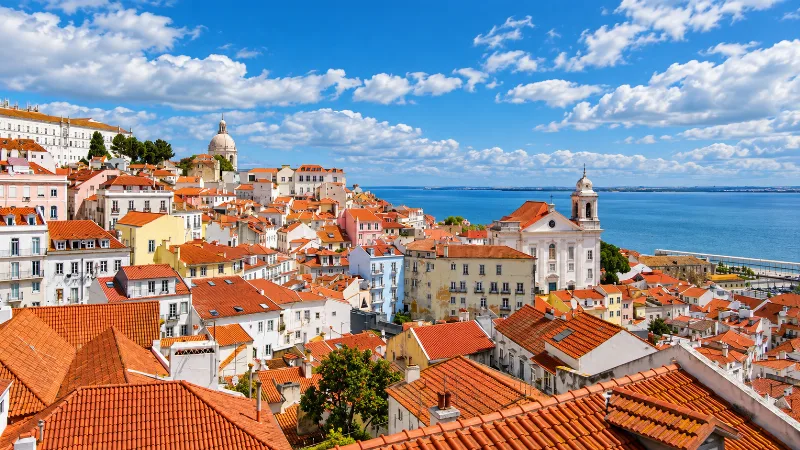
Lisbon
Portugal’s capital combines historic neighbourhoods, river views, tiled façades, viewpoints and an energetic everyday city life.
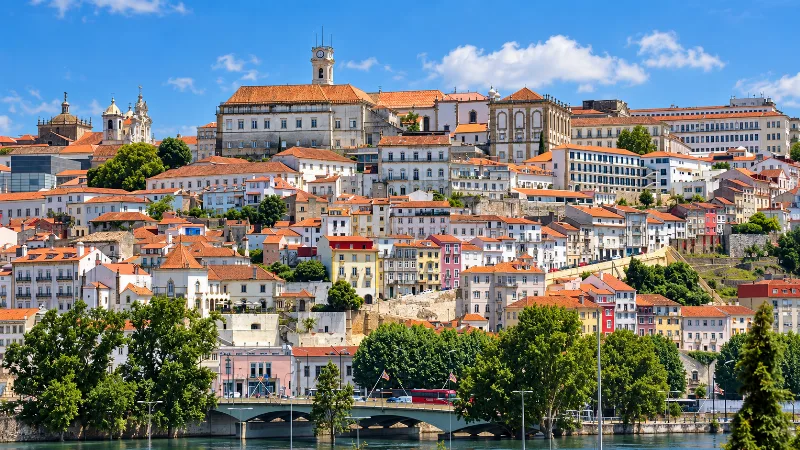
Coimbra
Coimbra combines Portugal’s oldest university traditions with a compact historic centre, river views, medieval streets and a student atmosphere.
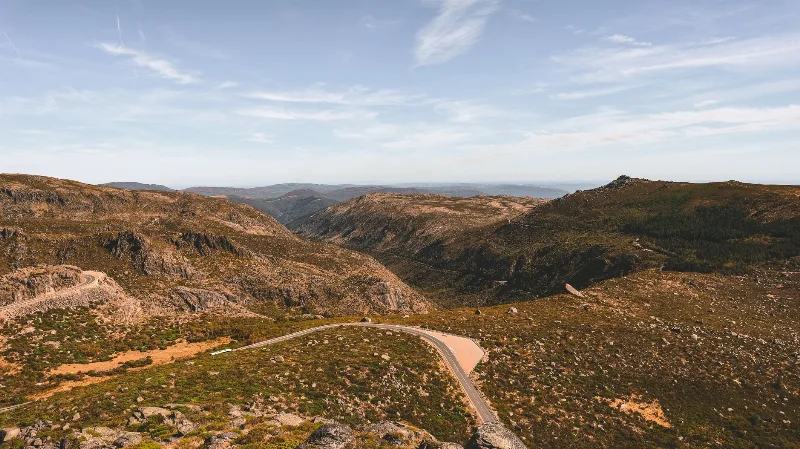
Guarda
Guarda is Portugal's highest city, set on a granite plateau beside the Serra da Estrela. This guide looks at its medieval streets, Gothic cathedral, Jewish heritage and mountain surroundings.
Serra da Estrela Granite Landscape and Glacial Valley
The highest ground in mainland Portugal is a weathered granite massif where ice once carved cirques, trough valleys and moraines. The Zêzere valley preserves some of the clearest glacial scenery in the country.
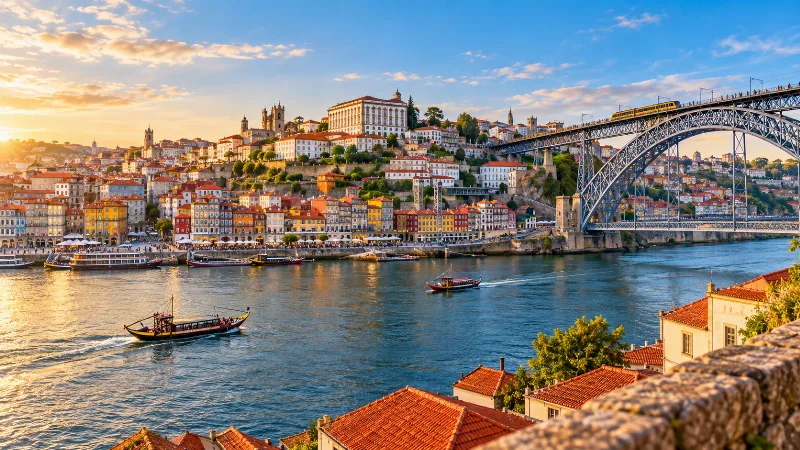
Portugal in 7 Days
A seven-day Portugal itinerary works best when it focuses on a small number of regions instead of trying to cover the entire country at speed.
The Mondego River Valley from Serra da Estrela to Coimbra
The Mondego is Portugal's longest river to rise and finish entirely within the country, linking the granite heights of Serra da Estrela with the Atlantic at Figueira da Foz. Its valley passes through mountain scenery, wooded gorges, historic towns and a wide agricultural plain.