
Buçaco National Forest and the Carmelite Convent Walls
Buçaco National Forest in central Portugal is a walled woodland shaped by Carmelite friars, planted with exotic trees and crossed by shaded paths, springs and devotional chapels.
Buçaco National Forest, known in Portuguese as the Mata Nacional do Buçaco, covers a compact ridge in the Beira region of central Portugal, within the municipality of Mealhada, roughly between Coimbra and Aveiro. It extends over little more than a hundred hectares, yet it holds an unusual combination of features: a Carmelite convent, a granite boundary wall raised in the seventeenth century, a remarkable collection of trees from several continents and a network of paths that has been walked for centuries. The forest is a national monument, and its character owes as much to deliberate human care as to the climate and soil of the ridge.
A Wooded Ridge in the Beira Region
The forest occupies the upper slopes of the Serra do Buçaco, a modest ridge rising to around five hundred metres above the surrounding plain. The height is enough to catch Atlantic cloud and rainfall, so the woods remain humid and cool through much of the year, and numerous springs break out along the slopes. From the higher ground there are wide views westwards towards the coastal lowlands and eastwards towards the inland hills. At the foot of the ridge lie the small town of Luso, long known for its mineral waters, and the surrounding countryside of vineyards, orchards and pine woods that belongs to the Bairrada area.
The Carmelite Convent and its Enclosing Wall
In 1628 a community of Discalced Carmelite friars founded the Convento de Santa Cruz do Buçaco on the ridge. They built a modest house of stone and, over the following decades, surrounded the woodland with a granite wall. The intention was practical rather than ornamental: the wall kept out grazing animals and people gathering firewood, allowing the trees to regenerate under the community's supervision. A papal bull placed the forest under the protection of the Holy See, strengthening the friars' hold on the land at a time when neighbouring landowners had their own claims on it.
Long stretches of the original wall survive, following the contours of the hill, and walking beside it makes clear that this is a defined and defended place rather than open countryside. The religious community was dissolved in 1834, when the forest passed into state hands, and parts of the convent buildings were later adapted to other uses, but the enclosure and the general layout of the wood remain legible.
An Arboretum of Native and Exotic Trees
State administration from the nineteenth century onwards brought a new phase of planting, and the forest gradually became something close to a formal arboretum. Several hundred species of trees and shrubs now grow here, including Lebanon cedars, giant sequoias, araucarias, ginkgos, cryptomerias and various cypresses, set among native holm oaks, Portuguese oaks and strawberry trees. The result is a wood of shifting textures and colours: deep evergreen shade in summer, and in autumn a spread of yellows, coppers and rusts from the deciduous introductions.
Broad avenues run through the forest, some lined with tall plane trees whose branches meet overhead. One of the best-known trees is a great cedar traditionally associated with the Duke of Wellington, who used the ridge as a vantage point during the Peninsular War.
The Via Sacra and the Springs
A series of stepped paths forms the Via Sacra, a devotional route laid out from the seventeenth century onwards. Small chapels and sculpted scenes depicting the Passion are set at intervals along the slope, once serving as stations for pilgrims and for the hermits who lived in cells among the trees. The stonework is weathered and partly shaded by moss, and the route remains one of the quieter parts of the forest.
Water is a constant presence. The Fonte Fria is reached by a monumental stone staircase that descends into a hollow of ferns and tall trees, and other springs, including the Fonte de São Silvestre, feed channels and small basins. The sound of running water, combined with the dense canopy, gives the interior of the forest a distinctly enclosed atmosphere.
Wellington, Masséna and the Battle of 1810
On 27 September 1810 the ridge was the scene of the Battle of Buçaco, in which Wellington's Anglo-Portuguese army held its position against the French forces commanded by Masséna. The fighting spread through the woods and around the convent enclosure, and the event is commemorated by monuments and place names within the forest. Later, between 1888 and 1907, a royal hunting pavilion was built on the ridge to designs by the architect Luigi Manini, drawing on Manueline and Neo-Renaissance forms; it is now the most conspicuous building in the wood and forms a landmark visible from several of the paths.
Walking in a Managed Woodland
The forest is crossed by waymarked trails of varying length, most of them gentle but with some steep stone steps on the older routes. Visitors are asked to keep to the paths, since the ground flora and young trees are easily damaged, and some compartments are fenced while natural regeneration takes place. Because the canopy is dense, the forest offers shade on hot days, and early mornings are usually the quietest time to walk. The combination of historic walls, botanical variety and devotional architecture makes Buçaco a place where the natural and the humanly made are difficult to separate, and all the more interesting for it.
Related content
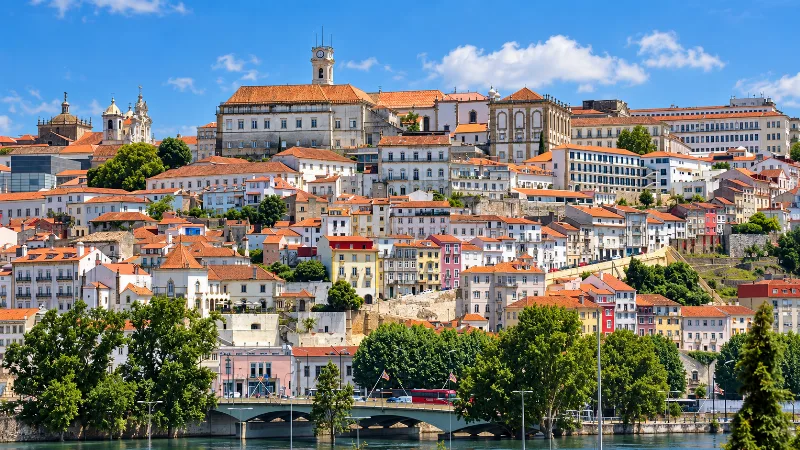
Coimbra
Coimbra combines Portugal’s oldest university traditions with a compact historic centre, river views, medieval streets and a student atmosphere.
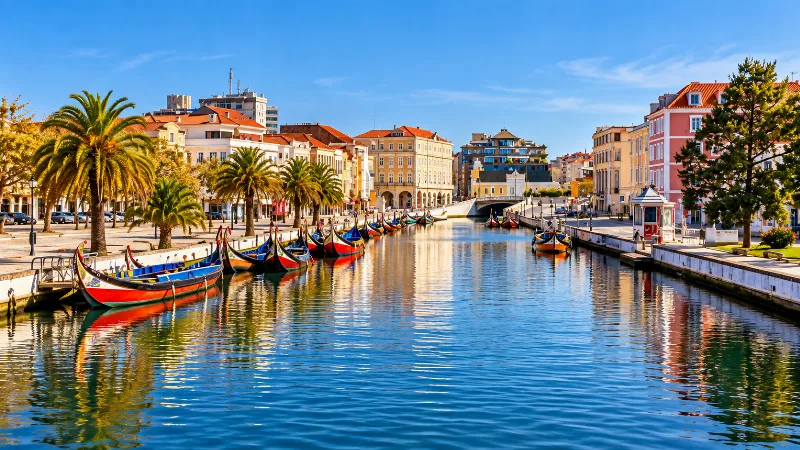
Aveiro
Aveiro is a small coastal-region city with canals, Art Nouveau details, colourful boats and easy access to lagoons and Atlantic landscapes.

Figueira da Foz
A working river port and seaside city in central Portugal, Figueira da Foz combines an estuary setting, a long Atlantic beachfront and a wooded cape with a lived-in, year-round character.
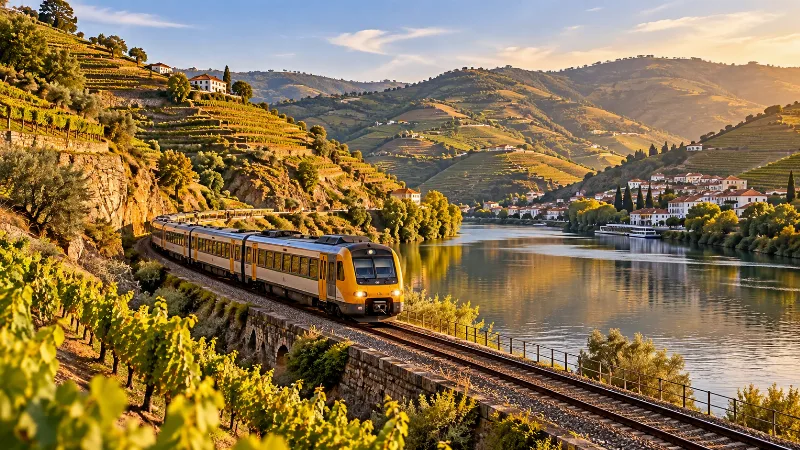
Portugal by Train
Portugal’s rail network connects many major cities and provides a comfortable way to travel between Lisbon, Porto, Coimbra, Braga, Aveiro and the Algarve.
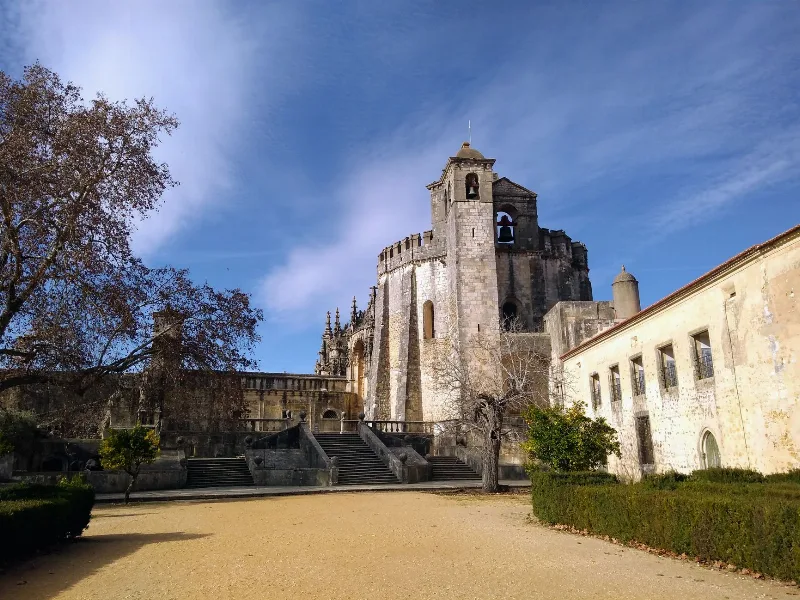
Tomar
Tomar is a riverside town in central Portugal whose skyline is dominated by the Convento de Cristo, a UNESCO-listed complex raised around a Templar castle. A gridded historic centre, a long aqueduct and a four-yearly flower festival give it a character of its own within the Ribatejo.
Ovos Moles de Aveiro and Conventual Sweets
Ovos moles de Aveiro are the most famous expression of Portugal's conventual pastry tradition, a smooth egg-yolk and sugar sweet sealed inside wafer-thin shells. Their story links Portuguese convents, Atlantic sugar and the maritime character of Aveiro.
Leiria
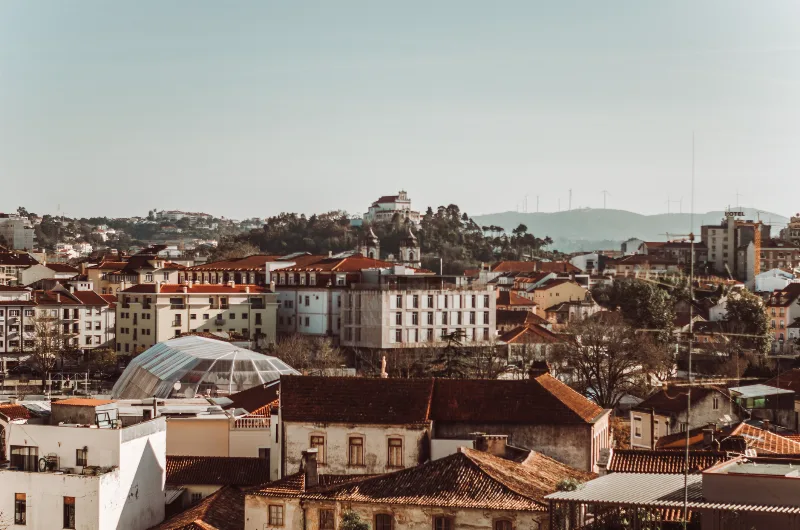
Leiria is a central Portuguese city built around a hilltop castle above the River Lis, with a compact historic centre, a long paper-making tradition and a pine forest stretching towards the Atlantic.