
Castelo de Vide Jewish Quarter and Medieval Synagogue
Castelo de Vide in the Alto Alentejo keeps one of Portugal's best-preserved former Jewish quarters, with narrow whitewashed lanes and a rare medieval synagogue at its centre.
Castelo de Vide is a small hill town in the Alto Alentejo, standing on a granite ridge a short distance from the Spanish border and within sight of the Serra de São Mamede. Its oldest streets climb steeply between whitewashed houses, and among them survives one of Portugal's most intact former Jewish quarters, with a medieval synagogue at its heart. This is not a reconstruction or a heritage set piece: the Judiaria is a lived-in part of the town whose street plan still follows lines established in the fourteenth and fifteenth centuries.
A hill town shaped by springs and granite
The character of Castelo de Vide comes from water as much as from stone. Numerous springs rise around the slopes, feeding old fountains, tanks and small gardens, a generosity of water that earned the place its long-standing nickname, the Sintra of the Alentejo. The Renaissance-era Fonte da Vila, a short walk below the Jewish quarter, is the best known of these, set in a small shaded square. Above it, the town splits into two historic centres, a lower Praça with arcaded houses and an upper one beside the castle, linked by lanes too narrow for anything but foot traffic. The castle itself, with its tall square keep, closes the hill and gives wide views over the plain and the wooded ridge behind.
The Judiaria: lanes, doorways and carved marks
The Jewish quarter occupies the ground between the castle hill and the lower town, arranged along the Rua da Judiaria and the smaller lanes that branch from it. The streets are short, the houses are whitewashed and often no more than two storeys high, and the granite door and window frames are cut with a plainness typical of the region. Look closely at the lintels and doorjambs and you will notice small incised marks, crosses and shallow niches; local tradition links some of these to the community that once lived here, though similar marks appear elsewhere in Portugal and their meanings remain debated. Gates once closed the quarter at night, and the memory of those boundaries survives in the shape of the streets rather than in standing structures.
Inside the medieval synagogue
The synagogue stands on the Rua da Judiaria, a modest stone building that would pass unnoticed were it not for the labels and the visitors who pause outside. It consists of a small rectangular hall, raised slightly above street level, with thick walls and a simple roof structure. Like many Jewish buildings in Portugal, it survived the expulsion of the Jews not by being preserved but by being reused, passing through centuries as a store, a workshop and a private dwelling, a history that paradoxically protected its fabric from later rebuilding. Restored and opened to the public, the building now serves as a cultural and interpretive space where panels and exhibits set out the story of the community. Its interest lies less in ornament, of which there is very little, than in its proportions and its plainness, which convey something of the scale of medieval worship in a small frontier town.
The community in the medieval town
Castelo de Vide lay close to the border and grew in importance during the fourteenth and fifteenth centuries, when its Jewish community formed a substantial share of the population. Its members worked as craftsmen, tailors, shoemakers, silversmiths and merchants, and the community maintained its own organisational structures, paying dues both to the crown and to the municipal council in return for protection and defined rights. That arrangement ended abruptly at the close of the fifteenth century, when the Portuguese crown ordered the expulsion of Jews who would not convert, and then, shortly afterwards, forced conversion on those who remained. Some families left, others stayed as New Christians, and over time the quarter lost its distinct identity. What remains is the physical layout and the documentary record, which together make Castelo de Vide one of the most informative places in Portugal for understanding pre-expulsion Jewish life outside Lisbon and Évora.
Walking the quarter with an eye for detail
The pleasure of the Judiaria is in slow observation. Notice how the houses turn narrow gables to the street and how doorways sit slightly proud of the walls, a response to rain running down the slope. Note the few buildings that still show Gothic or Manueline mouldings, and the way the lanes widen at small junctions where neighbours would once have gathered. Street names, plaques and the modest interpretive signage help to place the buildings in context. Because the quarter is residential, the most rewarding approach is quiet and unhurried, treating it as a neighbourhood rather than a monument.
Beyond the Jewish quarter
A visit fits naturally into a wider exploration of the town. The Igreja de Santa Maria da Devesa, the broad parish church on the main square, displays the scale of Counter-Reformation building in the Alentejo, while the castle and its keep offer the best orientation point for the surrounding landscape. Several small chapels, old fountains and shaded garden terraces lie within a few minutes' walk. The Serra de São Mamede natural park begins at the edge of the town, and the fortified village of Marvão stands on its crag a short drive away, making Castelo de Vide a natural stopping point for anyone following the history of the border region.
Related content
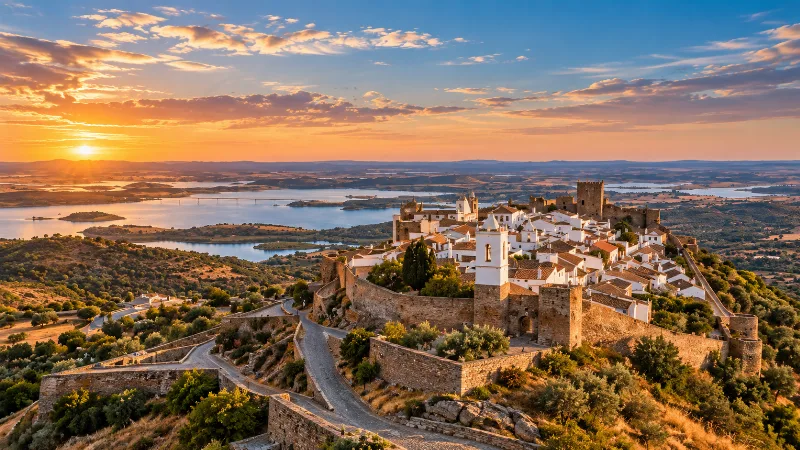
Alentejo
Discover Alentejo through Évora, whitewashed towns, cork-oak landscapes, vineyards, regional food and the broad rural interior of southern Portugal.
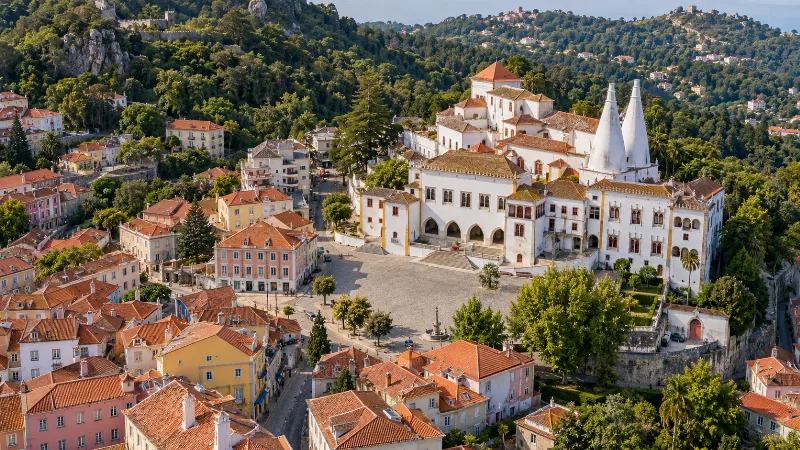
Sintra
Sintra combines hilltop palaces, wooded slopes, historic estates and a compact old town within easy reach of Lisbon.
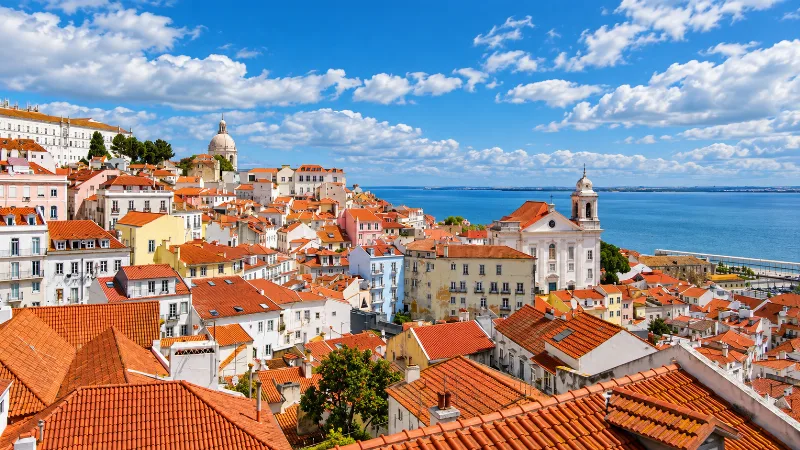
Lisbon
Portugal’s capital combines historic neighbourhoods, river views, tiled façades, viewpoints and an energetic everyday city life.
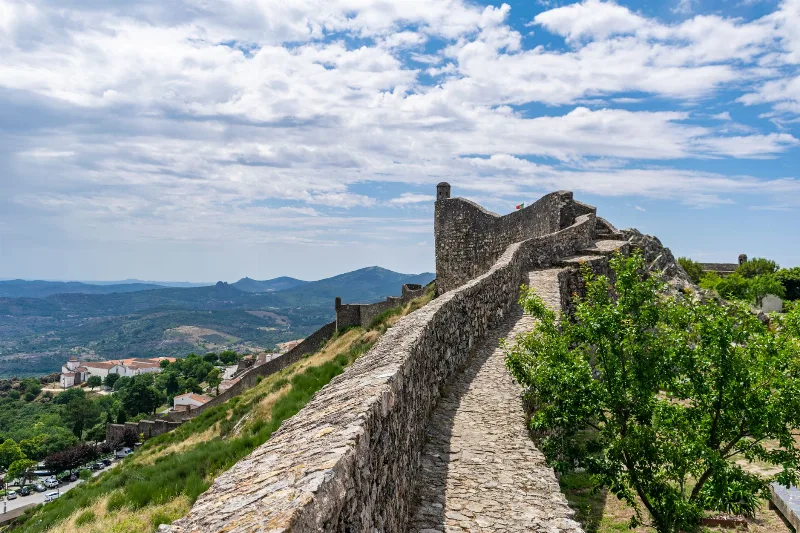
Marvão
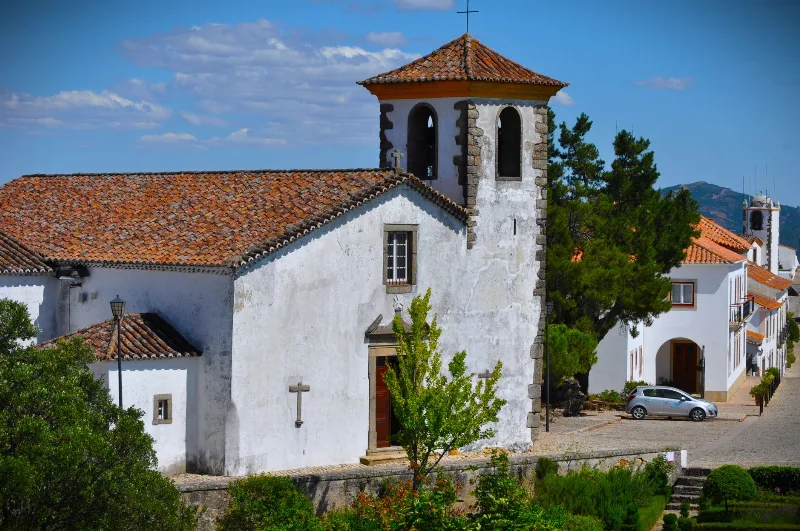
A granite hilltop town in Portugal's Alto Alentejo, Marvão grew around a castle on a quartzite ridge of the Serra de São Mamede, close to the Spanish border. Its walled streets, defensive architecture and mountain setting tell the story of a place built as much for protection as for living.
Portalegre
A hill town in the Alto Alentejo where the plains meet the Serra de São Mamede, Portalegre is known for its medieval walls, Baroque churches and handwoven tapestries.
Tomar
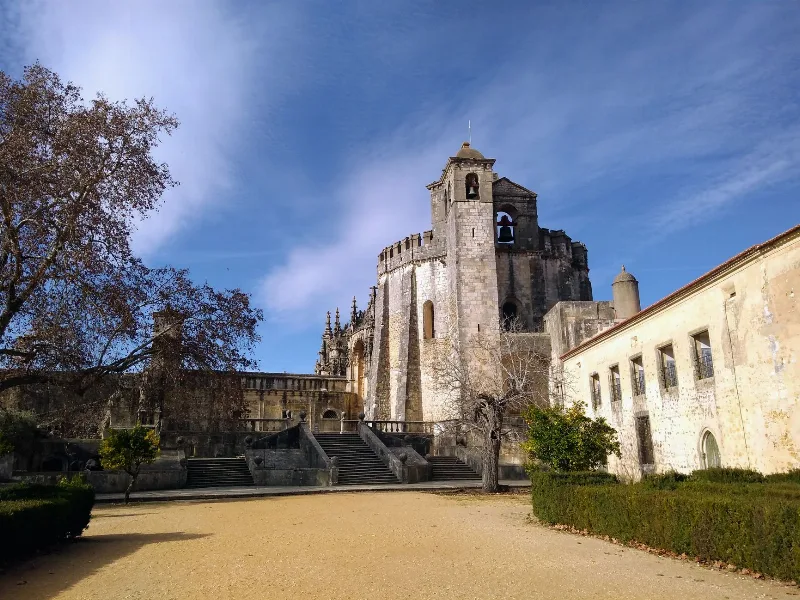
Tomar is a riverside town in central Portugal whose skyline is dominated by the Convento de Cristo, a UNESCO-listed complex raised around a Templar castle. A gridded historic centre, a long aqueduct and a four-yearly flower festival give it a character of its own within the Ribatejo.
Marvão Hilltop Fortress and Schist Village
Perched on a rocky ridge in the Serra de São Mamede, Marvão combines a hilltop fortress, schist-built lanes and wide views over the Alentejo borderlands.
Sintra's Pena Palace and Moorish Castle Gardens
Sintra's Pena Palace and Moorish Castle occupy neighbouring hilltops, combining colourful Romantic architecture with medieval walls and lush woodland gardens.