
Guimarães Castle and the Birthplace of Portugal
Guimarães Castle is a granite stronghold in northern Portugal whose walls, keep and neighbouring Romanesque chapel are tied to the emergence of the Portuguese kingdom.
Guimarães Castle stands on a small granite rise just beyond the historic centre of the city of the same name, in the Minho region of northern Portugal. Its heavy walls, corner towers and battlemented parapets make it one of the country's most striking medieval monuments, but its interest goes well beyond military architecture. The fortress is bound up with the emergence of Portugal as an independent kingdom, and the town beneath it has long been described as the nation's birthplace. To walk its ramparts is to follow a story that begins more than a thousand years ago.
A Fortress Built to Shelter a Monastery
The castle's origins lie in the tenth century, when Mumadona Dias, a noblewoman of considerable power in the region, founded a religious house at Guimarães. Fearing attacks from the coast and from rival territories, she ordered a defensive tower to be raised so that the community and the people living around it would have somewhere to take refuge. That first structure was modest by later standards, but it established the site as a place of both refuge and military consequence.
During the eleventh and twelfth centuries the stronghold was enlarged and rebuilt as the seat of the counts who governed the territory of Portucale. What survives today is essentially that later building: a compact but formidable enclosure of dressed granite, with a tall keep, subsidiary towers and a circuit of walls punctuated by the distinctive shield-shaped merlons that have become something of a signature of early Portuguese military architecture. Narrow openings, massive blocks and severe proportions give the castle a purposeful, unornamented appearance that reflects its original function rather than any desire to impress.
Afonso Henriques and the Birth of Portugal
Guimarães is closely associated with Count Henry of Burgundy and his wife Teresa, who held the county in the early twelfth century. Their son, Afonso Henriques, is traditionally believed to have been born in the castle around 1109. He later asserted his authority against his mother and her allies, defeating them at the Battle of São Mamede near Guimarães in 1128, and went on to be recognised as the first king of Portugal.
The claim that the castle was his birthplace rests on tradition rather than firm documentation, yet it has shaped the way the building is understood and presented. A short distance away stands the Chapel of São Miguel do Castelo, a small Romanesque church said to be where the infant was baptised; its plain granite interior and simple apse offer a quiet contrast to the martial bulk of the castle. In the town below, a stone inscription on one of the old gate towers declares Aqui nasceu Portugal — Portugal was born here — a phrase that has become the city's unofficial motto.
Walls, Keep and Ramparts
Entry to the castle is through a gateway in the outer wall, which leads into a grassy inner courtyard enclosed by the curtain walls. The keep rises from the centre of the enclosure and can be climbed by way of a wooden stair and upper floor inserted during twentieth-century restoration, work that also consolidated the masonry after long years of neglect and gave the monument the unified appearance it has today. From the top of the keep, the view takes in the tiled roofs of the old town, the neighbouring Ducal Palace and, further off, the wooded ridge of Penha.
A walkway runs along the top of the walls, and walking it is the most rewarding part of a visit: the circuit is short but gives a clear sense of how the fortress commanded the approach to the town. The battlements, the arrow slits and the corbelled supports beneath the walkway can all be examined at close range, and the granite itself, coarse and weathered, shows the marks of the masons who cut it.
The Ducal Palace and the Surroundings
Immediately beside the castle stands the Paço dos Duques de Bragança, a fifteenth-century palace founded by Afonso, first Duke of Braganza, and later restored and used as a residence for heads of state. With its tall chimneys, half-timbered upper gallery and sweeping tiled roofs, it forms a striking contrast with the austerity of the castle and completes a small ensemble of exceptional historical density. The two buildings, together with the chapel, can comfortably be explored in a single morning.
The Historic Centre of Guimarães
The medieval centre below the castle has been inscribed on the UNESCO World Heritage List since 2001, in recognition of the way its street plan and building stock illustrate the development of a Portuguese town from the Middle Ages onwards. Granite is the dominant material: houses with stone lower floors and timber-framed or whitewashed upper storeys line narrow lanes, and arcades supported on sturdy columns frame the two principal squares. Praça de Santiago, enclosed by arcaded buildings, is the more intimate of the two, while Largo da Oliveira takes its name from an olive tree said to have been planted on the spot, and is dominated by the Gothic Padrão do Salado, a canopy-like monument commemorating a fourteenth-century victory.
Rua de Santa Maria remains the most characterful street, its houses leaning close together and its upper windows opening onto small iron balconies. The old town is compact and largely pedestrian, and simply wandering between the squares, churches and fragmentary stretches of the ancient wall is the best way to absorb its character.
Geography and Surroundings
Guimarães lies in a green, well-watered valley about 50 kilometres north-east of Porto, in a landscape of small fields, vines and woodland typical of the Minho. The river Selho, a tributary of the Ave, runs through the lower part of the city, and the surrounding hills mark the transition towards the mountains of the interior. South-east of the centre, the wooded hill of Penha rises to just over 600 metres and is reached by a cable car as well as by road; its granite boulders, viewpoints and shade make it a popular escape from the city in summer. Between the castle, the old town and the wooded heights above it, Guimarães offers a compact introduction to the history and scenery of northern Portugal.
Related content
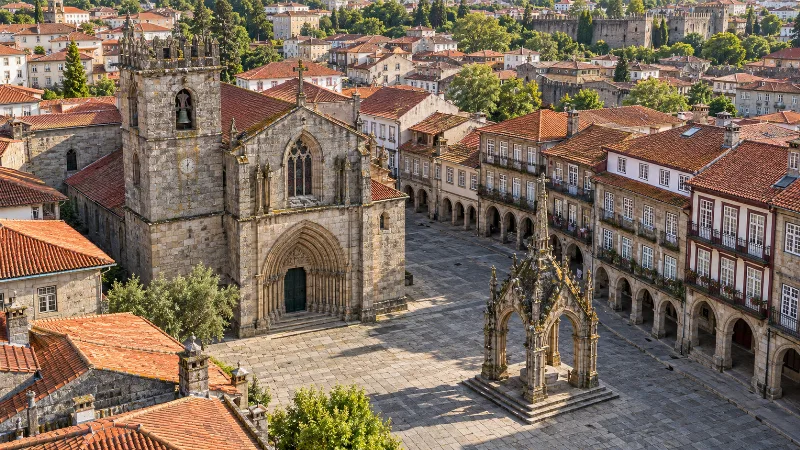
Guimarães
Guimarães combines a medieval castle, traditional squares and a UNESCO-listed historic centre closely linked to the early history of Portugal.
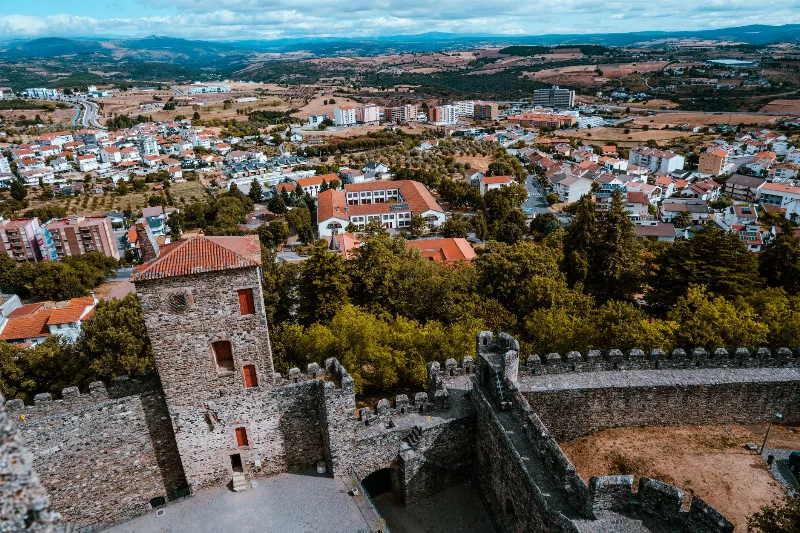
Bragança
Bragança is a granite-built city in north-east Portugal whose walled citadel, medieval castle and Romanesque civic hall stand above the surrounding Trás-os-Montes plateau, close to the Montesinho hills.
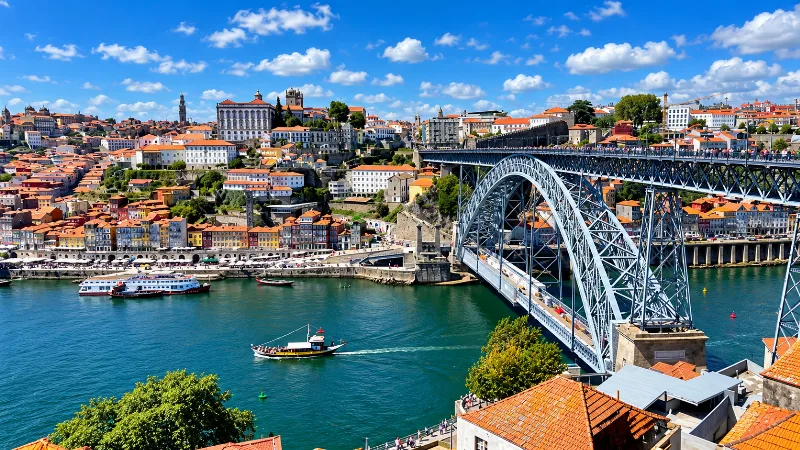
Porto
Porto is a compact northern city of steep streets, granite architecture, riverfront views, historic districts and strong local character.
Discovering the Historic Streets of Guimarães
Explore discovering the historic streets of guimarães with a practical guide to notable places, regional landscapes, local heritage and travel planning in
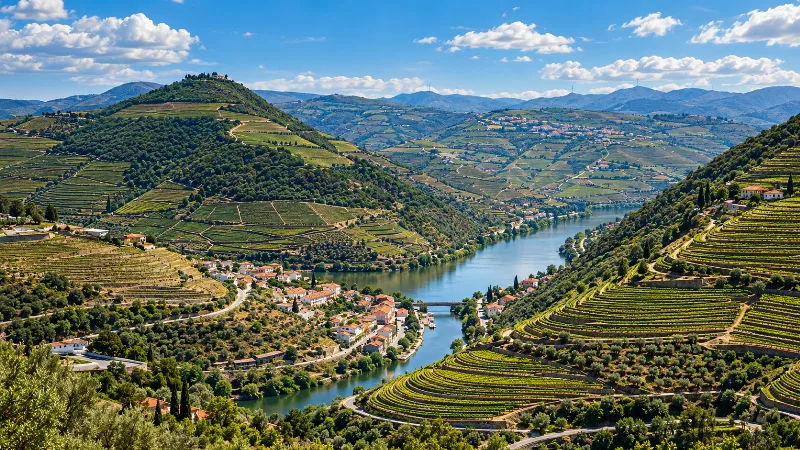
Northern Portugal
Explore Porto, the Douro Valley, Braga, Guimarães, Peneda-Gerês and the green landscapes, food traditions and historic cities of northern Portugal.
Barcelos
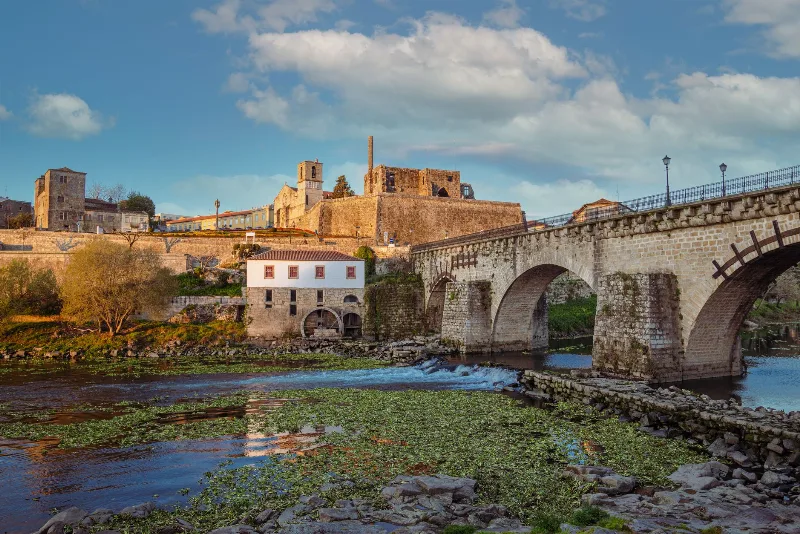
A Minho town built around a medieval bridge and a long-running Thursday fair, Barcelos is the home of Portugal's rooster legend and a living centre of popular craft.
Lisbon or Porto: Which City Is Right for Your Trip?
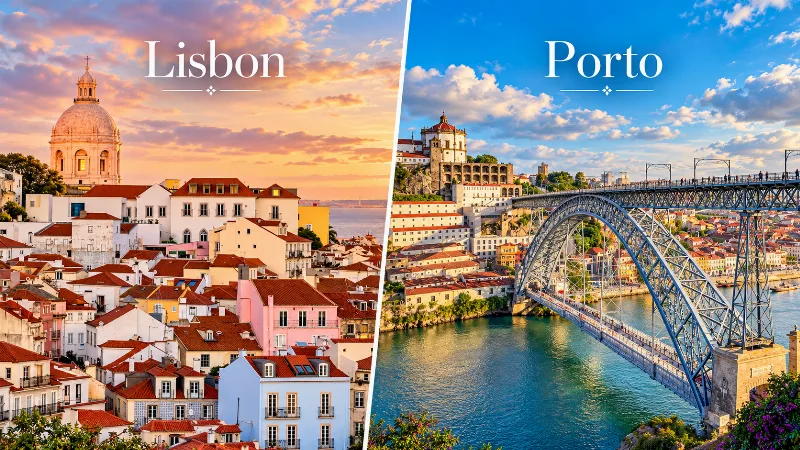
Lisbon and Porto offer very different first impressions of Portugal, from scale and weather to food, nightlife, day trips and overall pace.