
Chaves
Chaves is a granite town in Portugal's far north-east, built above the river Tâmega and shaped by Roman settlement, thermal water and centuries of frontier life. Its old bridge, castle keep and spa quarter give the place a character unlike anywhere else in Trás-os-Montes.
Chaves sits in the far north-east of Portugal, in the district of Vila Real, a short distance from the Spanish border. It is the principal town of the Alto Tâmega sub-region and one of the most distinctive places in Trás-os-Montes, recognised for its Roman bridge, its hot springs and a history written by centuries of frontier life.
Location and general character
The town occupies a granite plateau above the river Tâmega, at roughly 400 metres above sea level, with the older quarters clustered between the castle hill and the water. Streets in the historic centre are narrow and steep, opening onto arcaded squares, while the modern town spreads outwards along straighter avenues with housing, schools and light industry. Chaves has a markedly continental climate for Portugal: winters are long and cold, with regular frost and occasional snow on the surrounding hills, and summers are hot and dry. Rainfall is concentrated in late autumn and winter. The municipality is largely rural, with a population of around forty thousand spread across dozens of parishes, and the town remains the commercial centre for a wide, thinly populated hinterland.
History
The settlement began as the Roman town of Aquae Flaviae, which grew around the warm springs and a crossing point on the Tâmega. It was raised to municipal status in the first century AD, and the road traditionally known as the Via XVII connected it with Bracara Augusta, modern Braga, and with Asturica Augusta, now Astorga in Spain. Two inscribed Roman columns standing beside the bridge record work carried out under the emperors Vespasian and Trajan and are among the town's most important surviving documents.
After the collapse of Roman authority the area passed through Suevic and Visigothic hands before being absorbed into the expanding kingdoms of northern Iberia. Its position on the frontier made it a contested stronghold during the formation of Portugal, and the castle changed hands repeatedly in the twelfth and thirteenth centuries. Chaves received its charter in that period, and its walls and keep were later rebuilt under King Dinis as part of a wider programme of border fortification. The frontier continued to define the town: French troops under Soult occupied it in 1807, and it was retaken by Portuguese forces two years later. In 1912 the royalist commander Paiva Couceiro crossed from Spain and briefly held the town during an attempted restoration of the monarchy. For much of the twentieth century, smuggling and cross-border trade formed part of the local economy.
Architecture and the built environment
Granite is everywhere in Chaves, from the rough walls of the castle to the paving of the squares. The Roman bridge is the town's emblem: a low structure of several arches, close to 140 metres long, which still carries pedestrians across the Tâmega beside the modern road crossing. Above the river, the keep of the castle rises squarely above the rooftops, its stonework pierced by narrow openings and Gothic windows. The religious buildings mix Romanesque origins with later rebuilding, and the church of Santa Maria Maior, close to the main square, retains a heavy, fortress-like exterior typical of frontier churches. The Misericórdia church and the older town houses, many with wooden balconies and stone coats of arms, fill the streets around the Praça de Camões. On the hills above the centre stand two fortifications from the Restoration wars of the seventeenth century, the Forte de São Neutel and the Forte de São Francisco, both built with angular, star-shaped plans designed for artillery. More recent architecture includes a contemporary arts building dedicated to the painter Nadir Afonso, who was born in the town in 1920.
Natural surroundings
The Tâmega valley provides the setting for the town, with terraced slopes given over to vines, olive trees and chestnut groves. Higher ground rises on several sides, including the wooded ridge of the Serra do Brunheiro, where granite outcrops, broom and heather replace cultivation. The landscape is one of smallholdings, dry-stone walls and scattered hamlets rather than large estates, and it becomes emptier and more rugged as one moves north towards the Spanish border. The thermal water that first attracted Roman settlers still rises at around 73°C, making it among the hottest in Europe, and the spa quarter with its avenue of plane trees forms a green, quiet edge to the town centre.
Local culture and everyday life
Food is a strong marker of local identity. The pastel de Chaves, a flaky pastry filled with minced meat, is sold in most cafés, while the folar de Chaves, a savoury Easter bread layered with ham and sausage, is prepared at home and given as a gift. Cured ham from the surrounding parishes has a long reputation, and the November Feira dos Santos, held around All Saints, is one of the largest fairs in the region, drawing traders and visitors from both sides of the border. Carnival in Chaves is among the oldest and best attended in Portugal, with masked parades and satirical floats that fill the streets before Lent. Everyday life still revolves around the market, the parish churches and the spa, where bathing is as much a social routine as a treatment. The local speech carries the clipped consonants and rural vocabulary heard throughout Trás-os-Montes.
Notable places
- Torre de Menagem — the medieval keep, now housing a small military museum, with views over the town and the river.
- Termas de Chaves — the thermal spa and its surrounding park, in use in various forms since antiquity.
- Igreja de Santa Maria Maior — the principal parish church, with a severe granite exterior and a richly decorated interior.
- Forte de São Neutel — a seventeenth-century star fort on a hill above the centre, still enclosed by its original ramparts.
- Nadir Afonso collection — a museum devoted to the geometric, kinetic work of the town's most celebrated modern artist.
Nearby destinations
South of Chaves, the spa villages of Vidago and Pedras Salgadas sit among wooded parks and are known for their bottled mineral waters. Vila Real, the district capital, lies further south with its historic centre and the formal gardens of Mateus. To the west, Montalegre and the high moorland of the Barroso region offer castle ruins and bleak, striking scenery, while the Montesinho natural park stretches north-east towards Bragança. The Peneda-Gerês national park is within reach for longer excursions, and Miranda do Douro lies east along the Douro gorge. Across the border, the Galician towns of Verín and Ourense are connected by road and provide a natural extension to any visit, with Ourense holding its own Roman bridge and hot springs.
Related content
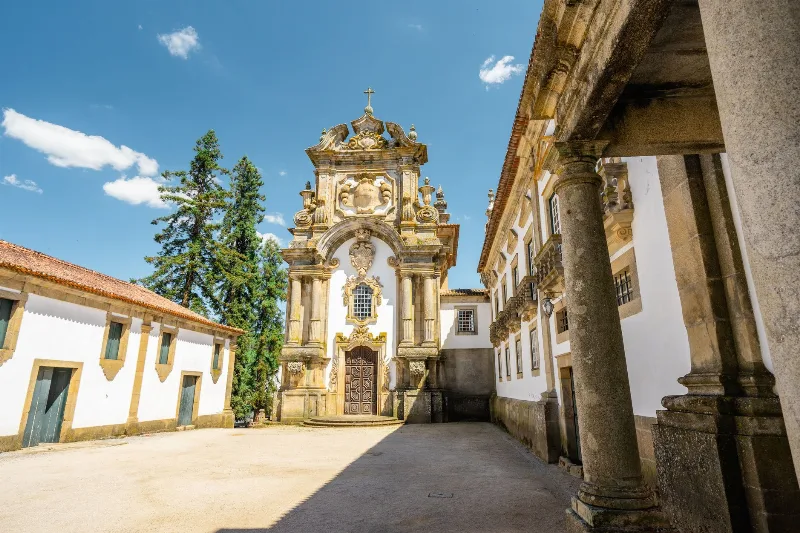
Vila Real
Vila Real is the district capital of northern Portugal's Trás-os-Montes, a granite town set above the Corgo gorge, with a noble old quarter, a university and the Baroque Palace of Mateus a short drive away.
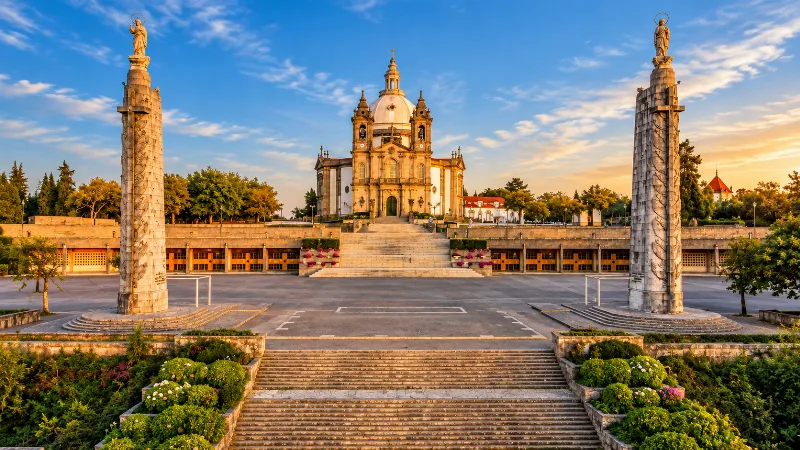
Braga
Braga is a historic northern city known for religious heritage, elegant squares, baroque architecture and a lively modern centre.
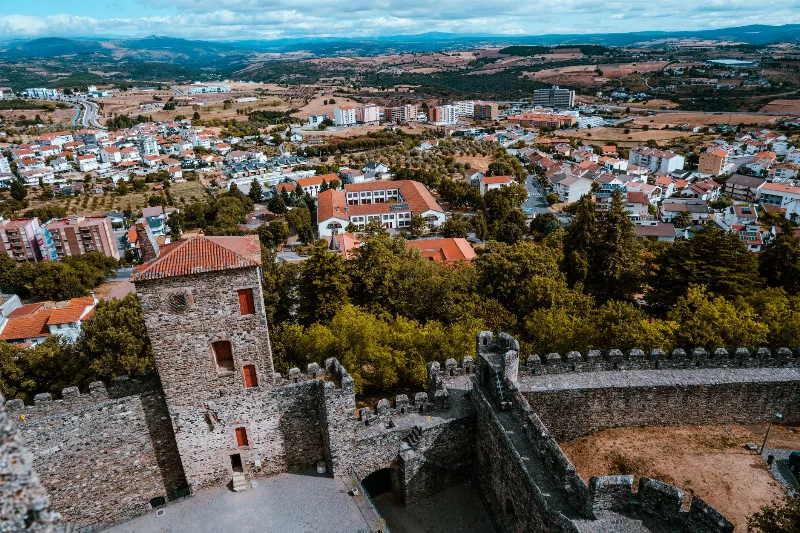
Bragança
Bragança is a granite-built city in north-east Portugal whose walled citadel, medieval castle and Romanesque civic hall stand above the surrounding Trás-os-Montes plateau, close to the Montesinho hills.
Things to Do in Vila Real
Explore things to do in vila real with a practical guide to notable places, regional landscapes, local heritage and travel planning in Portugal.
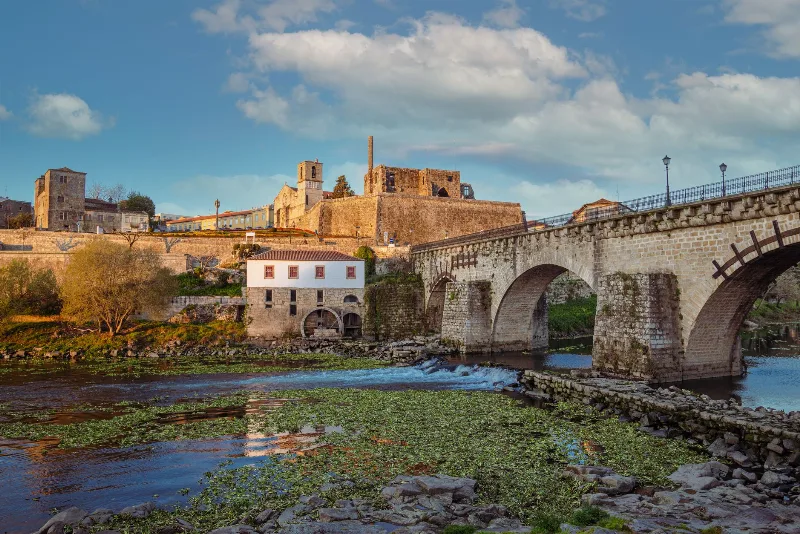
Barcelos
A Minho town built around a medieval bridge and a long-running Thursday fair, Barcelos is the home of Portugal's rooster legend and a living centre of popular craft.
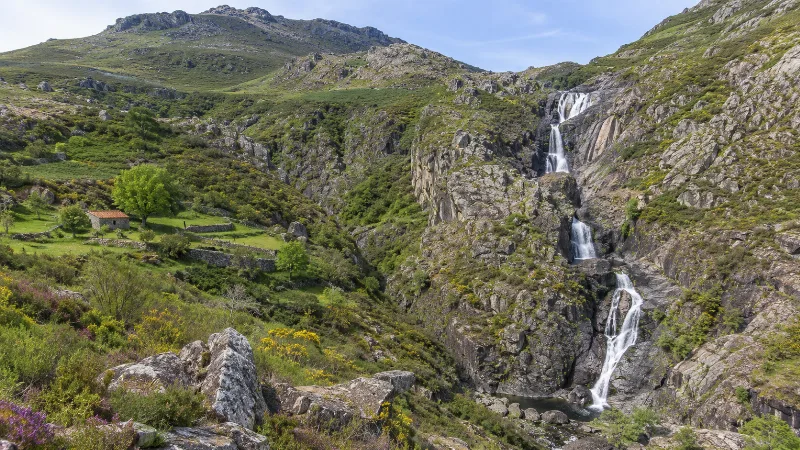
Alvão Natural Park – Granite Villages and Mountain Waterfalls
Alvão Natural Park is a mountain landscape in northern Portugal, with granite villages, upland pastures and the waterfalls of Fisgas de Ermelo.