
Vila do Conde
A working coastal town at the mouth of the Ave in northern Portugal, known for its shipbuilding past, its lace makers and the great convent and aqueduct of Santa Clara.
Vila do Conde is a town of roughly 30,000 people on the northern coast of Portugal, built around the final stretch of the Ave where the river opens into the Atlantic. It lies about 27 kilometres north of Porto, close enough to share in the city's economy and far enough to keep a rhythm of its own, and its history has been shaped by the sea, by shipbuilding and by the boats that once worked the estuary.
Location and General Character
The municipality covers around 149 square kilometres and runs from the coast inland into wooded, farmed parishes. Some 80,000 people live across it, most of them in the urban core and in the neighbouring parishes of Azurara, on the south bank of the river, and Árvore to the north. The old town stands on the northern side of the Ave, a short walk from the sea, so that the estuary with its quays and moored craft and the open beach beyond it lie almost within sight of each other.
The centre is compact and easily covered on foot. Two- and three-storey terraced houses line narrow streets that lead down to the water, with small squares, cafés and a daily market serving the surrounding parishes. The metro line running from Porto to Póvoa de Varzim passes through the town with several stops, and road connections south to Porto and north along the coast are straightforward. Vila do Conde remains a working town rather than a resort, although its beach brings summer visitors and second homes occupy part of the seafront.
History
The town's medieval prosperity came from its river mouth. Timber floated down the Ave from the interior fed yards that built and repaired wooden vessels, and during the 15th and 16th centuries the shipwrights of Vila do Conde were among the most respected in Portugal, contributing to the fleet used in Atlantic trade and exploration. A royal customs house was set up by the river to regulate goods passing through the port, and fishing, salt and coastal shipping supported much of the population in the centuries that followed.
The dissolution of the religious orders in 1834 removed an important presence from the town, and the 19th and 20th centuries brought a different kind of industry: the textile mills of the Ave valley, which drew workers from the rural parishes and reshaped the outskirts with housing and factory buildings. More recently the harbour has been adapted for fishing and leisure craft, and the old warehouse quarter along the river has been converted to new uses.
Architecture
Local granite gives the town much of its colour, appearing in door and window surrounds, kerbs, gateposts and the walls of older houses. Facades are commonly whitewashed or faced with tiles, and many retain wrought-iron balconies, deep timber eaves and tall chimneys of the northern Portuguese type. Small chapels mark street corners, several of them decorated with panels of blue and white tiles, and the parish church of São João Baptista, whose building history stretches over several centuries, dominates the highest part of the centre.
Along the riverside, former warehouses and the customs building show the plain, functional masonry of commercial architecture, now mixed with cafés and apartments. Away from the historic core, the 20th century left a legacy of modest apartment blocks and villa housing, and the approach roads are edged with the low industrial sheds characteristic of the Ave valley.
Natural Surroundings
The Ave rises in the Cabreira hills and runs for roughly 90 kilometres before reaching the sea here. Its final stretch forms a tidal estuary with sandbanks, reedbeds and saltmarsh, used by gulls, herons, cormorants and wading birds, and the water level and the mudflats change visibly through the day. West of the town a broad sandy beach faces the open Atlantic, backed by dunes held together by marram grass and by stands of pine.
Behind the coast near Árvore and Mindelo lies the Mindelo Ornithological Reserve, created in 1957 and the first protected area of its kind in Portugal. It combines dune, pinewood and farmland, and is used by passage and wintering birds. The climate is Atlantic: mild and wet in winter, cool and often cloudy in summer, with a steady north-west wind that keeps the sea cold and the beaches bracing even in August.
Local Culture and Everyday Life
Fishing still sets part of the daily rhythm, with boats working out of the harbour and a fish auction that supplies the town's restaurants and markets. Bobbin lace, known locally as renda de bilros, is the craft most closely associated with Vila do Conde: lace makers work on cushions of pins, following patterns handed down within families, and the skill is taught at the town's lace school and sold in small workshops. Since 1993 the town has also held Curtas Vila do Conde, an international short film festival each July that fills its cinemas and squares with visitors.
The Coastal Way of St James passes through the town, so walkers with packs are a familiar sight in the streets during the milder months. Food follows the coast and the river: grilled fish, seafood rice, shellfish and stews, eaten with the light white wines of the Vinho Verde region, which takes in the surrounding parishes. Summer brings religious festivals and processions, and the calendar of fairs and markets still structures the year for many families.
Notable Places
The Mosteiro de Santa Clara was founded in 1318 by Afonso Sanches, an illegitimate son of King Dinis, and his wife Teresa Martins. Its Gothic church was extensively remodelled in the 18th century, and the tombs of the founders remain inside; the convent was closed in 1834. Close by stands the Aqueduto de Santa Clara, built in the early 18th century to bring water to the convent, which runs for about four kilometres on close to a thousand arches and crosses a valley on its tallest tier.
The Alfândega Régia, the old royal customs house by the river, now holds a museum of naval construction, with models, tools and plans that explain the town's shipbuilding trades. A separate museum is devoted to bobbin lace. The Igreja Matriz de São João Baptista, the riverside quays and the fishing port are all within a short walk of one another, and the town beach and promenade lie just beyond.
Nearby Destinations
- Póvoa de Varzim, about ten kilometres north, a larger seaside town with a long sandy bay and a fishing quarter of its own.
- Azurara and Árvore, neighbouring parishes within the municipality, with quieter beaches and river views.
- The Mindelo reserve, a short drive up the coast, for dunes, pinewoods and birdwatching.
- Porto, 27 kilometres south, with the airport around 20 kilometres away.
- Esposende and Viana do Castelo, further north along the coastal route, for anyone continuing the walk to Santiago.
Inland, the roads up the Ave valley lead through small parishes of farmland, stone villages and vineyards, where the Vinho Verde grape growers work some of the oldest terraced plots in the region.
Related content
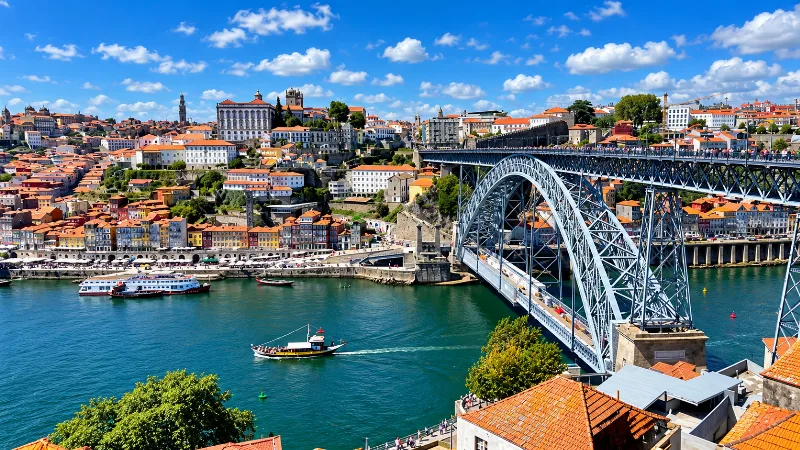
Porto
Porto is a compact northern city of steep streets, granite architecture, riverfront views, historic districts and strong local character.
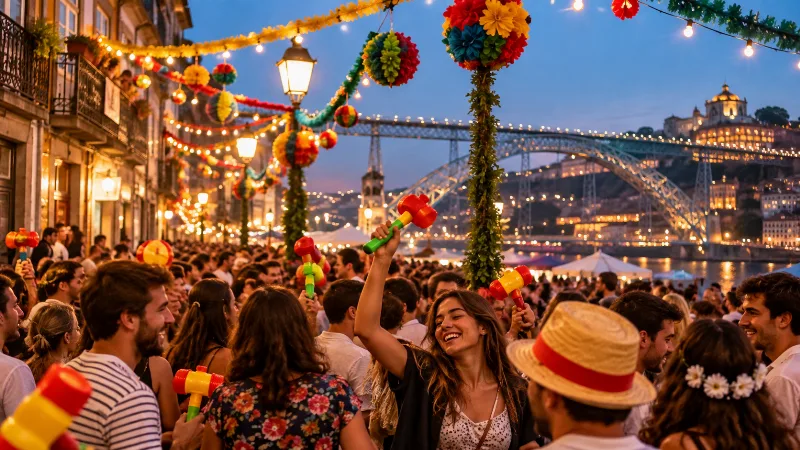
São João
São João is Porto’s major midsummer celebration, filling the city with street gatherings, music, decorations, food, fireworks and long-standing local traditions.
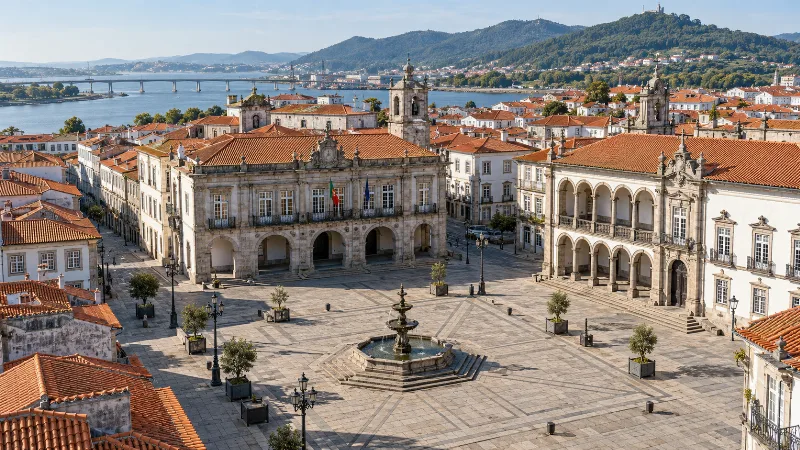
Viana do Castelo
Viana do Castelo combines historic squares, maritime heritage, Atlantic beaches and hilltop views over the Lima River estuary.
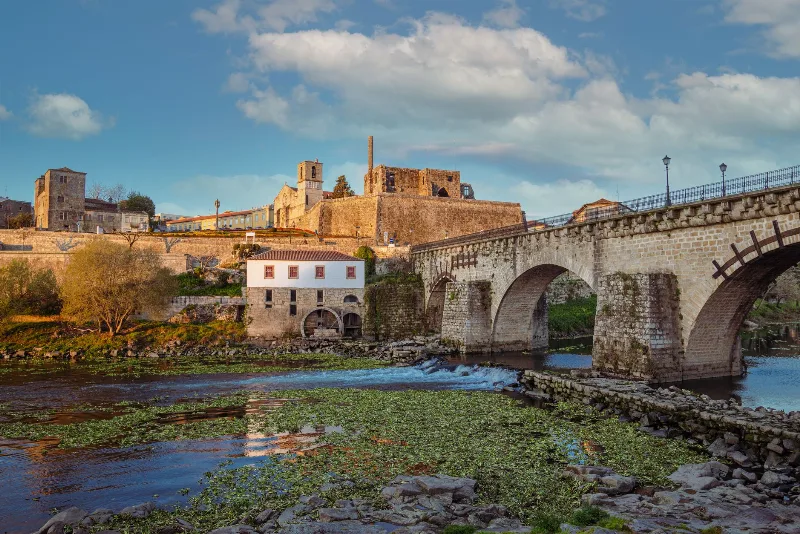
Barcelos
A Minho town built around a medieval bridge and a long-running Thursday fair, Barcelos is the home of Portugal's rooster legend and a living centre of popular craft.
Porto's Ribeira Waterfront and Historic Bridges
Porto's Ribeira is the old riverside quarter on the north bank of the Douro, a dense grid of arcaded streets and tiled façades watched over by a succession of iron and concrete bridges.
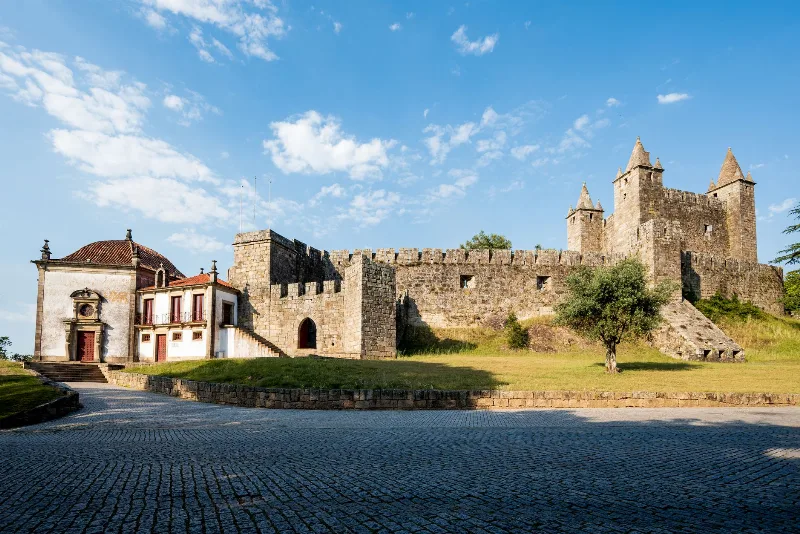
Santa Maria da Feira
A city and municipality in Portugal's Aveiro district, Santa Maria da Feira grew up around a medieval castle and a famous annual fair. It combines a historic centre with a heavily industrialised landscape, cork processing above all.