
The Guadiana River and the Border Landscape near Mértola
The Guadiana carves a deep valley along Portugal's eastern frontier, and the historic town of Mértola rises above it, carrying centuries of Islamic heritage and a landscape protected as a natural park.
The Guadiana River is one of the Iberian Peninsula's longest rivers, rising in the plains of La Mancha in Spain and running some 780 kilometres south and west before meeting the Atlantic near Vila Real de Santo António. For much of its lower course it forms the frontier between Spain and Portugal, and nowhere is that border character more visible than in the steep valley surrounding Mértola, a small Alentejo town built on a rocky spur high above the water.
A River That Shapes the Frontier
In its Portuguese section the Guadiana flows through a landscape of schist and greywacke bedrock, cutting a broad, winding valley with slopes of varying steepness and occasional rocky outcrops at the water's edge. Downstream of Mértola the river receives the waters of the Ribeira de Oeiras, which joins it almost directly beneath the town, and further south the Chança, whose lower course also marks part of the Spanish border, flows in near Pomarão. Flow levels are regulated by dams along the river's course, so the water appears calm and broad for much of the year, with quieter stretches of flat water between old weirs.
The valley floor is narrow, and the slopes above it are covered with a typical Alentejo mosaic: cork oak and holm oak woodland, olive groves, and dense Mediterranean scrub of cistus, rosemary and rockrose. In spring the hillsides carry a haze of colour, while in high summer the landscape turns to pale gold and the river becomes the darkest line in the view.
Mértola Above the Water
Mértola occupies a natural defensive position, a promontory enclosed on two sides by the river and the Oeiras stream. Its skyline is dominated by the castle keep, rebuilt in the thirteenth century on earlier foundations, from which the whole valley opens out in both directions. Below the walls, streets of whitewashed houses with stone doorways descend towards the old river port, an area that once handled grain, olive oil, cork and mineral ore shipped down the Guadiana to the coast.
The town has long been described as a museum town, and the description is fair: Roman remains, medieval walls and a riverside tower survive alongside the everyday life of a working Alentejo community. Walking the streets above the river gives a clear sense of how closely the settlement's history has been tied to navigation and trade.
Layers of Islamic Heritage
Known in Roman times as Myrtilis, Mértola became an important river port during the Islamic period, when it maintained commercial links with North Africa and the wider Mediterranean. The most striking survival is the church of Nossa Senhora da Anunciação, a former mosque converted after the Christian conquest. Its interior retains a mihrab and a series of horseshoe arches, making it one of the most significant buildings of its kind in Portugal.
The town's museum collections, spread across several buildings, hold Islamic ceramics, epigraphy and everyday objects recovered locally, and the wider streetscape preserves elements of domestic Islamic architecture. Each May the town's Islamic past is marked with a festival that brings crafts, food and music into the historic centre, drawing on the region's Andalusian connections.
The Vale do Guadiana Natural Park
The valley around Mértola is protected within the Vale do Guadiana Natural Park, established in 1995 to safeguard a stretch of river and its surrounding hills. The park is notable for birds of prey and cliff-nesting species, including Bonelli's eagle, black stork and eagle owl, while otters and Egyptian mongooses are found along the water. The Iberian lynx has been reintroduced in the wider valley, and the woodland and scrub provide cover for wild boar, genet and a rich community of reptiles and insects.
This is quiet, spacious country. Roads follow the ridges rather than the water, and long views open across the valley to the Spanish side, where the land rises in similar fashion.
Experiencing the River
The Guadiana around Mértola is best appreciated slowly. Small boats run along the river from the town towards Pomarão, giving views of the valley from water level, and canoeing is possible on the calmer sections. Footpaths lead along the banks and up to viewpoints above the gorge, and the riverside area at dusk, when swifts and kestrels hunt over the water, is one of the most rewarding places in the Alentejo to simply sit and watch.
Related content
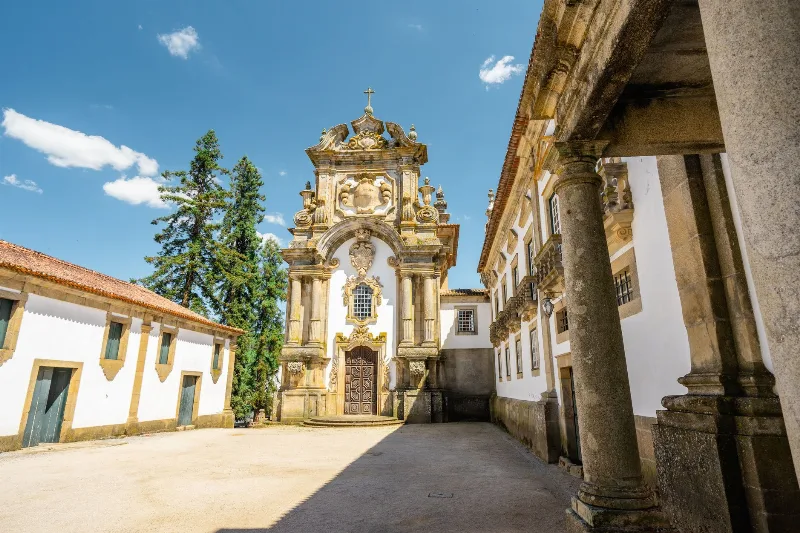
Vila Real
Vila Real is the district capital of northern Portugal's Trás-os-Montes, a granite town set above the Corgo gorge, with a noble old quarter, a university and the Baroque Palace of Mateus a short drive away.
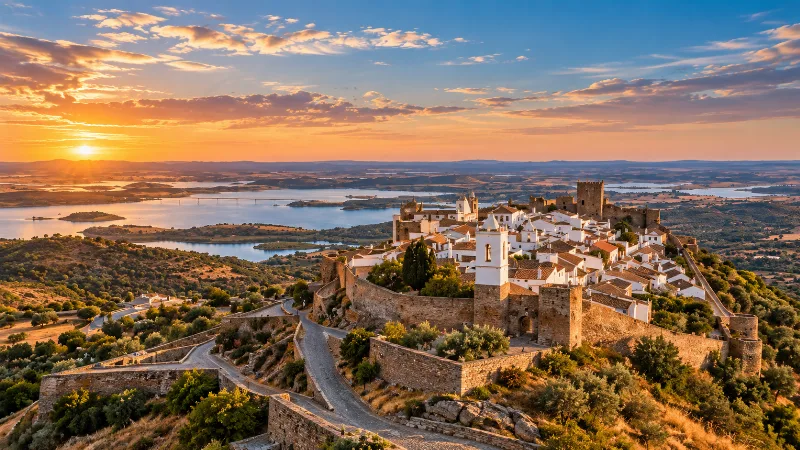
Alentejo
Discover Alentejo through Évora, whitewashed towns, cork-oak landscapes, vineyards, regional food and the broad rural interior of southern Portugal.
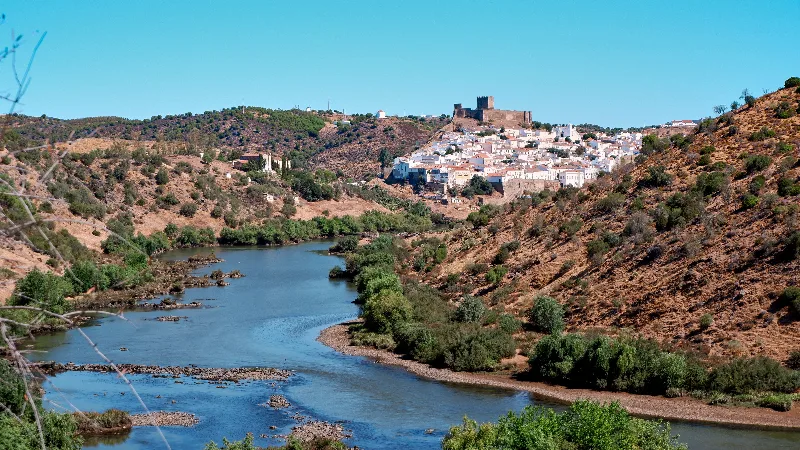
Beja
Beja is a hilltop city in the Baixo Alentejo, once the Roman town of Pax Julia, whose marble-grey castle keep rises above a plain of wheat, olive groves and cork oak. Its old convent now holds one of southern Portugal's richest regional museums.
The Salt Pans of Castro Marim and Sapal Nature Reserve
A look at the traditional salt pans and tidal marshes around Castro Marim in the eastern Algarve, where hand-harvested salt, wading birds and the Guadiana estuary exist side by side.
Monsaraz Hilltop Village and Megalithic Sites
Monsaraz is a fortified hilltop village in Portugal's Alentejo, surrounded by wide plains, cork oak groves and a notable cluster of prehistoric stone monuments.
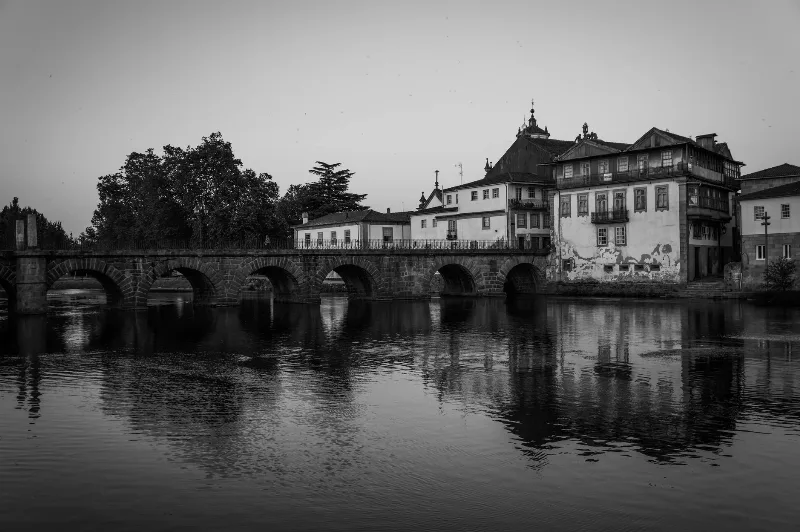
Chaves
Chaves is a granite town in Portugal's far north-east, built above the river Tâmega and shaped by Roman settlement, thermal water and centuries of frontier life. Its old bridge, castle keep and spa quarter give the place a character unlike anywhere else in Trás-os-Montes.
Marvão Hilltop Fortress and Schist Village
Perched on a rocky ridge in the Serra de São Mamede, Marvão combines a hilltop fortress, schist-built lanes and wide views over the Alentejo borderlands.
Things to Do in Vila Real
Explore things to do in vila real with a practical guide to notable places, regional landscapes, local heritage and travel planning in Portugal.