
Alcobaça Monastery and its Gothic Tombs
Founded by Portugal's first king and built over more than a century, the Cistercian monastery of Alcobaça shelters the country's most celebrated medieval tombs, carved for Pedro I and Inês de Castro.
The Alcobaça Monastery stands in the small town of Alcobaça in the Estremadura region of central Portugal, roughly a hundred kilometres north of Lisbon and a short distance inland from the Atlantic coast at Nazaré. Founded in 1153 by Afonso Henriques, the country's first king, it was entrusted to the Cistercian order, whose monks arrived from Clairvaux in France. Construction of the present church began in the late twelfth century and the building was consecrated in 1252, making it one of the earliest and most complete Gothic monuments in Portugal. The monastery was inscribed on the UNESCO World Heritage list in 1989.
A Cistercian foundation in the Portuguese kingdom
The gift of land at the confluence of the Alcoa and Baça rivers formed part of a wider strategy of settlement and agricultural development in newly conquered territory. Cistercian communities were prized for their discipline, their skill in farming and their capacity to organise large estates, and the abbey at Alcobaça quickly became one of the most powerful religious houses in the kingdom. Its abbots held considerable influence at court, and the monastery accumulated lands, granaries and dependent churches across the region. For centuries the community followed the Cistercian rhythm of prayer, manual work and silence, and the buildings that survive today reflect that ordered, self-sufficient way of life.
Architecture of the Gothic church
The church is austere in the best Cistercian manner: a tall, narrow nave with a flat, gallery-like elevation, slender columns and almost no figurative carving in the medieval fabric. The original intention was clearly spiritual rather than decorative, allowing the architecture itself to carry the sense of scale. The nave ranks among the largest in Portugal, and the stonework is remarkably unified for a building raised over more than seventy years. Later periods left their mark elsewhere, notably in the Manueline sacristy and in the eighteenth-century additions that gave parts of the complex their baroque character.
The Gothic tombs of Pedro I and Inês de Castro
Two magnificent carved tombs face each other across the transept, and they are the reason many visitors come to Alcobaça. They were made for King Pedro I, who died in 1367, and for Inês de Castro, a Galician noblewoman attached to the household of Pedro's wife, Constança. Inês was murdered at Coimbra in 1355 on the orders of Pedro's father, Afonso IV, a killing that became one of the most enduring episodes in Portuguese literature and song.
Both monuments are richly sculpted in local limestone, with recumbent figures, lions supporting the sides and dense programmes of relief carving around the sarcophagi. Tradition holds that the king had the tombs placed foot to foot so that, on the day of resurrection, the two would rise and see one another at once. The story of Inês being crowned after death is likewise a legend rather than a documented ceremony, but it has attached itself to the site and to Portuguese culture more broadly.
Beyond the church: the monastic rooms
The cloister of silence, so called for the strict rule observed within it, is a serene double-storey arcade of restrained Gothic arches. Around it lie the rooms of daily life: the refectory, where the monks ate in silence while listening to readings; the long dormitory; the chapter house, where the community met; and the kitchen, notoriously practical in design, with a channel of the Alcoa stream once directed through it. A later addition, the baroque kitchen with its tiled walls and stone tables, is often remembered long after a visit. The monastic precinct also includes a library and exhibition spaces devoted to the abbey's history.
Visiting Alcobaça and its surroundings
The monastery dominates the centre of a pleasant market town, and the formal gardens in front of the façade offer a clear view of the church's west front. The surrounding countryside is varied: to the west, the low hills fall away towards the coast and the beaches around Nazaré; to the east, the limestone uplands of the Serra dos Candeeiros begin, with walking routes and characteristic dry-stone landscapes. Alcobaça is easily combined with nearby Batalha, Óbidos and Leiria, all within a short drive, and the abbey remains one of the clearest places to understand the medieval union of royal power, religious reform and Gothic architecture in Portugal.
Related content
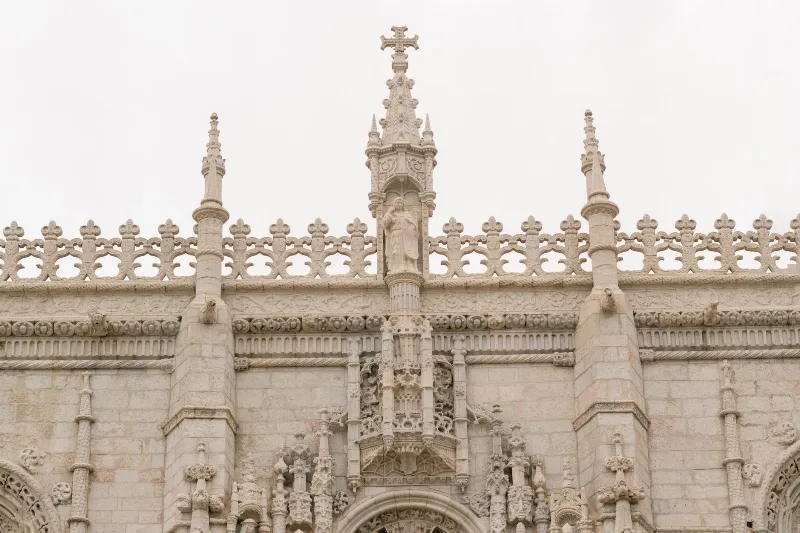
Alcobaça
A small town in central Portugal that grew up around one of Europe's best-preserved Cistercian abbeys, with a medieval monastic complex at its heart and a valley of orchards beyond it.
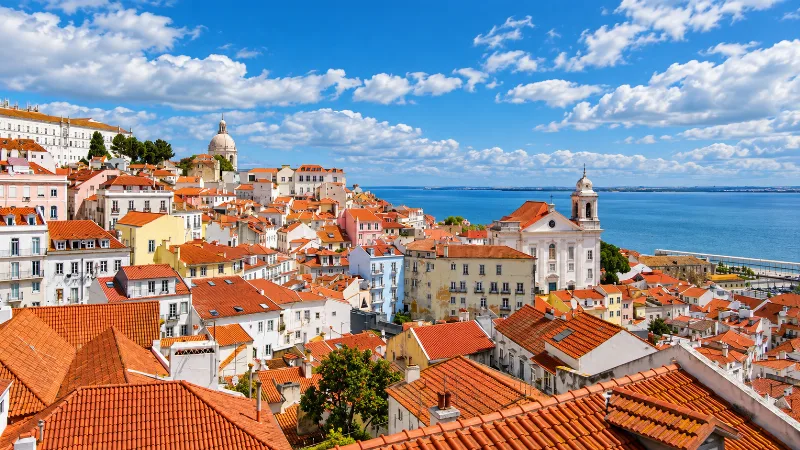
Lisbon
Portugal’s capital combines historic neighbourhoods, river views, tiled façades, viewpoints and an energetic everyday city life.
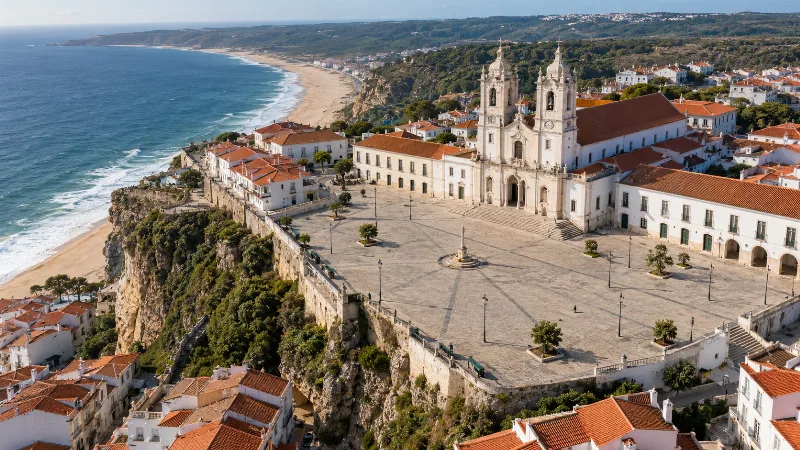
Nazaré
Nazaré is an Atlantic fishing town known for its broad beach, clifftop Sítio district, maritime traditions and the large winter waves at Praia do Norte.
Batalha Monastery and Manueline Architecture
Batalha Monastery in central Portugal was founded to commemorate a medieval victory and became a showcase of late Gothic ambition and Manueline stone carving.
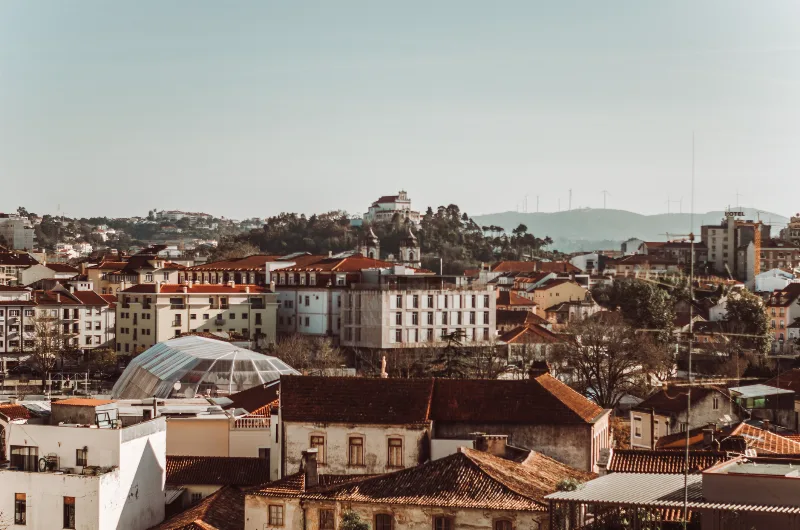
Leiria
Leiria is a central Portuguese city built around a hilltop castle above the River Lis, with a compact historic centre, a long paper-making tradition and a pine forest stretching towards the Atlantic.
Óbidos
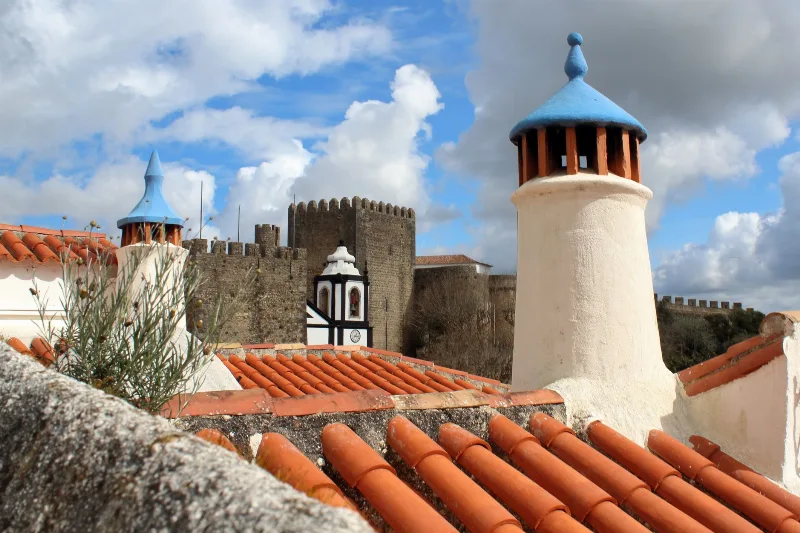
Óbidos is a small walled town in Portugal's Oeste region, built inside an intact medieval circuit of walls around a hilltop castle. Its streets, churches and sour-cherry liqueur tradition make it one of the country's most distinctive historic centres.
Santarém
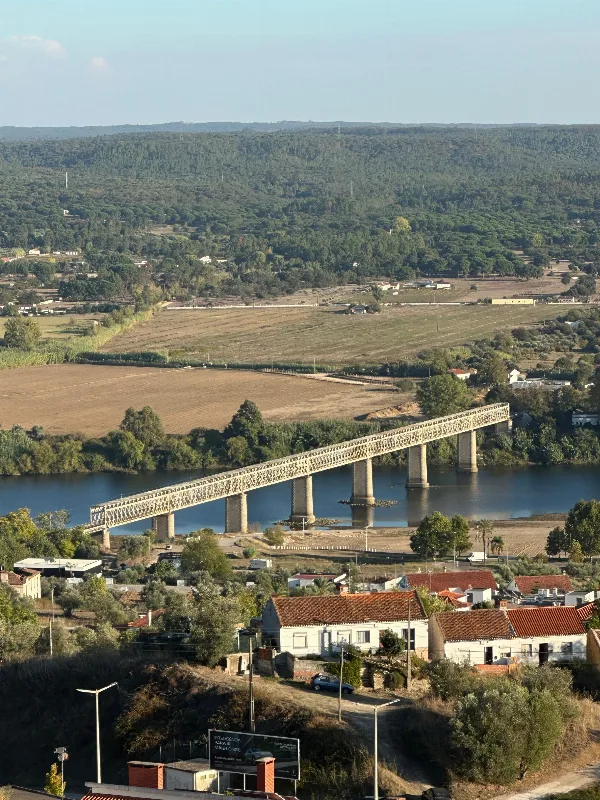
A Ribatejo town set on a plateau above the River Tagus, Santarém is known for its cluster of Gothic churches, its medieval street plan and its long relationship with the farmland below.
Portugal's Most Impressive Monasteries
Explore portugal's most impressive monasteries with a practical guide to notable places, regional landscapes, local heritage and travel planning in Portuga