
Batalha Monastery and Manueline Architecture
Batalha Monastery in central Portugal was founded to commemorate a medieval victory and became a showcase of late Gothic ambition and Manueline stone carving.
Batalha Monastery, formally the Mosteiro de Santa Maria da Vitória, stands in a shallow valley in the Leiria district of central Portugal, roughly 120 kilometres north of Lisbon. It was founded as an act of royal thanksgiving and grew over more than a century and a half into one of the most ambitious building projects ever undertaken in the country, uniting severe late Gothic structure with the exuberant carved ornament later called Manueline. UNESCO inscribed the monastery on its World Heritage list in 1983.
From battlefield to building site
The abbey owes its existence to the Battle of Aljubarrota in 1385, when King João I defeated a Castilian army and secured the independence of the Portuguese crown. The victory was followed by the Treaty of Windsor and by his marriage to Philippa of Lancaster, daughter of John of Gaunt, an alliance that shaped Portuguese history for generations. Construction began in the late 1380s under the architect Afonso Domingues, and the scale was deliberately monumental, intended to impress as much as to serve a religious community.
Later masters, including the Catalan-trained Huguet, carried the work forward, and the patronage of successive monarchs — Duarte, Afonso V, João II and Manuel I — kept masons, sculptors and glassmakers busy into the sixteenth century. The result is a building that can be read like a chronology of Portuguese architecture, with a Gothic core wrapped in increasingly decorative later additions.
The Gothic heart of the abbey
The church interior is striking for its height and restraint. Slender piers rise to a vault more than thirty metres above the floor, and the pale limestone gives the nave a cool, even light that contrasts with the density of carving elsewhere. Off the nave, the Founder's Chapel was conceived as a star-vaulted burial room for the House of Avis; the tombs of João I and Philippa of Lancaster lie side by side, their hands joined in stone, surrounded by the graves of their sons, including Henry the Navigator. The Chapter House holds a vault that spans the room without intermediate support, a feat of medieval engineering that local tradition long attributed to condemned men working under sentence. Sixteenth-century stained glass, made by Portuguese and Flemish workshops, survives in several windows.
What makes Manueline architecture distinctive
Manueline is the Portuguese expression of late Gothic, flourishing roughly between the 1490s and the 1530s during the reign of Manuel I. Its defining trait is ornament drawn from the sea and from the enterprise of exploration: twisted cables and ropes, armillary spheres, anchors, shells, coral, seaweed, alongside oak leaves, artichokes and the Cross of the Order of Christ. The style is not merely applied decoration; it reshapes portals, windows and vault ribs, so that structural elements become the frame for filigree carving. Influences from Spanish Plateresque, Flemish sculpture and Italian design are absorbed into a distinctly Portuguese idiom, also visible at the Jerónimos Monastery and the Torre de Belém in Lisbon.
The Royal Cloister and the Unfinished Chapels
The Claustro Real is the monastery's most celebrated ensemble, its arcades filled with tracery so fine that the stone reads almost as lace, and the effect changes constantly as sunlight moves across it. The adjoining Cloister of Afonso V is plainer, with simple columns and a surface of azulejo tiles that alters the mood entirely. At the east end stand the Capelas Imperfeitas, the Unfinished Chapels, begun for King Duarte and left without a roof. Open to the sky, they form an octagonal rotunda entered through a monumental Manueline portal by Mateus Fernandes, crowded with sculpted vines, shields and figures. The absence of a vault does not diminish them; it makes the carving unusually easy to study.
The surrounding landscape
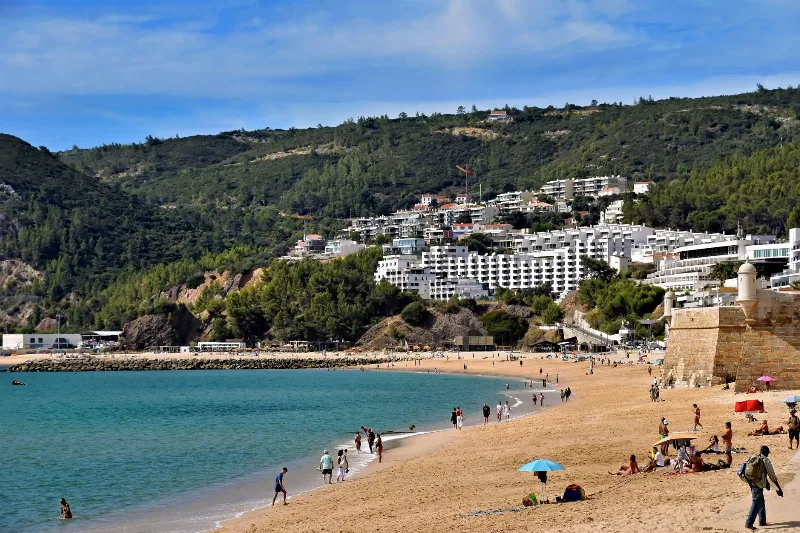
The monastery's stone came from local quarries in a landscape of pale limestone, drystone walls and low scrub that forms part of the Maciço Calcário Estremenho. The small town of Batalha has grown around the abbey, and the region places other historic sites within easy reach: the Cistercian monastery at Alcobaça to the north, the sanctuary at Fátima to the east, the castle town of Leiria, and the Atlantic coast around Nazaré and São Martinho do Porto, where cliffs give way to a sheltered bay. The combination of monumental architecture and open limestone country makes the area rewarding for anyone interested in Portuguese heritage.
Related content
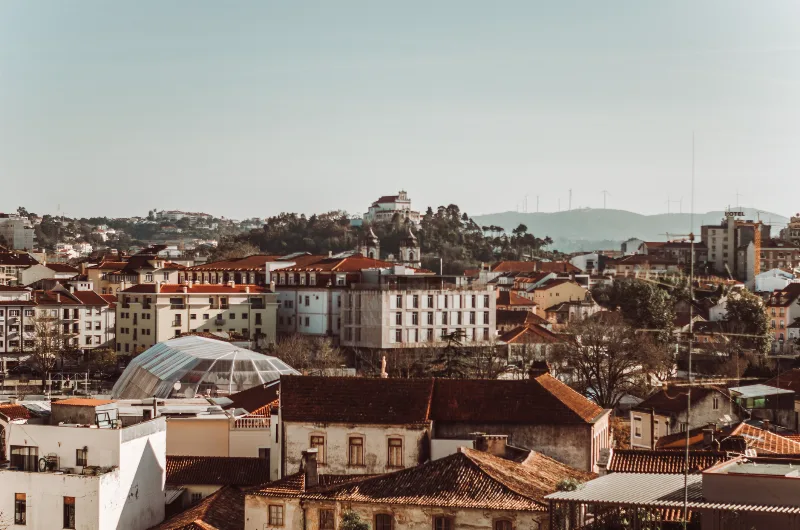
Leiria
Leiria is a central Portuguese city built around a hilltop castle above the River Lis, with a compact historic centre, a long paper-making tradition and a pine forest stretching towards the Atlantic.
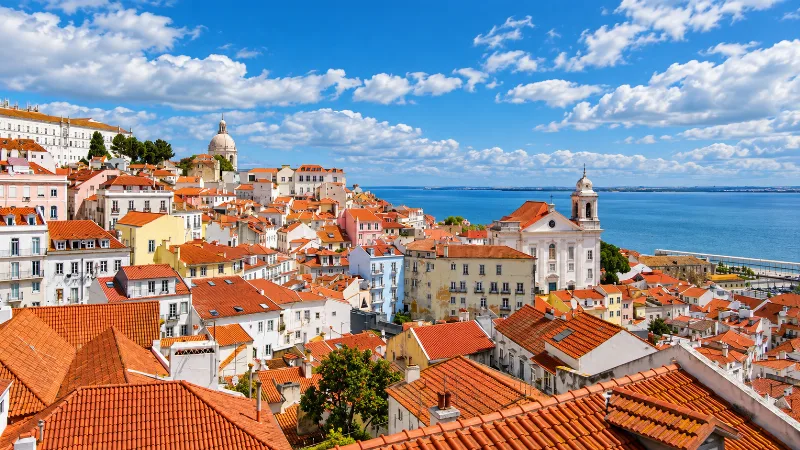
Lisbon
Portugal’s capital combines historic neighbourhoods, river views, tiled façades, viewpoints and an energetic everyday city life.
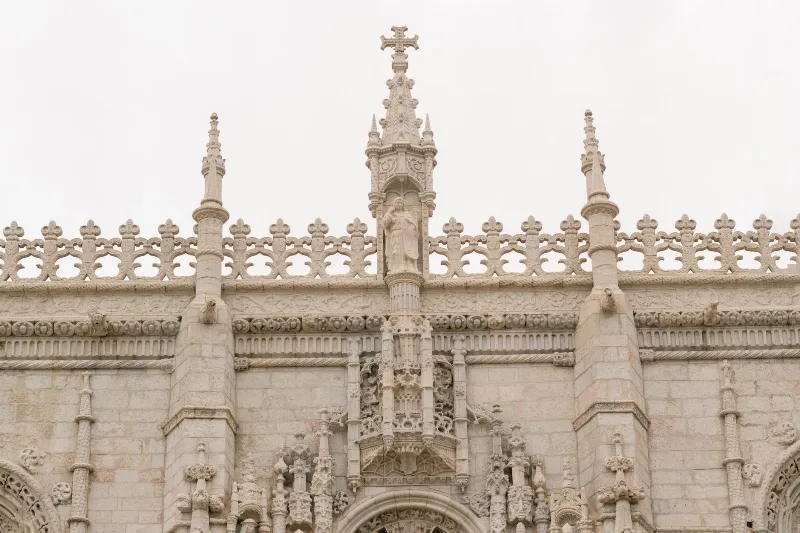
Alcobaça
A small town in central Portugal that grew up around one of Europe's best-preserved Cistercian abbeys, with a medieval monastic complex at its heart and a valley of orchards beyond it.
Alcobaça Monastery and its Gothic Tombs
Founded by Portugal's first king and built over more than a century, the Cistercian monastery of Alcobaça shelters the country's most celebrated medieval tombs, carved for Pedro I and Inês de Castro.
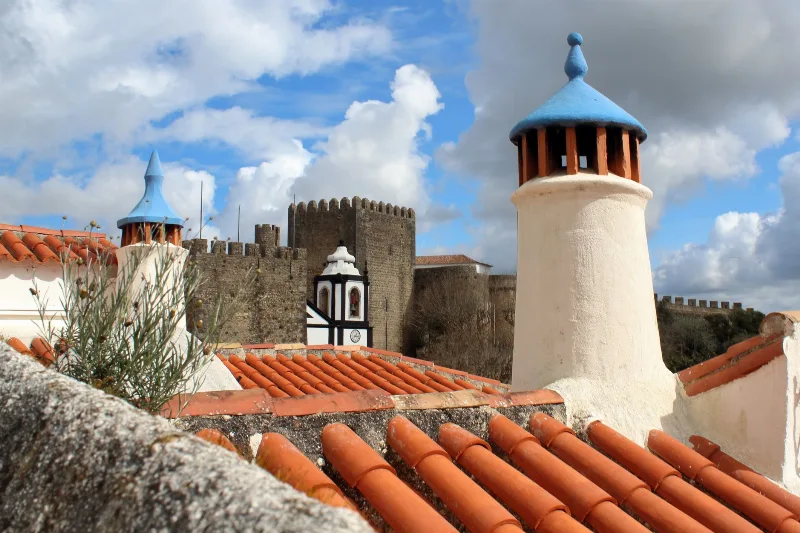
Óbidos
Óbidos is a small walled town in Portugal's Oeste region, built inside an intact medieval circuit of walls around a hilltop castle. Its streets, churches and sour-cherry liqueur tradition make it one of the country's most distinctive historic centres.
The Convent of Christ in Tomar and Templar Heritage
A fortified monastery above the River Nabão, the Convent of Christ preserves the legacy of the Knights Templar alongside some of Portugal's most celebrated Manueline stonework.
Portugal's Most Impressive Monasteries
Explore portugal's most impressive monasteries with a practical guide to notable places, regional landscapes, local heritage and travel planning in Portuga
Best Regions to Visit in Portugal
Discover Portugal's most popular travel regions, from the historic cities of Lisbon and Porto to the beaches of Algarve, the countryside of Alentejo and the Atlantic islands.