
Angra do Heroísmo Historic Centre and its Bay Defences
Angra do Heroísmo on Terceira combines a grid of basalt-and-whitewashed streets with a ring of fortresses built to guard one of the Atlantic's most useful anchorages.
Angra do Heroísmo lies on the south coast of Terceira, one of the central islands of the Azores, and ranks among the most complete historic towns in the Portuguese Atlantic. Its name derives from an old word for a cove or inlet, and the curve of water at its feet explains much of its story: the sheltered anchorage attracted shipping from the fifteenth century onwards and turned the settlement into a natural staging post between Europe, the Americas and the Indian Ocean. The historic centre and the bay defences that protected it were inscribed on the UNESCO World Heritage list in 1983.
A Sheltered Harbour on the Ocean Crossings
Long-distance voyages in the fifteenth and sixteenth centuries depended on dependable places to take on water, provisions and repairs, and Angra's bay offered precisely that. The town was laid out in the mid-fifteenth century, received its charter as a city in 1534, and quickly acquired the institutions of a significant port: customs, churches, convents and the residences of governors and merchants. Because the harbour was so valuable, it was also exposed. Privateers, rival fleets and pirates repeatedly threatened the town, and from the sixteenth century the crown treated its defence as a matter of strategic importance rather than local convenience.
The Street Pattern and Architecture of the Centre
Angra is unusual among Azorean settlements for the regularity of its plan. The core is arranged on a grid of straight streets and narrow lanes that climb gently from the waterfront, a layout that has survived earthquakes, rebuilding and modern life remarkably intact. The buildings that line these streets are recognisably Atlantic in character: two-storey houses of dark volcanic basalt, rendered and whitewashed or painted in muted yellows, pinks and blues, with wooden balconies and window frames picked out in green, ochre or blue.
Among the landmarks of the centre are the Praça Velha, the old main square flanked by the town hall, and the cathedral, whose interior reflects the wealth that shipping brought. The Palácio dos Capitães Generais, a former Jesuit college later converted into the residence of the island's captains-general, and the museum housed in the former Convent of São Francisco both preserve the memory of that administrative and religious life. Small chapels dedicated to the Holy Spirit stand at intervals through the streets, reminders of a devotional tradition that still structures the local year. The severe earthquake of 1980 damaged much of the town, and the careful reconstruction that followed is part of what makes the centre look so coherent today.
The Bay Defences: Fortresses and Watchposts
The defensive system around Angra bay is one of the most complete of its kind in Portugal. On Monte Brasil, the volcanic peninsula that closes the bay to the south, the Fortaleza de São João Baptista was begun in the early 1580s during the period of Spanish rule and grew into one of the most extensive fortifications in the Azores, its walls following the contours of the rock rather than imposing a geometric shape upon it. Across the water, the Forte de São Sebastião commanded the eastern approach to the harbour, while a succession of smaller batteries, lookouts and gun platforms filled the gaps along the shore.
The defences were tested again during the Liberal Wars of the 1830s, when Terceira served as a stronghold for the constitutionalist cause and the town became a base for the regency supporting Maria II. The Alto da Memória, an obelisk on a hill above the centre, recalls that period, and the military architecture of the bay remains legible as a single integrated scheme rather than a collection of isolated monuments.
Monte Brasil and the Surrounding Landscape
Monte Brasil is the dominant feature of the local scenery: a forested volcanic cone rising directly from the sea, its slopes covered with introduced and native trees and threaded with paths that lead to viewpoints over the town, the bay and the open Atlantic beyond. The interior of Terceira is equally rewarding, with green pastureland divided by hedgerows, volcanic calderas and the remains of older eruptions.
Festivals and Living Traditions
Angra's cultural life is closely tied to the calendar of the Azores. The Espírito Santo festivals, held after Easter, combine processions, crownings and communal meals in a tradition centuries old. The Sanjoaninas in June bring music, parades and street celebrations to the centre, and Carnival is marked with masked dances and satirical performances. Bull running on a rope, in which the animal is controlled by handlers rather than enclosed in an arena, remains a familiar summer spectacle on Terceira, part of a wider set of island customs that give Angra a character distinct from mainland Portugal.
Related content
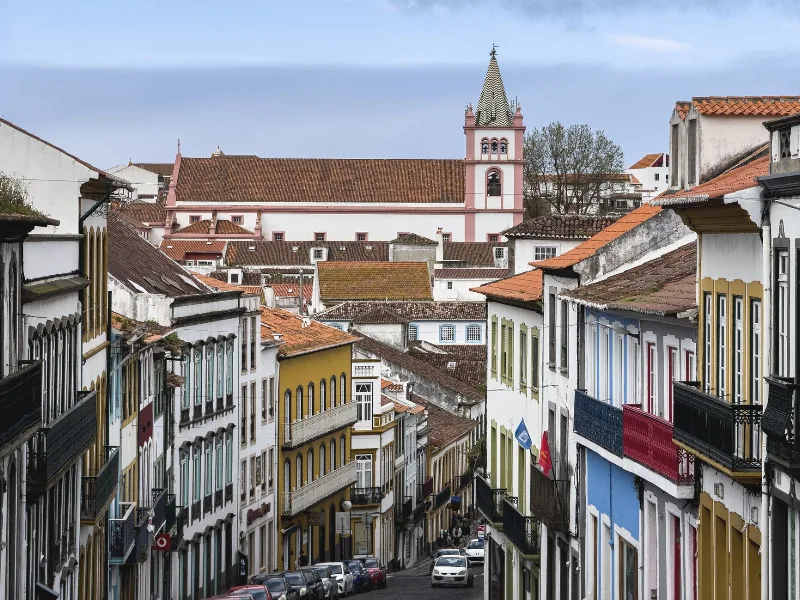
Angra do Heroísmo
Angra do Heroísmo wraps around a sheltered bay on Terceira, where a UNESCO-listed street plan, baroque churches and a hilltop fortress record five centuries of Atlantic trade and island life.
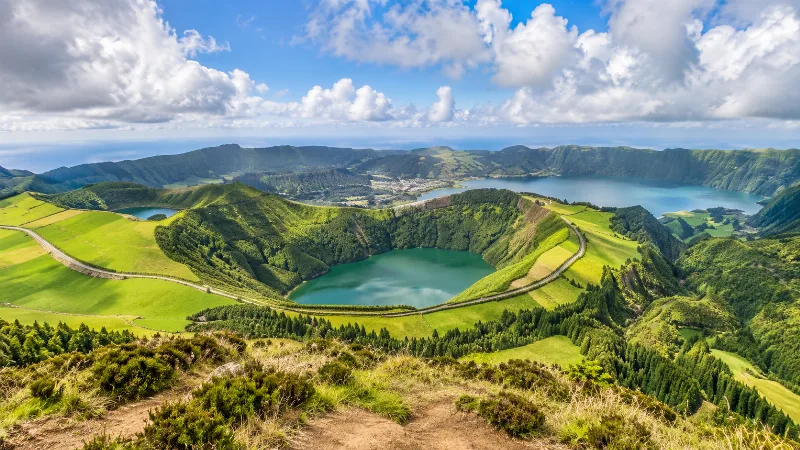
Azores
Discover the Azores through volcanic islands, crater lakes, green landscapes, Atlantic coastlines, hiking, wildlife and distinctive island communities.
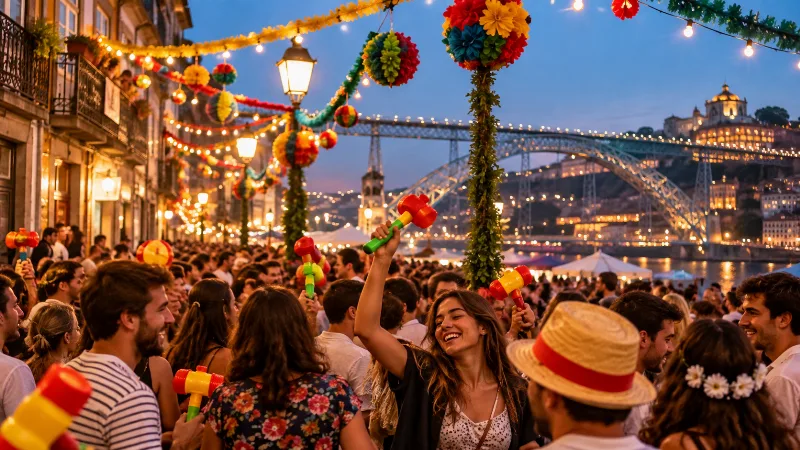
São João
São João is Porto’s major midsummer celebration, filling the city with street gatherings, music, decorations, food, fireworks and long-standing local traditions.
Horta
Horta, the main town of Faial in the Azores, is built around a sheltered bay that has served whalers, cable engineers and Atlantic sailors. Its compact centre, painted harbour wall and volcanic hinterland make it one of the central group's most distinctive ports.
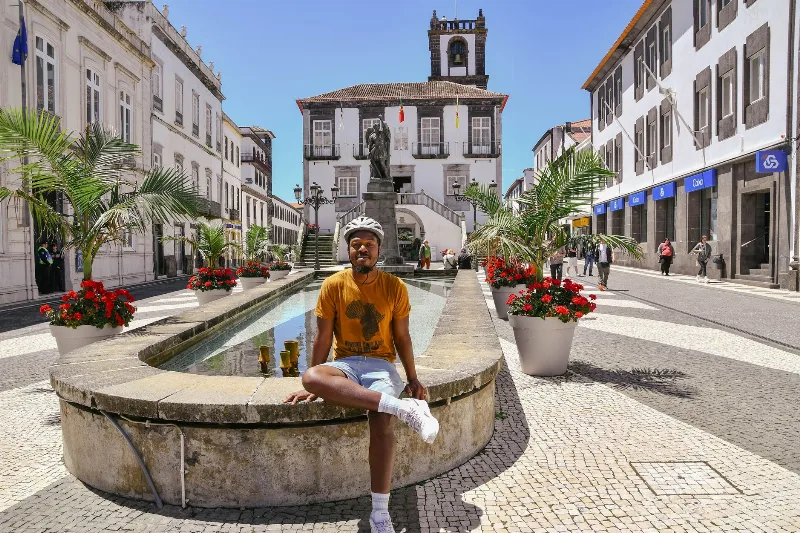
Ponta Delgada
The Azores' largest city spreads across a basalt terrace above a south-facing bay on São Miguel. This guide covers its harbour history, religious architecture, festivals and the volcanic hills that surround it.
Machico
Machico is one of Madeira's earliest settlement sites, a bay-side town on the island's drier eastern coast with a fishing harbour, a sandy beach and a compact historic centre.
Sesimbra
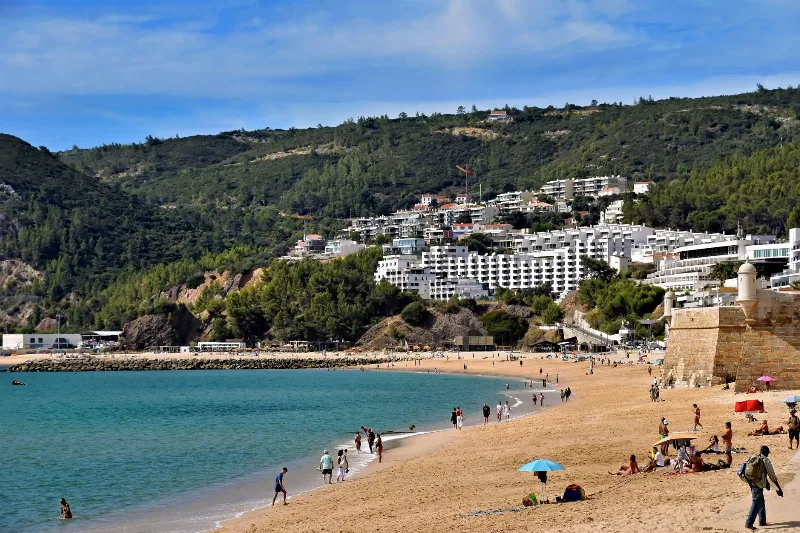
A sheltered Atlantic bay at the foot of the Serra da Arrábida, Sesimbra remains a working fishing town whose castle, harbour and beaches shape everyday life.
Óbidos Medieval Walls and Whitewashed Streets
Óbidos is a compact walled town in central-west Portugal, known for its medieval defences and whitewashed lanes. This article explores its architecture, streets, viewpoints and surrounding landscape.