
Azeitão Sheep's Cheese and the Setúbal Peninsula
Azeitão cheese is a soft sheep's milk cheese from the villages below the Serra da Arrábida, set with cardoon thistle and made by small dairies on the Setúbal Peninsula.
Azeitão cheese — queijo de Azeitão in Portuguese — is a soft sheep's milk cheese made in the parishes around Vila Nogueira de Azeitão, a cluster of villages on the Setúbal Peninsula south of Lisbon. The rounds are small, pale and often sold wrapped in cloth, and they carry a flavour that speaks directly of the limestone hills, Atlantic breezes and scrubland herbs of the Serra da Arrábida. Few Portuguese cheeses are so closely identified with a single, compact landscape.
A Landscape That Shapes the Milk
The cheese begins with the flocks. Sheep graze on the lower slopes and dry pastures of the Arrábida hills, where thin limestone soils support rosemary, thyme, wild lavender and other aromatic plants. Local animals, largely of the Saloia type with Merino influence, produce a milk that is relatively rich and distinctly perfumed. Mild winters and the proximity of the Atlantic allow grazing for much of the year, although cheesemaking is concentrated in the cooler months, when milk yields are lower and richer and the curds set best.
Thistle Instead of Rennet
The most distinctive step in making Azeitão cheese is coagulation. Rather than animal rennet, producers use the dried flowers of the cardoon thistle, Cynara cardunculus, which grows locally and is gathered in summer. The flowers are dried, then soaked in water or whey, and the resulting infusion is stirred into warm raw sheep's milk. Enzymes in the thistle cause the milk to set into a delicate curd that is cut, ladled into small cylindrical moulds and left to drain. The cheeses are turned by hand, lightly salted, wrapped in cloth and moved to a cool room to ripen.
Texture, Flavour and the Question of Age
Azeitão is at its best over a short window. Young cheeses, a few weeks old, are soft and mildly sweet, with a fresh dairy aroma and a faint vegetable note from the thistle. Left longer, the paste softens further towards a spoonable, almost oozing consistency and develops a gentle tang and a creamy, slightly pungent finish. Because the cheeses are made from raw milk and continue to evolve, they are usually bought young and eaten soon after.
How It Is Served
Tradition dictates a simple approach: the top of the round is sliced off and the interior scooped out with a small spoon or with crusty bread, which also serves as the vehicle. Accompaniments tend to be local and unfussy — bread, walnuts, perhaps a drizzle of honey — and the natural partner is Moscatel de Setúbal, the fortified wine produced on the same peninsula. The cheese also appears on restaurant tables in Lisbon and Setúbal and at village fairs in the Azeitão parishes, where it forms part of a wider calendar of local dairy and agricultural produce.
A Protected Local Identity
Queijo de Azeitão holds protected designation of origin status, which restricts production to defined parishes in the municipalities of Setúbal, Palmela and Sesimbra and requires the milk, the thistle and the making to be local. Dairies remain small, often family-run, and many sell through markets, shops and direct sales rather than large distribution. The rules protect not only a recipe but a way of farming: small flocks, scrubland pasture and seasonal rhythms that larger systems cannot easily replicate.
Exploring the Surroundings
The cheese is one part of a small region well worth a day's exploration. Vila Nogueira de Azeitão and the neighbouring villages of São Simão and São Lourenço contain tile-fronted quintas and old wine estates. Palmela to the north has a hilltop castle with wide views over the Sado estuary, while Setúbal combines a working harbour and fish market with a compact historic centre. To the south, the Serra da Arrábida Natural Park protects wooded hills that fall steeply to clear, sheltered water at Portinho da Arrábida, and Sesimbra offers a fishing town and a curving beach below a Moorish castle.
A visit in the cooler months brings the best chance of finding cheese at its freshest and of seeing how a modest round of sheep's milk cheese became one of the Setúbal Peninsula's most recognisable foods.
Related content
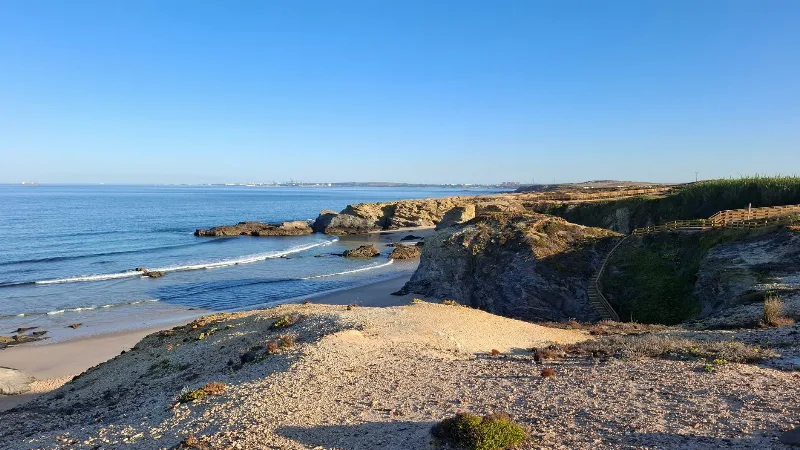
Setúbal
A working port on the north bank of the Sado estuary, Setúbal combines a long maritime history, Manueline architecture and the limestone hills of Arrábida. Ferries, a renowned fish market and a resident dolphin population are part of everyday life there.
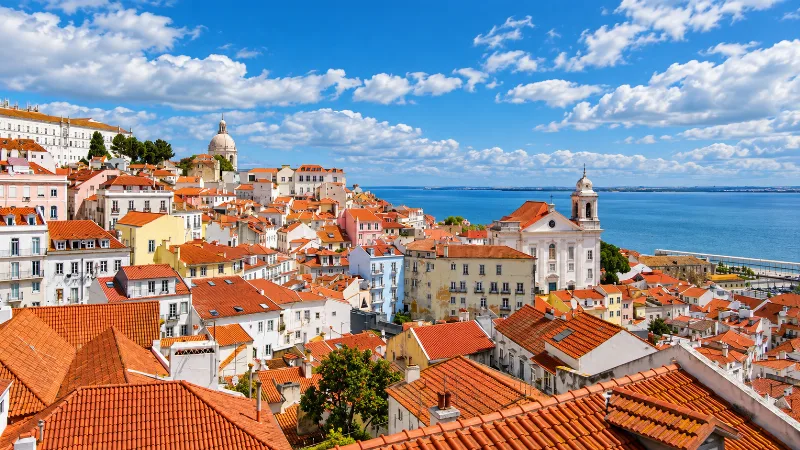
Lisbon
Portugal’s capital combines historic neighbourhoods, river views, tiled façades, viewpoints and an energetic everyday city life.

Palmela
A hilltop town in the Setúbal district, Palmela combines a long medieval castle wall, sandy-soil vineyards and wide views over the plain between the Tagus and the Sado estuary.
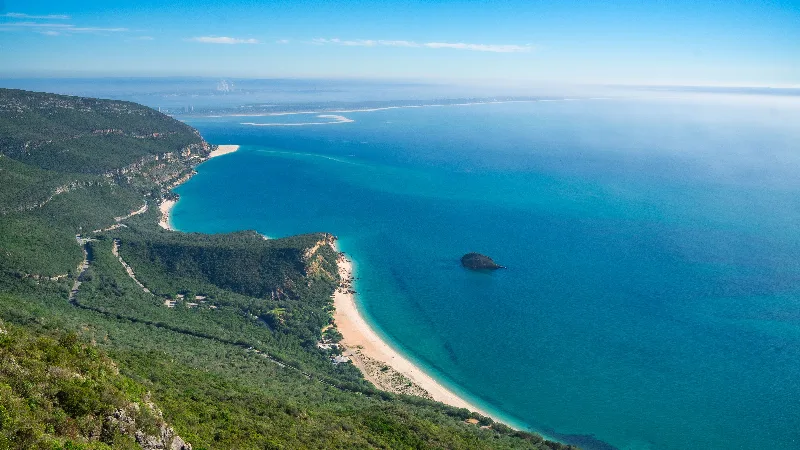
Arrábida Natural Park – Green Hills and Sheltered Bays
Arrábida Natural Park combines limestone hills, Mediterranean vegetation and sheltered beaches along the coast near Setúbal.
Setúbal Grilled Sardines and Fishing Culture
Setúbal's grilled sardines are a direct expression of the town's long fishing heritage, shaped by the Sado estuary, the charcoal grill and the Portuguese summer table.
Arrábida Natural Park Limestone Hills and Coves
Arrábida Natural Park stretches along the Setúbal peninsula, where pale limestone hills fall sharply to a coast of sheltered coves and clear water. The park combines Mediterranean vegetation, a protected marine area and long views across the Sado estuary.
Alcácer do Sal
A hilltop town above the Sado river in Portugal's Alentejo, Alcácer do Sal combines a walled historic centre with rice fields, salt pans and a long trading past.
Things to Do in Setúbal
Explore things to do in setúbal with a practical guide to notable places, regional landscapes, local heritage and travel planning in Portugal.