
Setúbal Grilled Sardines and Fishing Culture
Setúbal's grilled sardines are a direct expression of the town's long fishing heritage, shaped by the Sado estuary, the charcoal grill and the Portuguese summer table.
Setúbal sits on the north bank of the Sado estuary, around fifty kilometres south of Lisbon, where the river broadens towards the Atlantic behind the long sandbar of the Tróia peninsula. Fishing has shaped the town's streets, its market halls and its cooking for generations, and few things express that inheritance as plainly as a charcoal grill loaded with fresh sardines on a warm evening.
A Working Port on the Sado Estuary
Setúbal has one of Portugal's busiest fishing ports, and the boats that work out of it range from small vessels that fish the estuary and inshore waters to larger craft that head out along the Atlantic coast. The Sado itself is a tidal estuary of mudflats, channels and salt marsh, and its resident bottlenose dolphins are among the few populations in Europe that live in an estuary year-round rather than moving along open coastline.
Away from the quays, the same maritime economy left its mark on the town's architecture. Setúbal grew prosperous in the nineteenth and twentieth centuries partly through fish canning, and the warehouses and factory buildings of that trade still stand around the older waterfront districts. The Michel Giacometti museum of labour documents this industrial heritage, including the canning lines that once employed much of the local population.
Sardines and the Rhythm of the Seasons
The Portuguese sardine, Sardina pilchardus, is a small, oily fish that feeds on plankton in coastal waters. Its condition changes through the year, and the fish landed in the warmer months is generally fuller and richer than the leaner sardines of winter. In Portugal the fishery is managed with seasonal restrictions, so the grilling season coincides with the period when the fish is at its best — one reason the smell of charcoal and sardines is so strongly associated with early summer in coastal towns.
Sardines are landed, sold and eaten within a very short space of time in Setúbal. Freshness is treated as the single most important quality, and the fish is rarely more than a day or two out of the water before it reaches a grill.
How the Sardines Are Grilled
Preparation is deliberately simple. The fish are gutted or left whole depending on the cook, rinsed in seawater or salted water, then coated in coarse salt and laid over hot charcoal. They are turned once, cooked quickly and served immediately, since the flesh dries out if it waits. Olive oil is sometimes drizzled over at the end, but the flavour is mostly salt, smoke and fish fat.
In homes and in the street kitchens of the arraial gatherings of June, grilled sardines are usually served with some combination of the following:
- Boiled new potatoes, dressed with olive oil
- Roasted or grilled green peppers
- Thick slices of rustic bread, sometimes used to catch the dripping fat
- A simple tomato and onion salad
- Local white wine or a light red
The fish is traditionally eaten by hand, lifted from the spine in pieces, a habit that survives even in formal settings.
Market, Street and Everyday Food Culture
The Mercado do Livramento, Setúbal's main market, is one of the finest in Portugal, its walls lined with blue and white azulejo panels and its fish hall busy from early morning. The market gives a clear picture of what the estuary and nearby coast provide: sardines, mackerel, sea bream, clams, cuttlefish and much else.
Cuttlefish is worth noting alongside the sardine, because fried cuttlefish — choco frito — is the town's other signature dish, a breadcrumbed preparation served with lemon and salad. Together they show how closely the local menu follows the seasons of the water.
In June, Setúbal's neighbourhoods hold their popular saints' celebrations, with temporary grill stands, paper decorations and long tables in the streets. Sardines, caldo verde and grilled peppers are eaten outdoors well into the night. These gatherings are not staged for visitors; they are ordinary neighbourhood events that happen to be open to anyone who walks past.
A National Symbol with Local Roots
The sardine is often treated as a symbol of Portuguese food in general, celebrated in festivals along the whole coast and preserved in tins that are exported across the world. Its everyday reality, though, belongs to ports like Setúbal, where the rhythm of the boats, the market and the grill still sets the pace of the summer. For a visitor, the most honest way to understand the town's fishing culture is to eat the fish simply cooked, close to where it was landed.
Related content
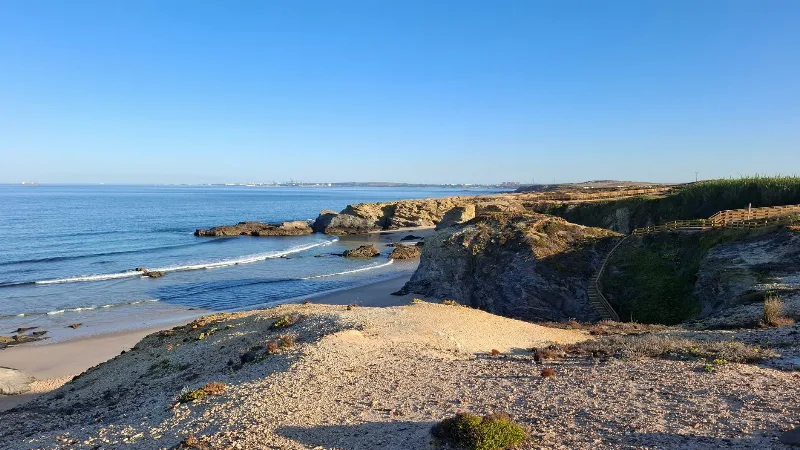
Setúbal
A working port on the north bank of the Sado estuary, Setúbal combines a long maritime history, Manueline architecture and the limestone hills of Arrábida. Ferries, a renowned fish market and a resident dolphin population are part of everyday life there.
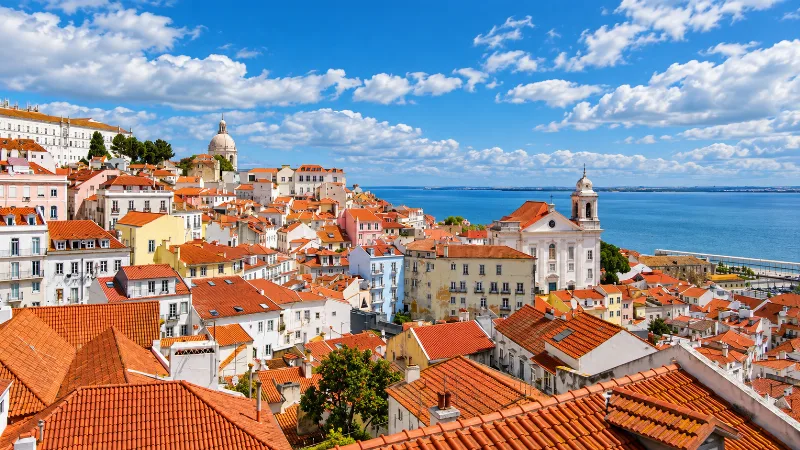
Lisbon
Portugal’s capital combines historic neighbourhoods, river views, tiled façades, viewpoints and an energetic everyday city life.
Azeitão Sheep's Cheese and the Setúbal Peninsula
Azeitão cheese is a soft sheep's milk cheese from the villages below the Serra da Arrábida, set with cardoon thistle and made by small dairies on the Setúbal Peninsula.
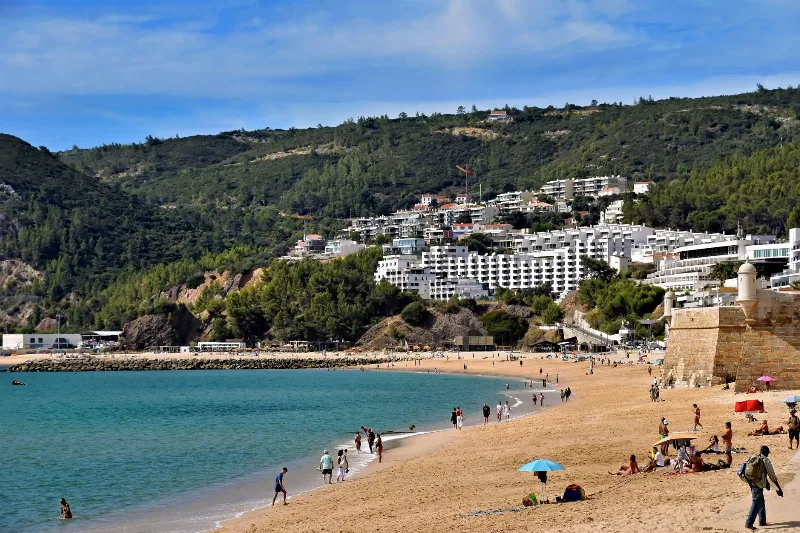
Sesimbra
A sheltered Atlantic bay at the foot of the Serra da Arrábida, Sesimbra remains a working fishing town whose castle, harbour and beaches shape everyday life.
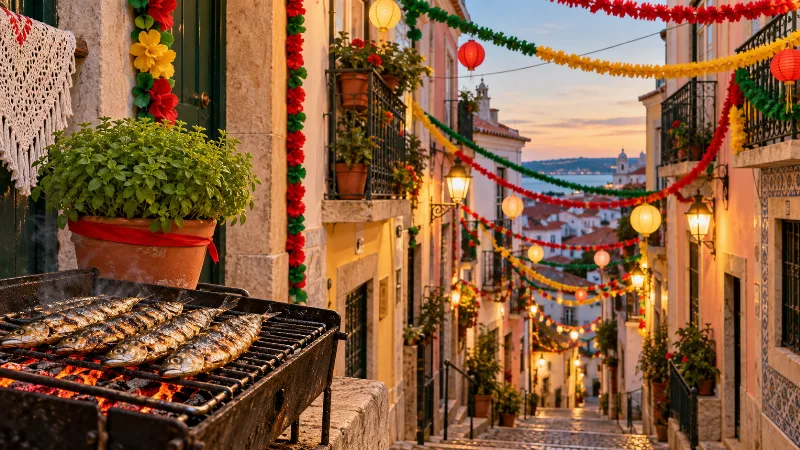
Santo António in Lisbon
Discover Lisbon’s June celebrations through neighbourhood festivities, popular marches, grilled sardines and the manjerico tradition.
Alcácer do Sal
A hilltop town above the Sado river in Portugal's Alentejo, Alcácer do Sal combines a walled historic centre with rice fields, salt pans and a long trading past.
Arrábida Natural Park Limestone Hills and Coves
Arrábida Natural Park stretches along the Setúbal peninsula, where pale limestone hills fall sharply to a coast of sheltered coves and clear water. The park combines Mediterranean vegetation, a protected marine area and long views across the Sado estuary.
Things to Do in Setúbal
Explore things to do in setúbal with a practical guide to notable places, regional landscapes, local heritage and travel planning in Portugal.