
Barcelos Rooster and Portuguese Folk Art
The painted clay cockerel from northern Portugal is more than a souvenir: it carries a medieval legend, a living pottery tradition and a widely shared message of good fortune.
Few objects are as instantly recognisable as the Barcelos rooster, the painted ceramic cockerel that stands on kitchen shelves, shop counters and garden walls throughout Portugal. With its arched neck, flamboyant tail and dense patterns of flowers, dots and hearts, the figure has long outgrown its origins as a piece of village pottery to become one of the most familiar emblems of Portuguese folk art.
The Legend Behind the Rooster of Barcelos
The story attached to the figure is set in the town of Barcelos, in the Minho region of northern Portugal. A pilgrim travelling through on his way to Santiago de Compostela was accused of theft and sentenced to be hanged. He asked to be brought before the local magistrate, who was dining with friends, and protested his innocence. Pointing to a roast cockerel on the table, he declared that the bird would crow as proof of his word. According to the tale, the cockerel rose up and crowed, and the pilgrim was released.
The episode is remembered in a stone monument, the Cruzeiro do Senhor do Galo, which stands beside the Paço dos Condes de Barcelos, a ruined medieval palace that is now an archaeological museum. The cross, carved with figures relating to the story, gave the legend a permanent physical home in the town centre.
Craft and Colour: Making the Figure
The Barcelos rooster is shaped from local clay, either moulded or built by hand, and fired before being painted. Its form is deliberately stylised rather than naturalistic: a tall comb, a pronounced wattle, a thick rounded breast and a tail of sweeping feathers arranged in tiers. Decoration is applied with a brush in strong, flat colours, most often red, yellow, blue, black and white, and may include dots, stripes, small flowers or heart motifs scattered across the wings and tail. Eyes are painted as simple circles with a dark centre.
Figures vary considerably in size, from thumb-sized ornaments to large pieces over half a metre tall, and no two are identical. That variation is part of the appeal: each piece carries the hand of the painter who decorated it, and small irregularities are accepted as a mark of authenticity rather than a defect.
Barcelos and the Minho Pottery Tradition
Barcelos is a market town on the River Cávado, surrounded by green hills, vineyards and farmland in the heart of the Minho. Its weekly market has roots going back to the medieval period and remains a social occasion as much as a commercial one, with stalls selling linen, tools, produce and pottery. The town's Museu de Olaria holds a collection of local and national ceramics and documents the working methods of the region's potters.
Pottery was once a practical trade in this part of Portugal, supplying cooking pots, jugs and bowls to nearby villages. As demand for household earthenware declined, many workshops turned to decorative and figurative pieces, and the rooster became the most popular of them all.
Beyond the Rooster: The Figurado of Barcelos
The cockerel is only the best known of the clay figures modelled in and around Barcelos. Potters also make musicians with guitars and concertinas, courting couples, women in elaborate dress, animals, saints and gently satirical portraits of neighbours and local characters. The most celebrated maker of this figurative work was Rosa Ramalho, who began modelling in later life and produced strange, expressive creatures that are now held in Portuguese museum collections; her descendants continue the craft.
These figures are traditionally displayed and sold around the Festa das Cruzes, the town's May celebrations, when processions include giant headed figures and oversized puppets that share the same imaginative spirit as the clay models.
A Rooster of Good Fortune
In Portuguese homes the rooster is treated as a charm against bad luck, and its image appears on tiles, textiles, kitchenware and signage. Visitors encounter it as a decorative emblem of the country, but its meaning remains rooted in a simple narrative about justice and the value of a truthful word. That combination of story, craftsmanship and everyday optimism is what has allowed a small painted bird from a northern Portuguese town to travel so far.
Related content
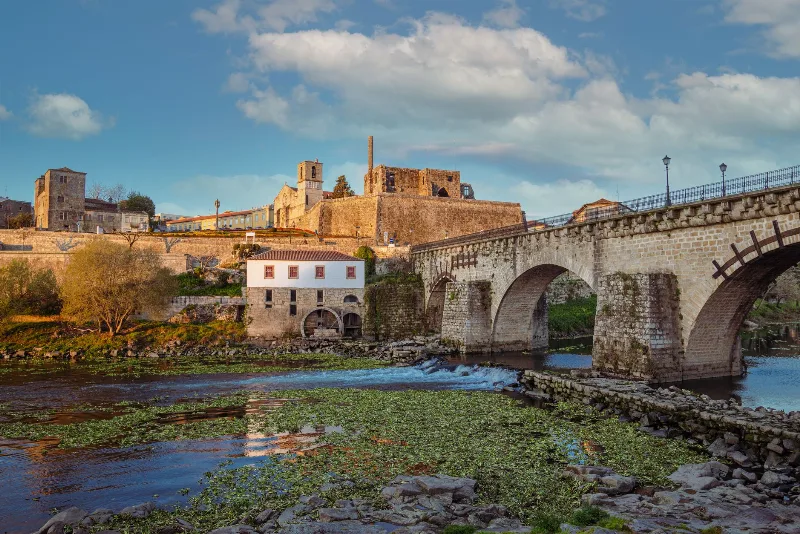
Barcelos
A Minho town built around a medieval bridge and a long-running Thursday fair, Barcelos is the home of Portugal's rooster legend and a living centre of popular craft.
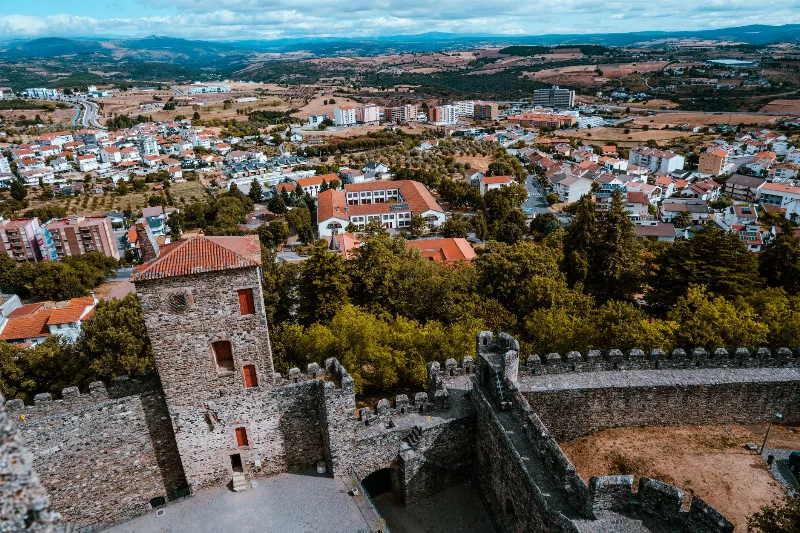
Bragança
Bragança is a granite-built city in north-east Portugal whose walled citadel, medieval castle and Romanesque civic hall stand above the surrounding Trás-os-Montes plateau, close to the Montesinho hills.
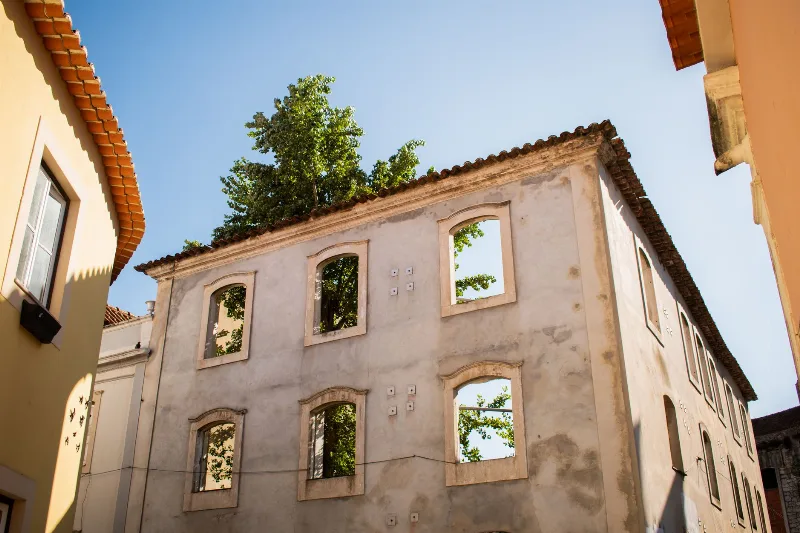
Caldas da Rainha
A guide to Caldas da Rainha, the Oeste town built around a fifteenth-century thermal hospital, known for its ceramics workshops, its daily fruit market and its position between the hills and the Atlantic coast.
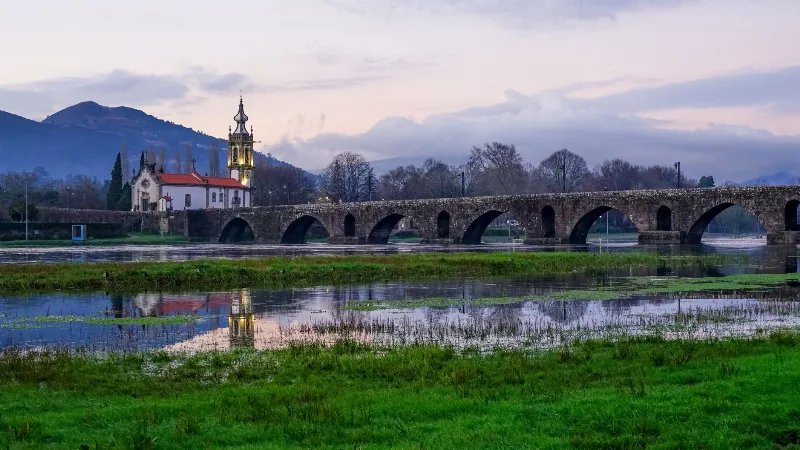
Ponte de Lima
Ponte de Lima straddles the River Lima in Portugal's Minho, where a Roman and medieval bridge, granite streets and riverside gardens shape one of the north's oldest settlements.
Aveiro's Art Nouveau Houses and Azulejo Façades
Aveiro's historic centre holds one of Portugal's densest groupings of Arte Nova houses, where curved stonework, iron balconies and patterned azulejo tiles line a handful of central streets.
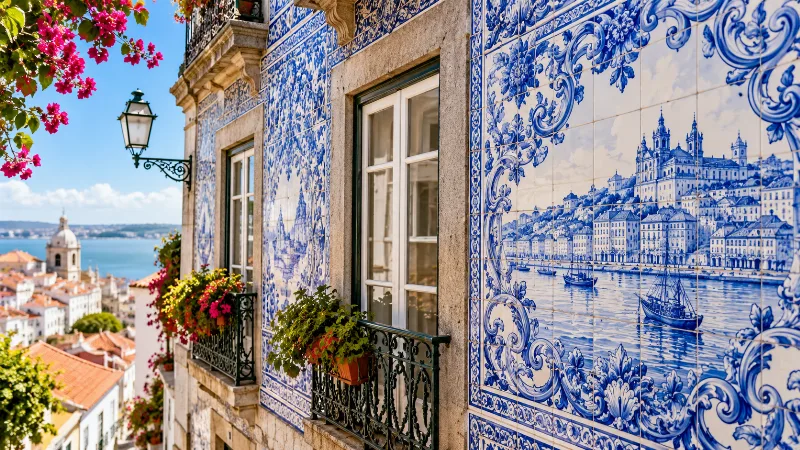
Azulejos
Azulejos are a defining feature of Portuguese architecture, appearing on churches, stations, palaces, homes and public buildings across the country.