
Caldo Verde and the Kale Gardens of Minho
Caldo verde is Portugal's most familiar soup, a simple combination of potato, onion and finely shredded kale from the northern province of Minho. Its ingredients reflect the household gardens and smallholdings of the region.
Caldo verde is the soup most closely associated with Portugal, served in village kitchens, family celebrations and simple everyday lunches across the country. Its ingredients are few — potatoes, onions, olive oil and kale — yet the dish carries a strong sense of place, rooted in the damp, green landscapes of Minho in the north-west. Understanding caldo verde means looking at both the cooking pot and the vegetable plot, since the soup grew out of what northern households could grow and store.
The Origins of Caldo Verde in Minho
The soup is traditionally linked to the northern province of Minho, the greenest and wettest part of Portugal, where small farms, known as minifúndios, were worked by families who grew most of their own food. Potatoes arrived from the Americas and became a staple of northern agriculture, while leafy brassicas had long been cultivated in kitchen gardens. Combining the two produced a filling, inexpensive dish that made use of the land's produce through the cooler months. From these rural beginnings caldo verde spread to Lisbon and the wider country, and later travelled with Portuguese communities abroad, where it remains a marker of home cooking.
Kale, Potato and Onion: How the Soup Is Made
The foundation is a broth of potatoes and onions simmered in water or light stock until soft, then blended or mashed to a smooth, pale base. Olive oil is added generously, and seasoning is kept simple with salt and perhaps a little garlic. The defining step comes at the end, when kale is sliced into fine, ribbon-like strips and stirred into the hot soup for a few minutes only, so that it keeps its colour and a slight bite. The result is a soup that is neither a thick purée nor a thin broth but something in between, with dark green strands suspended in the creamy potato base.
A slice of chouriço is a common addition in many kitchens, cooked in the pot or placed in the bowl before serving, though the soup also appears in a meatless form. It is usually eaten with broa de milho, a dense corn bread suited to soaking up the broth.
Couve Galega and the Minho Kitchen Garden
The kale used in Minho is couve galega, a tall, open-leafed brassica with long stems and broad, slightly crinkled leaves. It grows well in the region's mild, humid climate and is harvested leaf by leaf rather than cut whole, allowing a single plant to keep producing over many months. Garden plots throughout Minho still hold rows of these plants alongside potatoes, turnip greens and beans, often bordered by stone walls or the pergolas that support vines.
This style of cultivation is part of the visual character of the northern countryside, where vegetables, fruit trees and vines are fitted into small spaces around the house. The kale is valued for its robust texture and slightly bitter flavour, which stands up to long cooking in soups and stews such as caldo verde itself or the hearty broths served with corn bread.
Caldo Verde on the Northern Table
The soup has a social role that reaches beyond everyday meals. It is a customary presence at weddings, baptism parties and village festivals, often served late in the evening in deep bowls, sometimes accompanied by a glass of young green wine. In this setting it functions as a shared, warming dish that can be prepared in large quantities without great expense, which helps explain its endurance in Portuguese food culture.
Regional Variations and Everyday Practice
Recipes vary from household to household. Some cooks prefer a thinner broth, others a denser consistency; the kale may be shredded finely by hand or with a knife according to local habit. What remains consistent is the balance between the mild potato base and the distinctive green flavour of the kale, and the use of good olive oil as a finishing element rather than an afterthought.
For visitors to northern Portugal, caldo verde offers a direct link to the region's agricultural traditions: a soup that reflects the gardens, the seasons and the practical cooking of Minho as much as it does the Portuguese table as a whole.
Related content
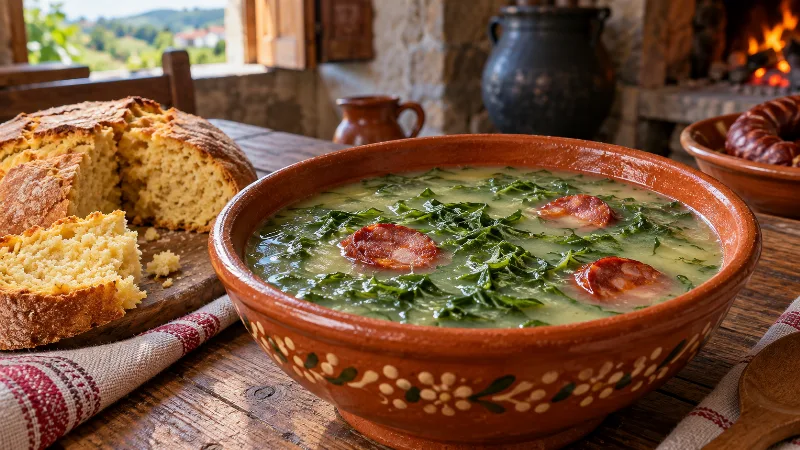
Caldo Verde
Discover Portugal’s traditional green soup, its northern roots, finely sliced greens and place at everyday meals and celebrations.
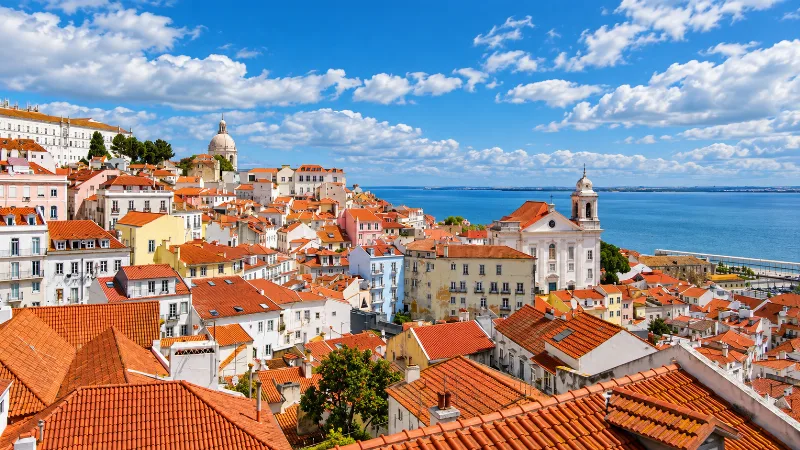
Lisbon
Portugal’s capital combines historic neighbourhoods, river views, tiled façades, viewpoints and an energetic everyday city life.
Setúbal Grilled Sardines and Fishing Culture
Setúbal's grilled sardines are a direct expression of the town's long fishing heritage, shaped by the Sado estuary, the charcoal grill and the Portuguese summer table.

Braga
Braga is a historic northern city known for religious heritage, elegant squares, baroque architecture and a lively modern centre.
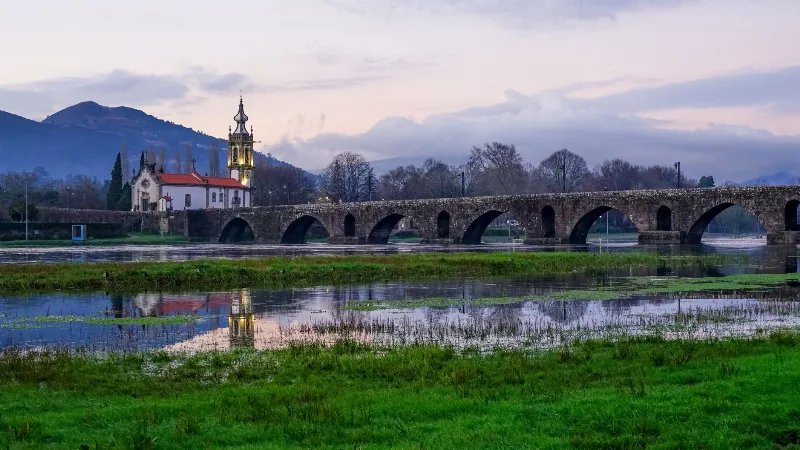
Ponte de Lima
Ponte de Lima straddles the River Lima in Portugal's Minho, where a Roman and medieval bridge, granite streets and riverside gardens shape one of the north's oldest settlements.
Vinho Verde and the Lima Valley Vineyards
The Vinho Verde region of north-west Portugal is defined by granite ground, Atlantic rain and densely planted vineyards. The Lima valley, one of its sub-regions, shows how landscape and local tradition shape the wines.
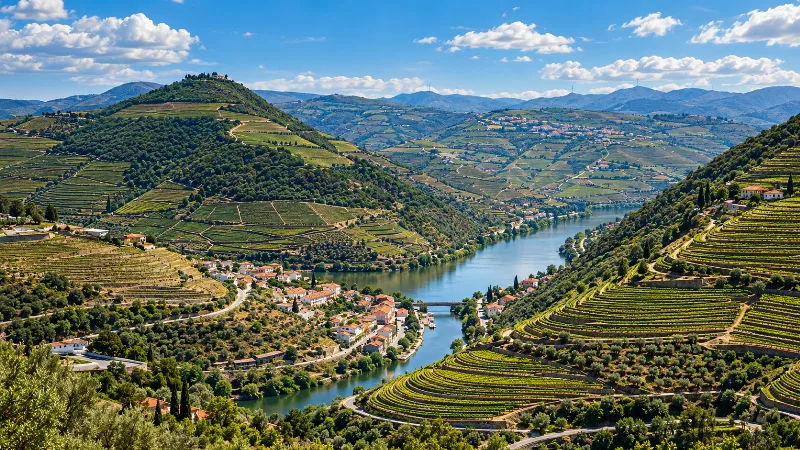
Northern Portugal
Explore Porto, the Douro Valley, Braga, Guimarães, Peneda-Gerês and the green landscapes, food traditions and historic cities of northern Portugal.
Furnas Valley Hot Springs and Volcanic Gardens
Furnas occupies the floor of a volcanic caldera on São Miguel, where steam vents, warm mineral springs and dense gardens shape daily life. The valley combines active geothermal features with botanical collections and a crater lake.