
Caldo Verde
Discover Portugal’s traditional green soup, its northern roots, finely sliced greens and place at everyday meals and celebrations.
Caldo verde is a Portuguese soup associated with the northern Minho region and served throughout the country. Fine ribbons of dark green leaves sit in a smooth potato base, creating its recognisable appearance. Found in home kitchens, traditional restaurants and festive gatherings, it connects everyday cooking with shared occasions.
The Greens That Define the Soup
The traditional green is couve galega, a leafy brassica often described in English as collard greens or kale. These translations are approximate, and substitutes can produce a different texture.
Finely slicing the leaves is a defining part of the preparation. The delicate strands remain visible in the finished soup, giving it a texture distinct from soups made with roughly chopped vegetables.
Preparing the Potato Base
The base usually combines potatoes, water, onion, garlic and olive oil, although household recipes vary. The potatoes are cooked and blended before the sliced greens are added.
This method creates a smooth foundation while preserving the texture of the leaves. The result is a pale broth threaded with greens rather than a uniformly green purée.
Chouriço and Traditional Accompaniments
Chouriço frequently appears in caldo verde, either during cooking or as a small garnish. Some preparations include it in the cooking liquid, while others place a slice in the bowl before serving.
Broa, a traditional bread often made with maize and sometimes other grains, is a familiar accompaniment. The bread’s texture complements the smooth soup, although serving traditions differ between kitchens.
Checking Dietary Requirements
If you avoid meat, ask how the whole soup is prepared. Removing a visible slice of chouriço does not establish that the cooking liquid is meat-free.
Recipes and stocks vary, so explain any dietary requirements when ordering. The description provided by the kitchen is more useful than assumptions based on the dish’s appearance.
Caldo Verde at the Portuguese Table
Caldo verde can be served as an opening course or as part of an informal meal. Its presence at celebrations shows how a simple household recipe also forms part of communal traditions.
When tasting it, notice the fine strands of greens, the consistency of the potato base and the flavour of the olive oil. Together, these elements give the soup its familiar character.
Related content
Caldo Verde and the Kale Gardens of Minho
Caldo verde is Portugal's most familiar soup, a simple combination of potato, onion and finely shredded kale from the northern province of Minho. Its ingredients reflect the household gardens and smallholdings of the region.
Setúbal Grilled Sardines and Fishing Culture
Setúbal's grilled sardines are a direct expression of the town's long fishing heritage, shaped by the Sado estuary, the charcoal grill and the Portuguese summer table.
Vinho Verde and the Lima Valley Vineyards
The Vinho Verde region of north-west Portugal is defined by granite ground, Atlantic rain and densely planted vineyards. The Lima valley, one of its sub-regions, shows how landscape and local tradition shape the wines.
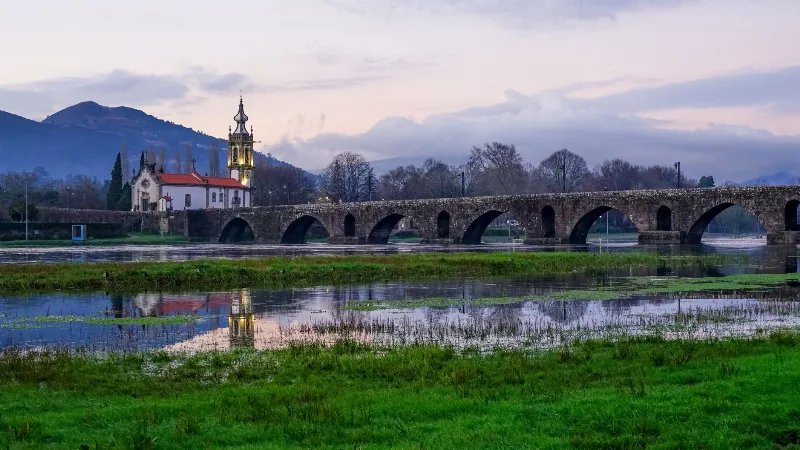
Ponte de Lima
Ponte de Lima straddles the River Lima in Portugal's Minho, where a Roman and medieval bridge, granite streets and riverside gardens shape one of the north's oldest settlements.
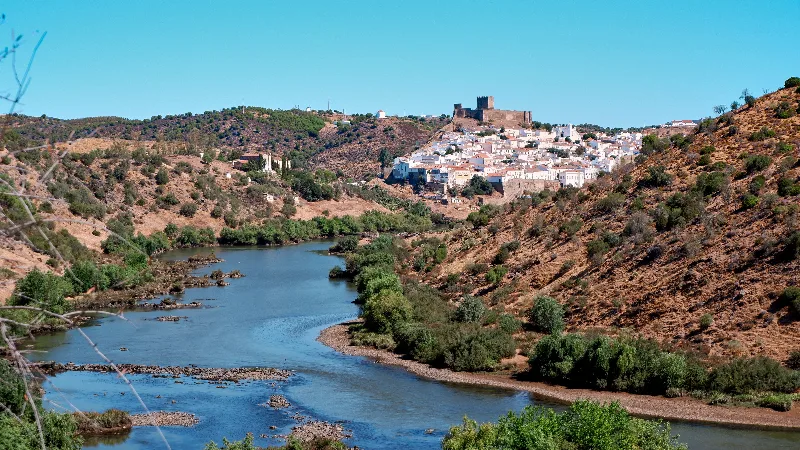
Beja
Beja is a hilltop city in the Baixo Alentejo, once the Roman town of Pax Julia, whose marble-grey castle keep rises above a plain of wheat, olive groves and cork oak. Its old convent now holds one of southern Portugal's richest regional museums.
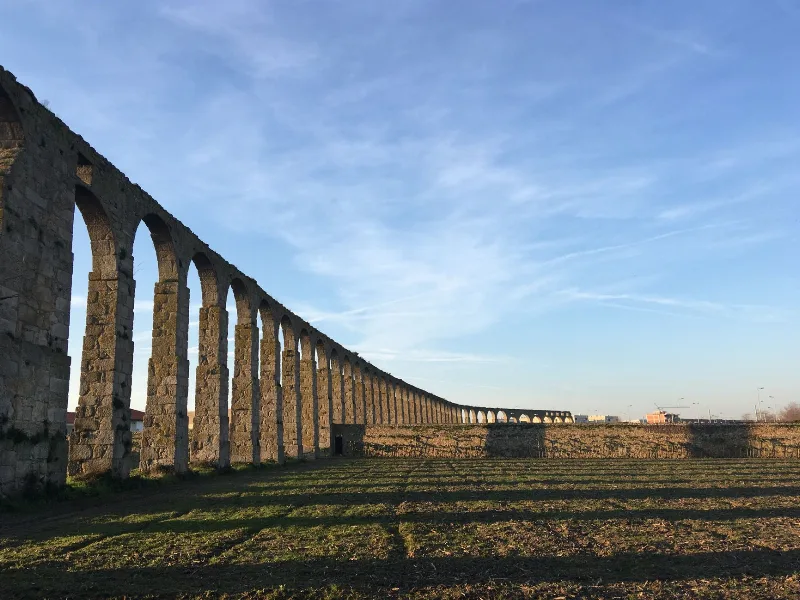
Vila do Conde
A working coastal town at the mouth of the Ave in northern Portugal, known for its shipbuilding past, its lace makers and the great convent and aqueduct of Santa Clara.