
Santiago do Cacém
A hilltop country town in Portugal's Alentejo hinterland, Santiago do Cacém is known for its medieval castle and for Miróbriga, one of the most complete Roman sites in the region. Its streets look out over cork oak woods, farmland and a coastal plain that runs down to the Atlantic.
Santiago do Cacém is a Portuguese municipality of around 30,000 people in the district of Setúbal, its main town set on a hill roughly twenty kilometres inland from the Atlantic. It belongs to the Alentejo region in administrative and cultural terms, yet sits close enough to the coast to share in the life of the Sines coastline. The town is a working agricultural centre rather than a tourist resort, and its appeal lies in the combination of a walled historic core, a Roman archaeological site of real importance and a surrounding landscape of cork oak, cereal fields and low hills.
Location and general character
The town grew up on a ridge at about 250 metres above sea level, an unusual position in a region better known for flat plains. From the castle hill the ground falls away on most sides, giving long views across rolling country towards the coastal lowlands and the sea. The municipality stretches from these hills down to the dunes and lagoons of the coast, taking in the parishes of Santo André, Cercal do Alentejo, Alvalade and several smaller villages, so that it includes both farmland and a seaside strip.
Road links follow the old inland route: the N120 connects the town with Sines to the west and Cercal do Alentejo to the south, while a motorway connection near Grândola puts Lisbon within reasonable driving distance. Despite this accessibility, Santiago do Cacém keeps the unhurried rhythm of an Alentejo country town, with a small daily market, narrow streets and a centre that empties in the afternoon heat.
History
The hill and its surroundings have been settled for a very long time. Iron Age communities occupied the site that later became the Roman town of Miróbriga, a short distance south-west of the present centre. Under Roman rule from the first century AD, Miróbriga grew into a modest urban settlement with a forum, shops, baths and a temple, and it was provided with a circus for chariot racing, a structure rarely found among Roman sites in Portugal. The town declined in late antiquity and was eventually abandoned.
After the Islamic period, the area was taken in the thirteenth century during the Christian advance southwards and handed to the Order of Santiago, the military order whose cross still appears on local monuments. The knights built the castle and promoted the settlement below it, which became the administrative seat of a wide rural territory. The town later lost much of its strategic importance. The earthquake of 1755 damaged buildings across the region, including parts of the castle, and repairs and reconstructions have left their mark on the historic centre. Economic life remained agricultural until the second half of the twentieth century, when the industrial development of nearby Sines created new employment and a measure of demographic growth.
Architecture and townscape
The old town is a compact network of steep lanes lined with houses painted in white and trimmed in blue, yellow or grey, many with small wrought-iron balconies and traditional chimneys. Roofs are of terracotta tile, and several façades carry panels of painted tiles. The highest point is occupied by the castle enclosure, whose walls and battlemented keep dominate views from below; the keep retains Gothic windows and is one of the emblematic monuments of the Alentejo.
Inside the walls stands the parish church, built in Gothic style with later alterations, and the open space in front of it serves as a terrace over the town. Elsewhere in the centre, the sixteenth-century former Franciscan convent now houses the municipal museum, and the pillory and the Misericórdia church mark the old civic and charitable heart of the settlement. Modern housing has spread down the slopes and along the approach roads in a more open pattern, with gardens and small commercial units.
Natural surroundings
The countryside around the town is a classic Alentejo landscape of cork oak woodland, known locally as montado, grazed by pigs and sheep and harvested for cork at intervals of about nine years. Stone pines and eucalyptus plantations cover parts of the slopes, while the flatter land towards the coast is used for cereal crops and pasture. To the south-east rise the hills of the Serra de Grândola, a low range of schist and scrub that forms a backdrop to the town.
Closer to the sea, the terrain becomes sandy and low-lying. Two coastal lagoons, at Santo André and Melides, lie within a protected reserve where dunes, reed beds and shallow water attract wading birds and waterfowl. The climate is Mediterranean, with hot, dry summers, mild and wetter winters and most rainfall falling between October and March.
Local culture and everyday life
Farming and forestry still shape the working year: cork extraction in summer, cereal harvesting, cork oak and pine management, and livestock rearing. A significant number of residents commute to the industrial complex and port at Sines, and small workshops and service businesses fill the gaps between these two economies. The weekly market and the shops around the main square supply the villages of the interior, where everyday life remains tied to the agricultural calendar.
Traditional Alentejo singing, recognised internationally as an oral heritage tradition, survives here in local groups, and the summer fair brings agricultural displays, livestock shows and music to the town. Religious festivals honouring Saint James, the town's patron, are held with processions and decorated streets. Local cooking is plain and robust, based on bread-based dishes, pork, game, olive oil and herbs, with fish from the coast appearing on menus in the villages nearer the sea.
Notable places
The castle and parish church
The castle enclosure, entered through a gate below the keep, contains the parish church and looks over the town and the plain beyond. The walls can be walked in part, and the keep, rebuilt after earthquake damage, is the best-known image of Santiago do Cacém.
Miróbriga
Two kilometres from the centre, Miróbriga preserves paved streets, a forum area with shop foundations, a well-preserved bath complex and a temple platform on the hillside, together with the elliptical outline of the circus. A mediaeval bridge over the nearby stream is also associated with the site, and a small interpretation centre explains the finds.
Municipal museum
Housed in the former convent of São Francisco, the museum holds archaeological material from Miróbriga alongside local ethnographic collections illustrating rural trades and domestic life.
Nearby destinations
The coastal town of Sines, birthplace of the navigator Vasco da Gama, lies about fifteen kilometres west with its castle, beaches and fishing harbour. Vila Nova de Santo André, a planned town built in the twentieth century, sits closer to the lagoon of the same name and its nature reserve. Further south, Porto Covo and Vila Nova do Milfontes offer small beaches and cliff paths, while inland the towns of Cercal do Alentejo, Grândola and Alcácer do Sal provide markets, hill walking and access to the quieter stretches of the Alentejo coast.
Related content
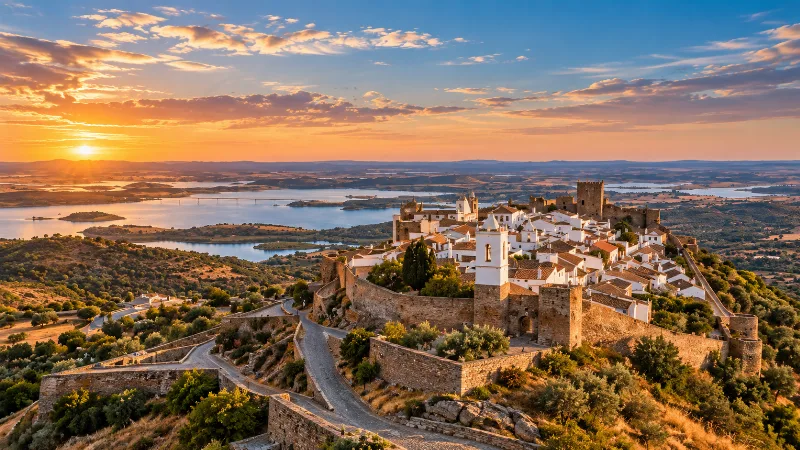
Alentejo
Discover Alentejo through Évora, whitewashed towns, cork-oak landscapes, vineyards, regional food and the broad rural interior of southern Portugal.
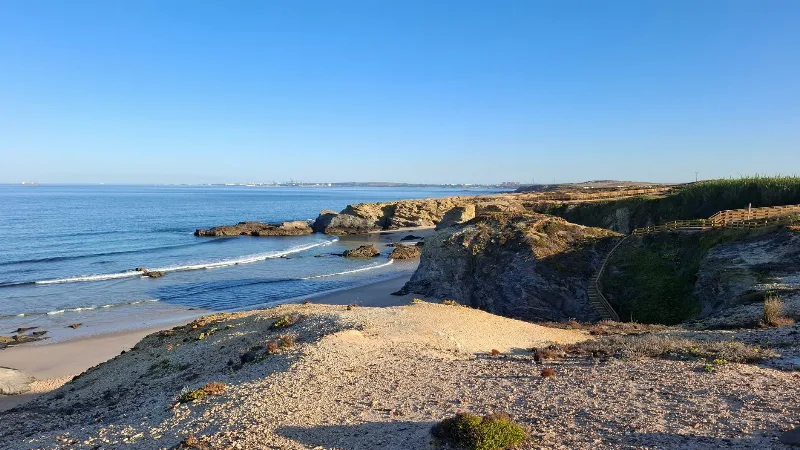
Setúbal
A working port on the north bank of the Sado estuary, Setúbal combines a long maritime history, Manueline architecture and the limestone hills of Arrábida. Ferries, a renowned fish market and a resident dolphin population are part of everyday life there.
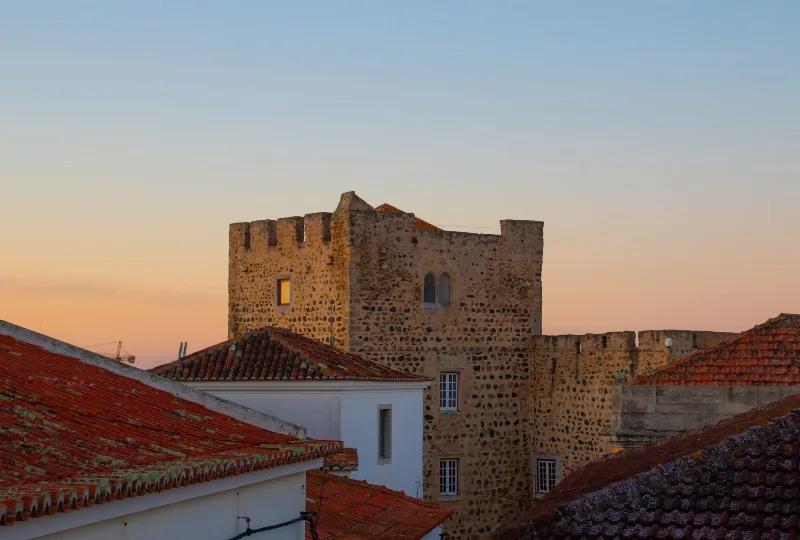
Sines
A working Atlantic port on the Alentejo coast, Sines combines a small whitewashed old town, a castle linked to Vasco da Gama and long stretches of dune-backed beach within a municipality shaped by heavy industry.
Grândola
A small Alentejo town in the Setúbal district, Grândola sits between cork oak plains and the wooded hills of the Serra de Grândola, and is bound up with the song that signalled the 1974 revolution.
Alcácer do Sal
A hilltop town above the Sado river in Portugal's Alentejo, Alcácer do Sal combines a walled historic centre with rice fields, salt pans and a long trading past.
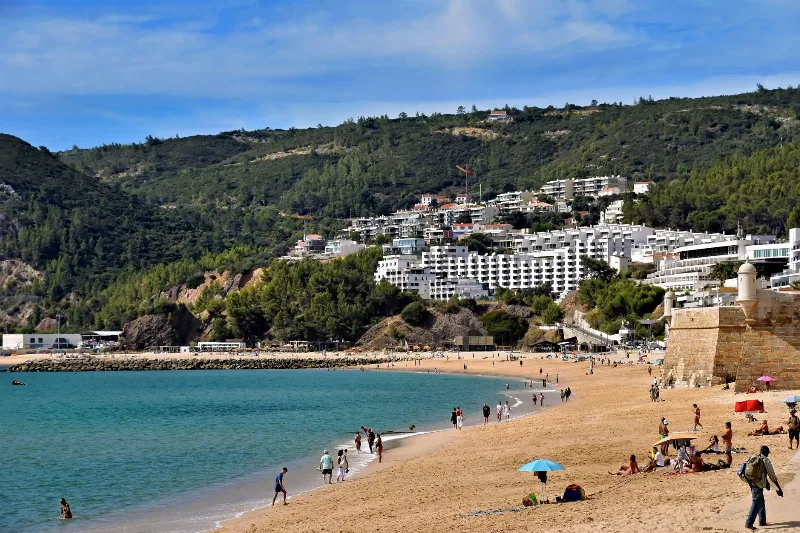
Sesimbra
A sheltered Atlantic bay at the foot of the Serra da Arrábida, Sesimbra remains a working fishing town whose castle, harbour and beaches shape everyday life.