
Silves Castle and the Moorish Water Cistern
Silves Castle presides over the old Algarve town from a hill above the Arade, and the vaulted Moorish cistern beneath its courtyard survives as one of the most striking reminders of the Islamic period in Portugal.
Silves Castle stands on the hill that rises directly above the historic centre of Silves, a town in the western Algarve set among orange groves and cork oak country on the banks of the Arade. Its sandstone and rammed-earth walls are visible from much of the surrounding valley, and the red roofs of the old town cluster beneath them. Among the structures inside the walls, the deep water cistern built during the Islamic period is the most atmospheric, a cool, dimly lit chamber of brick arches that connects the visitor directly with the town's Moorish past.
A hilltop stronghold above the Arade
Silves was known as Xelb under Moorish rule and served for a time as the capital of the Algarve. The fortress on the hill grew into one of the most heavily defended strongholds in the south of the Iberian Peninsula, controlling the navigable stretch of the Arade and the routes inland. Its present form owes most to the Almohad period, when the defensive circuit was strengthened, although the site had been occupied long before and was altered again after the Christian conquest of the thirteenth century.
The walls are built partly of stone and partly of taipa, a rammed-earth technique that gives them their warm, layered colour. A walk around the outer circuit passes ten towers of varying shape and size, including square and semi-circular examples, and reveals how the defences followed the contours of the hill. The castle was taken by Sancho I in the late twelfth century with the help of crusaders bound for the Holy Land, recovered by the Moors shortly afterwards, and finally secured for the Portuguese crown in the thirteenth century.
The Moorish cistern beneath the courtyard
The cistern lies below the level of the inner courtyard and is reached by a staircase that leads down into a vaulted chamber supported by slender columns and a series of brick arches. The design divides the space into parallel aisles, a form found in other Islamic water works and one that helps the roof span a wide area. Water still gathers at the bottom of the chamber, and the surface reflects the arches above it.
Reservoirs of this kind were essential to the survival of a besieged garrison. Rainwater and water drawn from wells were stored underground, kept cool and shaded, and protected from contamination. Standing inside, with the light falling from the opening above and the echo of footsteps on the stone, it is easy to understand how central water management was to the daily life of the castle. The cistern is occasionally used for small concerts and cultural events, when its acoustics are put to a very different purpose.
Walls, towers and views over the Algarve
Beyond the cistern, the castle contains a keep, a garden planted with species associated with the region and displays of archaeological finds from the site. The walkway along the battlements gives wide views across the town to the Arade valley, the surrounding hills and, on clear days, the countryside towards the coast. Information panels explain the phases of construction and the excavations that revealed earlier layers of occupation.
The old town of Silves below the castle
The town itself is worth time in its own right. Silves Cathedral, built largely after the Christian reconquest on the site of the former main mosque, stands close to the castle gate, and the old stone bridge crosses the Arade a short walk away. Narrow streets descend towards the river past whitewashed houses, small churches and the Cruz de Portugal, a carved stone cross of the sixteenth century. The combination of the fortress, the cistern and the town below gives Silves a coherence rare in the Algarve, where so much of the historic fabric has given way to later development.
Related content
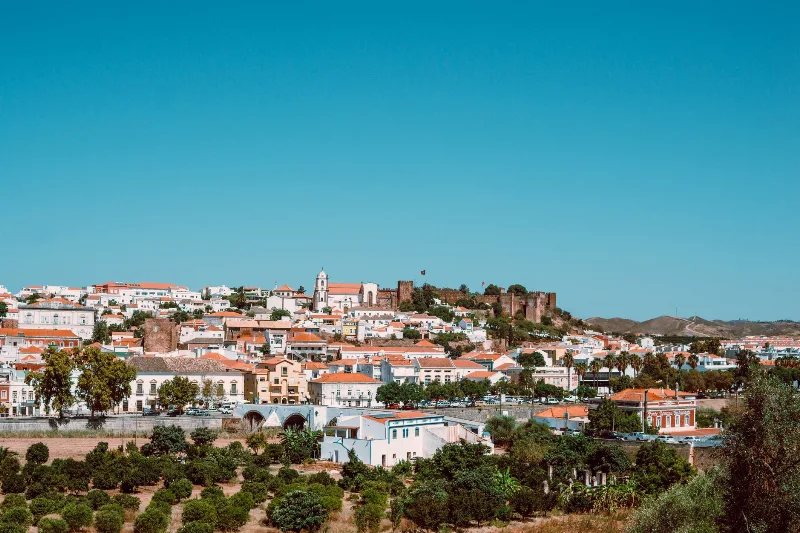
Silves
Once the seat of a Moorish kingdom, Silves is a quiet hill town in the western Algarve, known for its red sandstone castle, its cathedral and the orange groves along the Rio Arade.
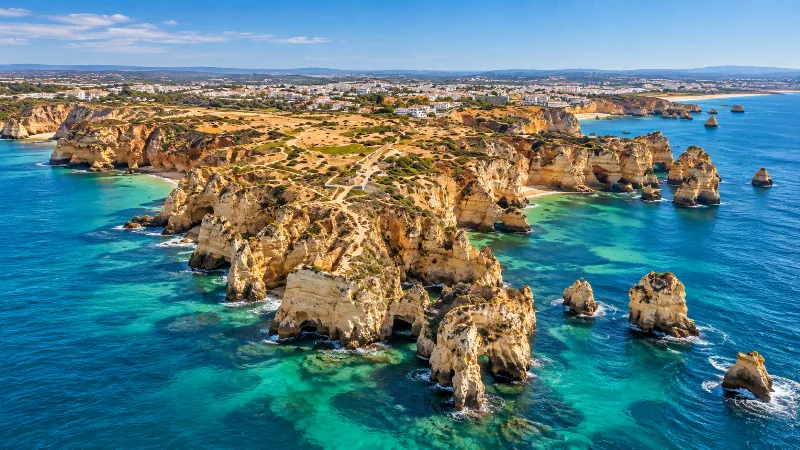
Algarve
Explore the Algarve through sandy beaches, limestone cliffs, Faro, Ria Formosa, coastal trails, historic towns and southern Portuguese landscapes.
Exploring the Historic Town of Silves
Explore exploring the historic town of silves with a practical guide to notable places, regional landscapes, local heritage and travel planning in Portugal
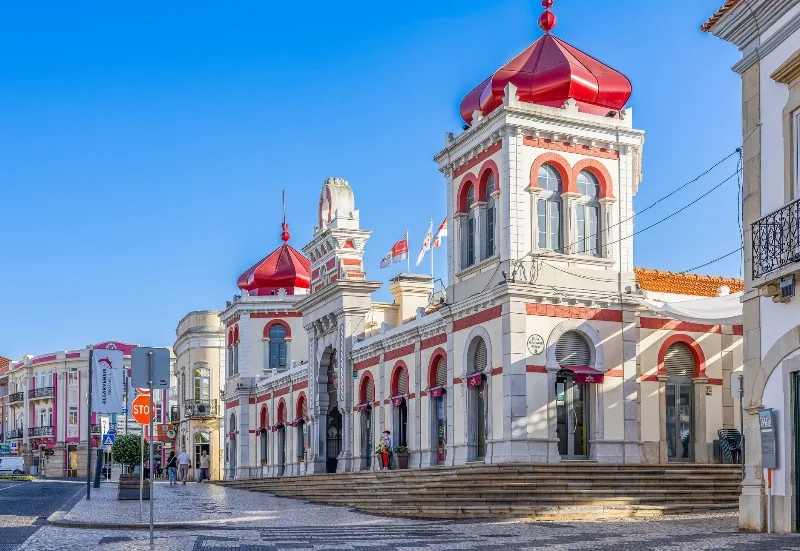
Loulé
An inland Algarve town built around a Moorish castle, Loulé has long been a trading centre for the surrounding hills and coast, known for its market halls, craft workshops and whitewashed old quarter.
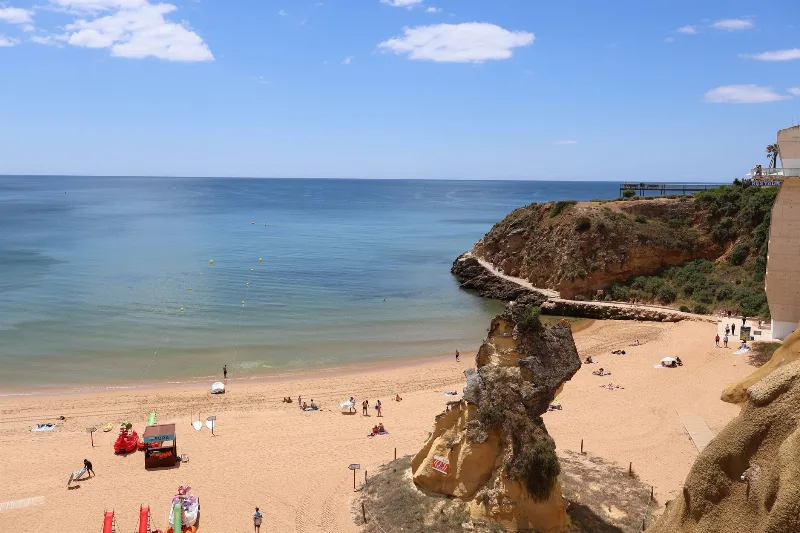
Portimão
A working river town in the western Algarve, Portimão grew around sardine fishing and canning before tourism reshaped its coast. Its riverside museum, old churches and long cliff-backed beach trace that shift.
Aljezur
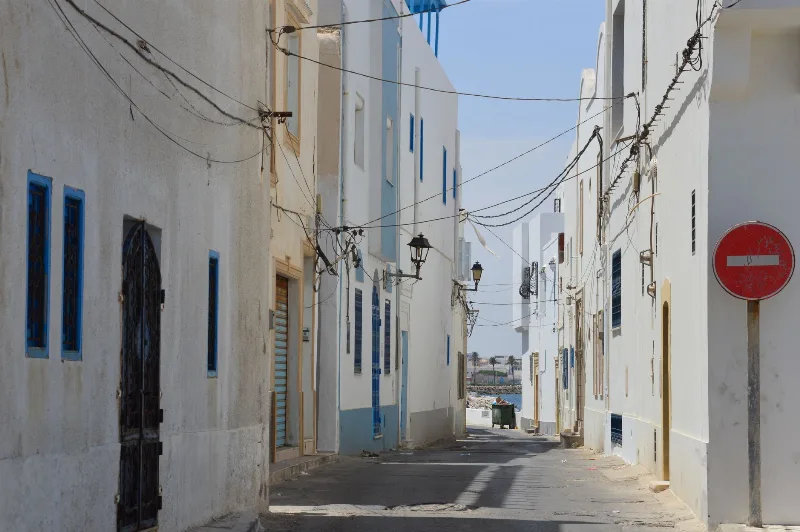
Aljezur is a small town in the western Algarve, set just inland from the Atlantic on the Ribeira de Aljezur and watched over by the remains of a Moorish castle. Its quiet streets, farming hinterland and wild coastline give it a character quite unlike the resort towns further east.
Sintra's Pena Palace and Moorish Castle Gardens
Sintra's Pena Palace and Moorish Castle occupy neighbouring hilltops, combining colourful Romantic architecture with medieval walls and lush woodland gardens.
Tavira
A historic town on the River Gilão in Portugal's eastern Algarve, shaped by a long maritime past, a skyline of church towers and the salt marshes of the Ria Formosa.