
Monchique Mountain Springs and the Village of Caldas de Monchique
Caldas de Monchique is a small spa village in the Serra de Monchique, built around warm mineral springs in a sheltered, wooded valley in the western Algarve.
Caldas de Monchique lies in a sheltered, wooded valley in the Serra de Monchique, the compact mountain range that rises behind the western Algarve in southern Portugal. The village takes its name from the warm mineral springs that emerge here, and it has developed around them as a small spa settlement rather than as a market town or a coastal resort. Approached from Portimão or Lagos on a road that climbs through cork oak and eucalyptus, it appears rather suddenly: whitewashed houses, steep lanes and garden terraces gathered on a hillside where the valley narrows.
The sheltered valley setting of Caldas de Monchique
The village occupies a modest altitude, roughly two hundred metres above sea level, in a hollow protected from the strongest Atlantic winds. The result is a mild, humid microclimate in which moisture-loving plants flourish. Camellias, hydrangeas, lemon trees and tree ferns grow in gardens and along the roadside, while laurel and oak clothe the slopes above. Because the settlement is small, it can be explored comfortably on foot in an hour or two, yet it rewards a slower visit.
At its heart is a small, shaded square where the everyday life of the village is visible: a handful of cafés, a few shops, and benches set beneath mature trees. Nearby stands the Capela de Santa Teresa, an eighteenth-century chapel whose interior is lined with blue-and-white azulejo panels depicting scenes of religious life. The narrow lanes around it contain a mixture of traditional houses, some with stone walls and small balconies, and older buildings associated with the spa's busiest period. There is no beach and no promenade here; the appeal lies in the quiet streets, the greenery and the sound of water moving through the valley.
The Monchique springs and the spa tradition
The Monchique springs are the reason the village exists. The water is mildly alkaline and rich in sodium bicarbonate, with silica and other trace minerals, and it reaches the surface at a gentle warmth of around thirty degrees Celsius, so that it feels tepid rather than hot. Use of the springs is generally linked to the Roman period, and an inscribed stone found in the area has been taken as evidence of early interest in the waters. Their reputation grew considerably from the seventeenth century onwards, when visitors began to travel inland to take the waters for digestive and respiratory complaints, and the village acquired the bath houses and lodging houses that still shape its layout.
Although the historic bathing facilities are no longer used in the way they once were, the spa buildings remain a visible part of the village scene, and the springs continue to supply water to the settlement. Visitors can see where the water is channelled and collected, and can follow the little promenade that runs beside the stream through the lower part of Caldas de Monchique. It is a place that invites contemplation of a very old idea: that a particular combination of geology, water and quiet could be valuable in itself.
Walking from the village into the Serra de Monchique
Caldas de Monchique makes a natural starting point for walks of varying length. A waymarked route climbs from the village to the small town of Monchique higher in the valley, passing cork oaks, smallholdings and terraced ground. Other paths lead away from the buildings into dense woodland, where the vegetation changes with height and moisture. The range is notably wetter than the coast, and in misty weather the wooded slopes take on an almost Atlantic character.
Higher up, the Serra de Monchique reaches its highest point at Fóia, at just over nine hundred metres the loftiest summit in the Algarve, with a secondary peak at Picota. On clear days the views extend south to the coastline and the sea, and north across rolling hills towards the Alentejo. The upper slopes support stands of oak and chestnut, and the range is known for the presence of the Algerian oak, a rare tree in Portugal that favours these damp, shaded valleys.
Local produce and mountain traditions
The surrounding hills have long supported small-scale farming, and that economy is still reflected in the shops and markets of the area. Cork is harvested from the oak woods, chestnuts are gathered in autumn, and honey from the mountain flora is valued locally. The best-known product of the Serra de Monchique is medronho, a spirit distilled from the fruit of the strawberry tree, traditionally made in small stills and served plain or in a sweetened liqueur. Wickerwork, wooden articles and simple pottery have also been part of the region's craft life.
Caldas de Monchique is best understood as a place where the mountain and its water meet. It offers shade in summer, greenery in every season and a pace of life that has changed little, and it remains an unusual corner of the Algarve for anyone interested in landscapes rather than beaches.
Related content
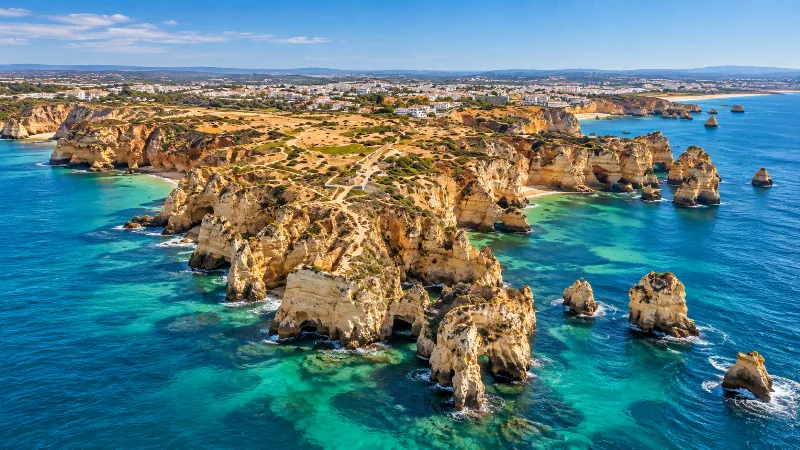
Algarve
Explore the Algarve through sandy beaches, limestone cliffs, Faro, Ria Formosa, coastal trails, historic towns and southern Portuguese landscapes.
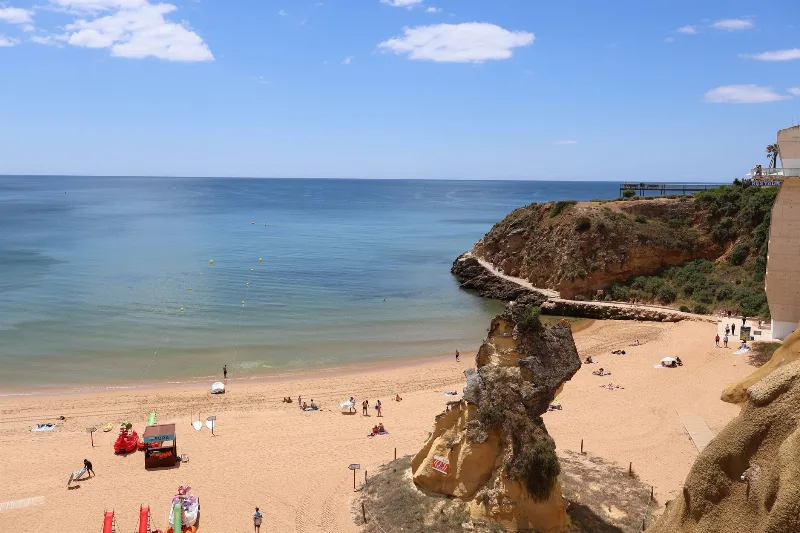
Portimão
A working river town in the western Algarve, Portimão grew around sardine fishing and canning before tourism reshaped its coast. Its riverside museum, old churches and long cliff-backed beach trace that shift.
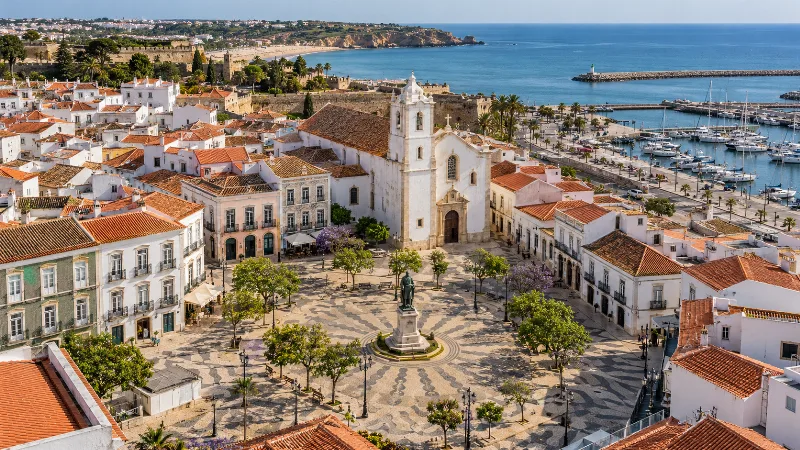
Lagos
Lagos combines a historic Algarve centre, small sandy beaches, coastal cliffs and the rock formations of Ponta da Piedade.
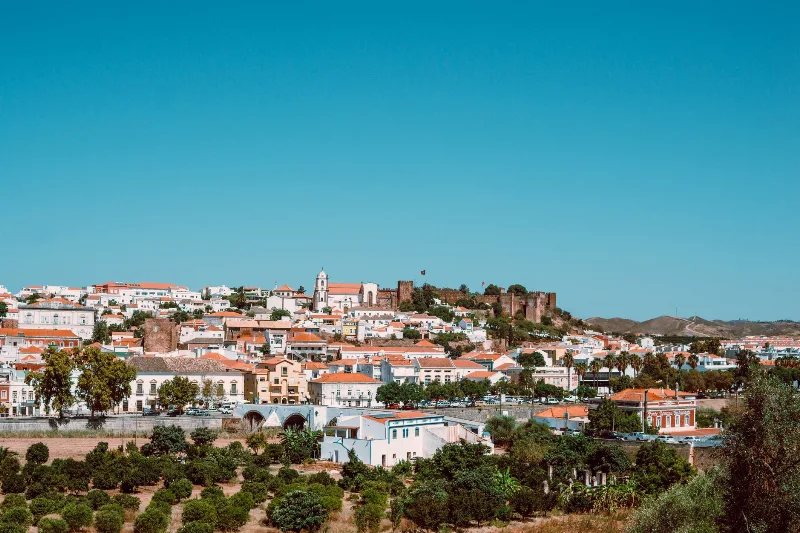
Silves
Once the seat of a Moorish kingdom, Silves is a quiet hill town in the western Algarve, known for its red sandstone castle, its cathedral and the orange groves along the Rio Arade.
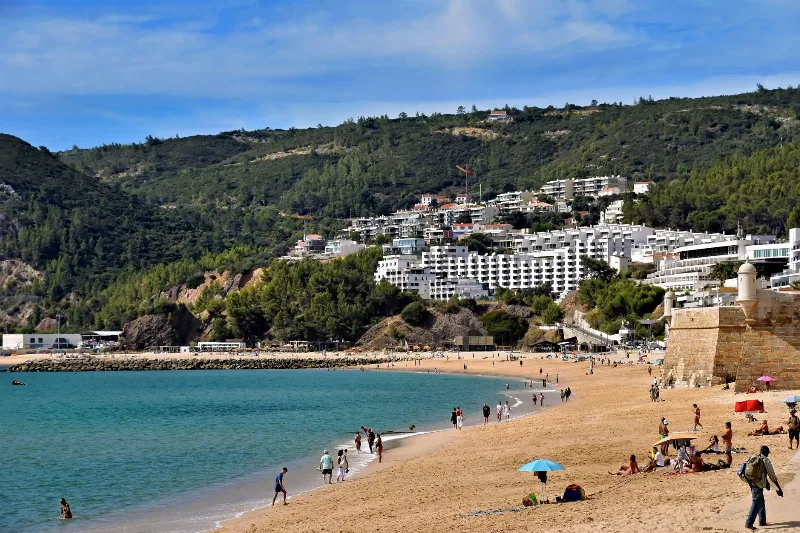
Best Regions to Visit in Portugal
Discover Portugal's most popular travel regions, from the historic cities of Lisbon and Porto to the beaches of Algarve, the countryside of Alentejo and the Atlantic islands.
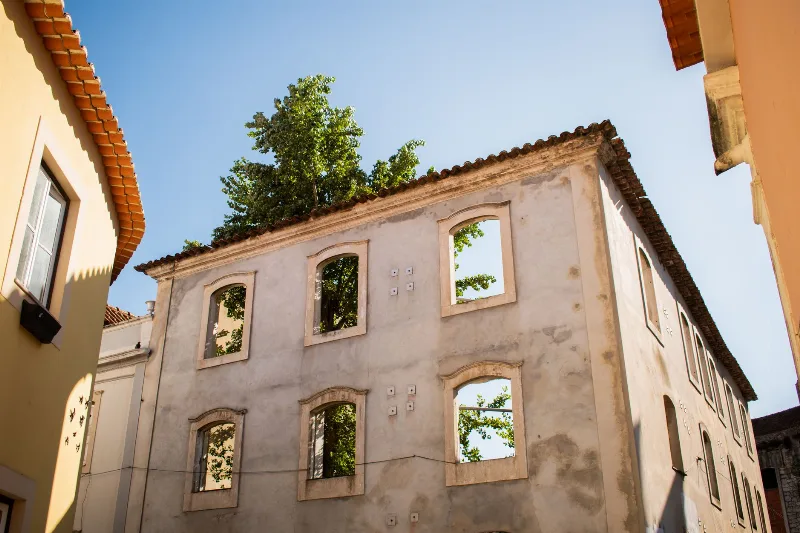
Caldas da Rainha
A guide to Caldas da Rainha, the Oeste town built around a fifteenth-century thermal hospital, known for its ceramics workshops, its daily fruit market and its position between the hills and the Atlantic coast.
Ponta da Piedade Clifftop Paths in the Western Algarve
The limestone headland of Ponta da Piedade, just south of Lagos, is threaded with clifftop paths above sea stacks, arches and hidden grottoes. This guide explains the geology, the walking routes and the natural detail that make the headland distinctive.
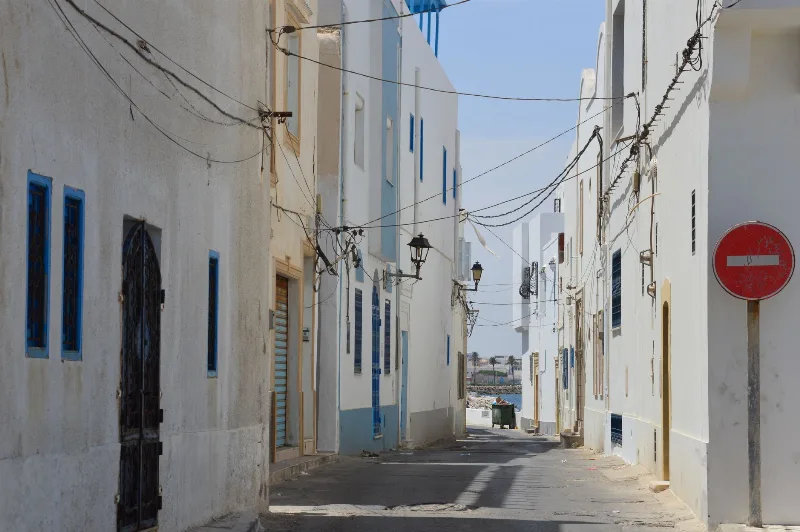
Aljezur
Aljezur is a small town in the western Algarve, set just inland from the Atlantic on the Ribeira de Aljezur and watched over by the remains of a Moorish castle. Its quiet streets, farming hinterland and wild coastline give it a character quite unlike the resort towns further east.